
US Coin Identifier For Dates, Mint Marks, And Value
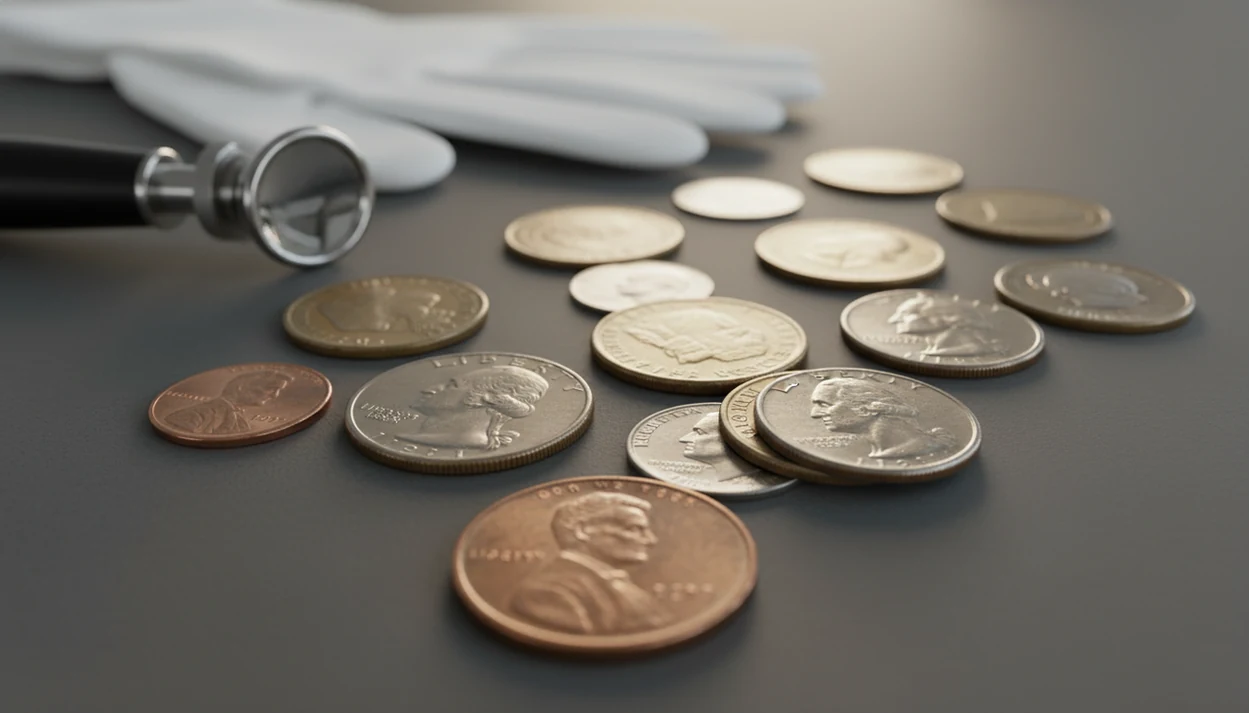


A US coin identifier helps you name a coin by denomination, design, date, mint mark, and condition, then connect those clues to rarity and value context. Start with clear photos of both sides, confirm the date and mint mark, and treat app value estimates as guidance rather than certified offers.
CoinEd is the photo-first coin identifier and value estimation app that identifies coins from photos, shows rarity and grade hints, and helps beginners and collectors estimate coin value.
- Identify U.S. coins by denomination first, then date, mint mark, design type, condition, and possible errors.
- Most pocket change is common, but small details like a 1909-S VDB cent, 1916-D dime, silver content, or doubled die can change value dramatically.
- Use photo identification for speed, but use human verification or professional grading for rare, damaged, or high-value coins.
| Need | Best option |
|---|---|
| Identify common U.S. coins from a phone photo and save results | CoinEd |
| Research certified U.S. coins, population reports, and professional grading references | PCGS |
| Verify high-value coins with professional grading and authentication | NGC |
| Run a broad visual search when the coin type is uncertain | Google Lens |
U.S. CoinEd Basics For Pennies To Dollars
A U.S. coin identifier is any app, guidebook, online catalog, or manual lookup process that helps identify U.S. coins by visible features. The core fields are denomination, obverse design, reverse design, date, mint mark, composition, condition, and edge details.
Start with the obverse, usually the portrait side, then turn the coin over and compare the reverse design. A beginner turning over a wheat cent under a kitchen light may find the tiny mint mark under the date only after the second look.
Circulating coin identification asks, “What is this spendable coin?” Collectible coin identification asks, “Which type, variety, grade, and market category does this example fit?” Tools like CoinEd are photo-first, but still work best when paired with careful collection notes, value context, and a trusted reference.
Five U.S. Coin Lookup Facts Before Checking Value
- Denomination and design type come before value. A Lincoln Wheat cent, Lincoln Memorial cent, and Shield cent should not be priced as one generic penny.
- Date and mint mark can matter more than age alone. A later key date may outrank an older common issue.
- Common circulated coins usually remain near face value. The U.S. Mint reported about 11.38 billion circulating coins produced in 2023 (https://www.usmint.gov/about/production-sales-figures/circulating-coins-production), so many modern finds are common circulation pieces.
- Condition changes the value conversation. Cleaning, scratches, corrosion, rim dents, and heavy wear can lower collector interest.
- Rare errors, key dates, and high-grade coins need expert confirmation. A close-up of reeded coin edges helps, but it does not authenticate a rare strike.
For beginners, denomination-first identification is usually easier than value-first searching because it prevents the wrong coin type from driving the estimate.
Before You Start: What You Need To Identify A U.S. Coin
Before identifying a U.S. coin, set up a clean viewing spot and gather a few simple tools. Good light, steady photos, and gentle handling prevent the most common first-pass mistakes.
- Use bright indirect light on a plain, non-reflective background so the date, relief, rims, and color are easier to judge without glare.
- Photograph the obverse and reverse straight on, then take close-ups of the edge, date, mint mark area, and any odd mark or possible doubling.
- Keep a loupe, small scale, and magnet nearby for coins that look silver, unusually heavy, altered, or different from normal pocket change.
- Handle the coin by the edge and avoid rubbing, polishing, dipping, or wiping it before identification, even if dirt hides part of the design.
- Set aside anything suspicious or promising — possible silver, proof finishes, errors, rare dates, strong mint marks, or unusually sharp examples — for slower verification before you spend, sell, or store it with common coins.
How A Photo-First American CoinEd Works
A photo-first American coin identifier compares obverse and reverse images against known U.S. coin types, then narrows the result with date, mint mark, design, and composition clues. A useful photo-first identifier should return structured clues — likely denomination, design type, date, mint mark, rarity context, and value range — rather than promising a guaranteed rare coin or certified grade.
The usual flow is simple: photo capture, design matching, date and mint mark reading, type match, rarity lookup, and estimated value range. Good ai coin identification, rarity lookup, and collection value estimation app for collectors and beginners should deliver structured clues, not a guaranteed rare coin or instant certified grade.
Lighting matters. Desk lamp glare across shiny copper can make a normal cent look altered. Wear, corrosion, soft focus, shadows, and partial images can also push the result toward a nearby type instead of the exact coin.
How To Use A US CoinEd App Step By Step
Use a U.S. coin identifier app as a photo-first check, then verify the details manually. The app gets you oriented; your eyes confirm the small clues.
- Photograph both sides in bright indirect light, with the coin flat and the camera square to the surface.
- Select or confirm the denomination before reviewing value, especially for small cents, dimes, and dollars.
- Check the date and mint mark manually against the app result, using magnification if the coin is worn.
- Review design type, composition, and variety notes before assuming a coin is rare.
- Compare condition and value range against wear, damage, cleaning, and recent market context.
- Save the coin to a collection inventory with photos, grade hints, duplicates, and notes.
Apps such as CoinEd can speed up the first pass, but rare pieces still deserve a slower review.
U.S. Coin Denomination Clues From Pennies To Dollars
Different denominations have different first clues. A penny lookup often starts with Lincoln Wheat, Memorial, or Shield reverse designs, while a dime lookup may turn on silver content and a small mint mark.
| Denomination | First clues to check | Value triggers |
|---|---|---|
| Pennies | Lincoln Wheat, Memorial, Shield, date, mint mark | Key dates, doubled dies, strong red color, low wear |
| Nickels | Jefferson, Buffalo, date visibility, wartime reverse mark | Wartime silver nickels, readable Buffalo dates, scarce mint marks |
| Dimes | Roosevelt, Mercury, date, mint mark | 1964-and-earlier silver, 1916-D Mercury dime, high grade |
| Quarters | Washington, State, America the Beautiful, reverse design | 1964-and-earlier silver, W mint marks, varieties |
| Halves and dollars | Kennedy, Eisenhower, Susan B. Anthony, Sacagawea, Presidential, Native American | Silver issues, scarce dates, proofs, low-mintage types |
For deeper denomination checks, use a focused penny identifier app, nickel identifier app, or quarter identifier app.
Date And Mint Mark Clues In A U.S. Coin Lookup
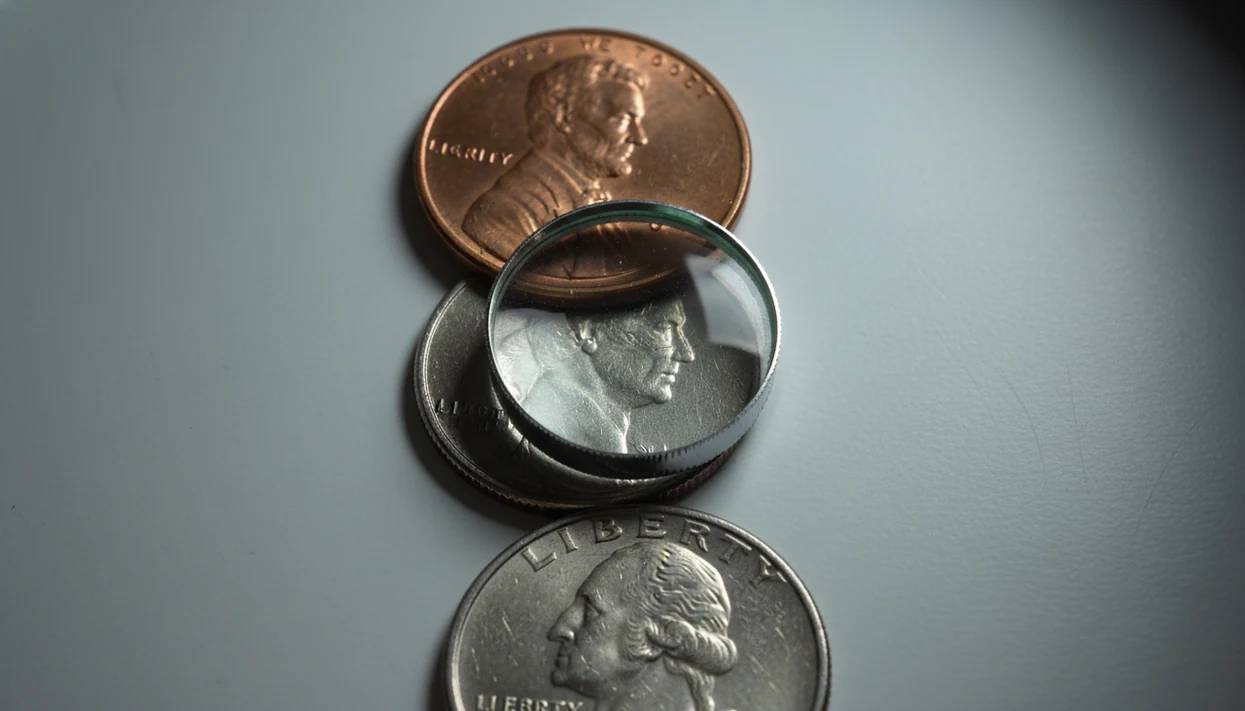
“Where is the mint mark, and does it change the coin?” Yes, often. A mint mark is a small letter showing where a coin was struck, and its location varies by denomination, design, and year.
Common U.S. mint marks include P for Philadelphia, D for Denver, S for San Francisco, and W for West Point. Historical marks, such as O for New Orleans and CC for Carson City, matter on older series. No mint mark often means Philadelphia on many U.S. coins, but not always.
The U.S. Mint lists six main facilities tied to coin production, storage, or administration — Philadelphia, Denver, San Francisco, West Point, Fort Knox, and Washington, DC (https://www.usmint.gov/about/mint-tours-facilities). Philadelphia and Denver produce most circulating coins. Age alone is not enough. A loupe pressed close to a quarter can reveal the date and mint mark that separate a common coin from one worth a closer look.
US CoinEd Value Checks And Collection Records
Coin value depends on date, mint mark, variety, grade, demand, metal content, and recent sales. A value range is context, not a formal appraisal or a guaranteed buyer price.
Separate the numbers before you make a decision. Face value is the spendable amount. Melt value is tied to metal content. Collector premium reflects rarity and condition. Retail asking price is what someone hopes to receive, not proof of a sale.
For higher-value coins, compare the app estimate with at least one recognized reference such as PCGS CoinFacts, NGC Coin Explorer, or completed auction/sold-price records before treating the range as market evidence.
A good record includes purchase price, source, photos, grade notes, duplicates, and wish lists. The clink of mixed nickels, dimes, and foreign coins poured from an inherited can onto a towel is where many inventories begin. For silver-focused searches, a dime identifier app or half dollar identifier can help sort likely melt-value candidates from ordinary clad coins.
Common U.S. Coin Identification Mistakes
- Old equals rare. Many older U.S. coins are common unless the date, mint mark, variety, or condition creates demand.
- Cleaning before identification. Wipe dust from a cardboard 2x2 flip if needed, but don’t clean the coin itself.
- Trusting one blurry photo. Dark wooden tables can make copper cents look redder than they are, which affects condition impressions.
- Confusing asking prices with sold prices. A high listing price is not the same as a completed sale.
- Skipping edges, weight, and composition. Reeded edges, silver color, weight, and magnetic response can all matter.
- Assuming apps authenticate counterfeits. Consumer lookup tools can suggest an ID, but they cannot guarantee authenticity.
The safest first pass is identify, compare, document, then verify if the coin appears valuable.
Limitations
App-based coin identification is useful, but it has clear limits. Treat results as organized clues, not final certification.
- AI can misread worn, corroded, cleaned, damaged, or partly hidden coins.
- Poor lighting, glare, shadows, and low-resolution photos can reduce accuracy.
- A value range is not a guaranteed sale price or dealer offer.
- Subtle varieties and errors may require magnification, weight checks, and specialist review.
- Counterfeit detection is not guaranteed by consumer coin lookup tools.
- Professional authentication or third-party grading is still the best route for rare, expensive, or disputed coins.
- Estimated grades are condition hints, not certified grades.
- Market demand changes, so saved values should be reviewed over time.
Small marks matter. So does doubt. When a coin looks unusually rare, slow down before selling, cleaning, or mailing it anywhere.
FAQ
How do I identify U.S. coins?
Identify U.S. coins by denomination, design, date, mint mark, condition, and then value context. Use both sides of the coin and confirm small details manually.
Where is the mint mark on a U.S. coin?
The mint mark location varies by denomination, design, and year. It may appear near the date, on the reverse, or in another design-specific position.
What does no mint mark mean on a U.S. coin?
No mint mark often means Philadelphia on many U.S. coins. There are exceptions, so confirm by coin type and year.
Are old U.S. coins always valuable?
Old U.S. coins are not always valuable. Date, mint mark, rarity, condition, and demand matter more than age alone.
Can an app grade coins accurately?
Apps can suggest condition or grade hints from photos. They do not replace certified grading by a professional grading service.
Should I clean old coins before identifying them?
You should usually avoid cleaning old coins before identification. Cleaning can leave hairlines, remove original surfaces, and reduce collector value.
Which U.S. coins are silver?
Common silver U.S. coins include most dimes and quarters dated 1964 or earlier, many half dollars dated 1964 or earlier, some 1965 to 1970 Kennedy halves, and wartime nickels from 1942 to 1945 with large mint marks.
Are coin value apps accurate?
Coin value apps provide estimates that depend on photo quality, condition, market data, and correct identification. CoinIdentifier and similar tools are most useful when their results are checked against trusted references.
When should I get a coin professionally graded?
Professional grading may make sense for rare dates, high estimated values, suspected counterfeits, or coins being sold to serious collectors. It is also useful when authenticity or condition is disputed.