
Identify Coin From Photo Using Both Sides, Edge, Date, And Mint Mark
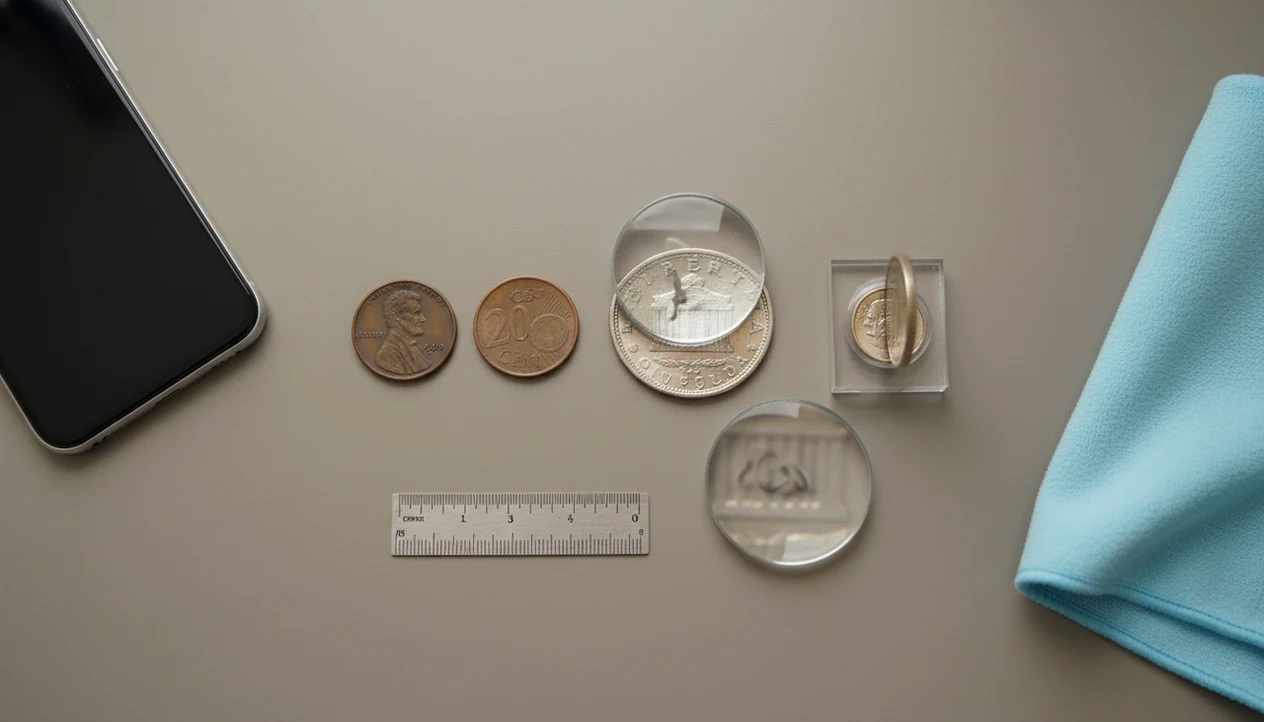


To identify coin from photo, capture sharp images of the obverse, reverse, edge, date, mint mark, and scale, then compare the result against trusted coin references before checking value. The photo-first workflow helps you find the coin’s country, denomination, year, and type before you treat any price estimate as reliable.
> CoinEd matches coin photos against reference images, then returns likely type, rarity, grade, and value clues for beginners and collectors.
- Photograph both sides of the coin straight on, in good light, with the date and mint mark readable.
- Use coin image identification to find the likely type first, then verify the match with references before estimating value.
- Treat app-based value, grade, error, and counterfeit hints as starting points, not final authentication.
| Need | Best option |
|---|---|
| Beginner-friendly photo coin identification with value estimates and collection tracking | CoinEd |
| Professional certification research for U.S. coins that may be high value | PCGS |
| Independent grading verification and population data for collectible coins | NGC |
| Broad visual search for foreign coins or quick comparison when details are unclear | Coinoscope or Google Lens |
What Identify Coin From Photo Means For Beginners
“Identify coin from photo” means matching clear coin images to known coin types, not instantly proving what the coin is worth. A good result usually gives a likely country, denomination, date range, design type, and possible mint.
People use this workflow for pocket change, travel coins, inherited jars, and old coins that have lost their paper labels. The clink of mixed nickels, dimes, and foreign coins poured from an inherited coffee can onto a towel is exactly the kind of sorting moment where photo lookup helps.
Collectors are not a tiny group. In 2019, about 146 million people in the United States reported collecting at least one type of item, including coins, stamps, and other collectibles. For beginners, identification should come before value every time.
At-A-Glance Coin Photo Lookup Checklist
For coin photo lookup, take six useful views before you upload: obverse, reverse, edge, close-up date, close-up mint mark, and a scale reference. Use indirect light, a neutral background, and a phone held parallel to the coin.
Good light beats guesswork.
Both sides matter because many coins share portraits, shields, eagles, monarchs, or national inscriptions. A front-only photo may identify a broad family but miss the exact type. If you want a deeper capture routine, the basics are covered in how to scan both sides of a coin.
Add a ruler or another common coin for scale. Scale helps separate similar-looking denominations, tokens, medals, and small foreign coins that can look alike in a cropped image.
Before You Start: Coin Photo Prerequisites
Before you start, set up the photo area so the coin can be identified without adding damage or confusion. The goal is simple: make the details easier to read while leaving the coin exactly as you found it.
- Choose indirect light, such as a bright window or shaded desk lamp, and place the coin on a plain neutral background.
- Steady your phone above the coin, keeping it parallel so the full rim, date, and lettering stay sharp.
- Clean only the surface around the coin, not the coin itself; even a quick rub can leave scratches or change toning.
- Gather a ruler, a common comparison coin, and a soft towel before taking photos, so scale and handling are controlled.
- Reduce glare from flips, slabs, or plastic holders when you can by changing the angle or photographing outside the holder if it is safe.
- Set aside coins that look rare, unusually old, gold, silver, or error-like for slower verification by references or an expert before pricing.
5 Facts About Coin Image Identification Accuracy
- Sharp, well-lit front and back images improve coin image identification because the system can read portraits, legends, rims, and reverse designs more clearly.
- Modern apps compare coin photos against large databases and return likely matches quickly, but they rank possibilities rather than prove certainty.
- Common modern U.S. and world coins are usually easier to match than ancient, worn, obscure, or locally issued coins.
- Grade and estimated value ranges should be treated as rough context, not a formal appraisal or dealer offer.
- Exact type, date, mint mark, composition, and condition must be verified before pricing a coin.
A CoinWeek test of CoinSnap found that it identified 14 of 15 modern and world coins correctly, but graded only 40% correctly in a small sample. That is useful triage, but not a certified grade.
How Coin Image Identification Works Behind The Scenes
Coin image identification works by comparing visible features in your photo against reference images. The software reads patterns such as portraits, legends, symbols, date placement, rim shape, edge clues, and reverse design, then ranks likely matches.
The technical idea is image recognition. In plain terms, the tool is looking for visual fingerprints, not receiving a magic answer from the coin. Databases work best when the coin type is represented by many clear examples. Dark wooden table photos can make copper cents look redder than they are, so color alone should not decide the match.
After identification, collectors often research certified examples. NGC reports more than 55 million certified coins worldwide, and PCGS reports more than 52 million certified coins since its founding. That scale shows why a photo match should lead to reference checking.
Trusted References For Verifying A Coin Photo
Trusted references turn a coin photo match into a checked identification. Use named sources to confirm the design, date, mint, and market context before treating any app result as dependable.
- Start with official mint information for modern U.S. coins, especially current designs, mint marks, compositions, and release details from the U.S. Mint.
- Compare certified examples through NGC and PCGS census or population pages when the coin may be slab-worthy, scarce, or commonly counterfeited.
- Check foreign coins against reputable catalogs, museum collections, or major auction archives, not just image-search lookalikes.
- Use app tests in the style of CoinWeek as context for what a tool can do, but not as proof that your specific coin was identified or graded correctly.
- Separate price evidence carefully: auction records show completed public sales, while dealer offers, retail asking prices, and app estimates can reflect different fees, timing, risk, and profit margins.
The best record is boring but useful: photos, measurements, reference names, and a short note explaining why the match fits.
How To Use Identify Coin From Photo Workflow
Use this workflow to move from photo capture to verified identification before value. For beginners, a photo-first check is often easier than searching price charts because it names the coin before asking what it may sell for.
- Clean the setup, not the coin; use a plain background and good light.
- Capture the obverse and reverse straight on, with the full rim visible.
- Add close-ups of the date, mint mark, edge, lettering, and unusual marks.
- Upload images to a coin photo lookup tool and review multiple possible matches.
- Verify the country, denomination, date, mint mark, composition, and design against trusted references.
- Only then check value, rarity, and whether professional grading is warranted.
A photo lookup app can help organize this process, but the strongest result still comes from checking the match against references. Treat AI identification, rarity lookup, and collection value estimates as structured clues, not guaranteed authentication.
Step 1: Photograph Both Sides For Coin Photo Lookup
Does a coin photo lookup need both sides? Yes, because the obverse and reverse often work together to identify the exact coin.
The obverse is the front or primary side, often showing a ruler, president, portrait, or main emblem. The reverse is the back, often showing the denomination, eagle, shield, wreath, building, animal, or national symbol. Front-only photos are risky when different coins share the same monarch, president, or inscription style.
Take several photos and choose the sharpest image before uploading. Avoid harsh flash, tilted angles, cropped legends, fingers covering rims, and reflective plastic holders. Wipe dust from a cardboard 2x2 flip if needed, but don’t clean the coin itself. For setup mistakes, a coin photo quality guide can save a second scan.
Step 2: Capture Date, Mint Mark, Edge, And Scale Details
Small details often decide the exact coin. A date and mint mark can separate a common circulation find from a scarcer variety, especially when the design stayed similar for many years.
Start with the obverse, then check the reverse and edge. Edges may be reeded, plain, lettered, or built with modern security features. A beginner turning over a wheat cent under a kitchen light to find the tiny mint mark under the date is doing the right kind of close check.
Use a ruler or common coin for scale, but don’t treat scale as metal testing. The U.S. Mint produced over 15.5 billion circulation coins in fiscal year 2023, so exact details matter in a very large coin universe. For worn dates, identify worn date coin clues can help set limits.
Step 3: Verify An Old Coin From Photo Before Pricing
Can you identify an old coin from photo and price it immediately? You can get a likely match, but you should verify the identification before trusting any value.
Compare the app’s match against inscriptions, symbols, monarch or president, denomination, date style, and metal color. A match is stronger when both sides, edge, weight, and diameter all align. If the coin is ancient, heavily worn, foreign, or locally issued, you may need catalogs, auction archives, museum references, or a numismatist.
Save the verified identification in your collection notes before searching prices. Keep scans, notes, and reference links together, while older or foreign pieces may still need specialist review. The fuller path is described in the coin identification timeline.
Common Myths About Identify Old Coin From Photo Tools
Photo tools are excellent triage aids, but they are not final expert opinions for valuable coins. These four myths cause the most trouble:
- One blurry photo is enough. It isn’t. Poor focus, glare, missing rims, or a cropped date can send the match in the wrong direction.
- The value estimate is a cash offer. It is usually an estimated value range, not what a dealer will pay today.
- An app can authenticate counterfeits or mint errors. Consumer tools may flag unusual features, but photos alone rarely prove authenticity or a true mint error.
- Professional grading is unnecessary after an app result. High-value coins still need NGC, PCGS, or another qualified grader when condition and authenticity matter.
A small label reading “possible error coin” is fine for sorting. It is not proof.
Limitations
Photo-based coin identification has real limits. Use it as a starting point, then compare against a trusted reference.
- Poor focus, glare, shadows, tilted photos, and cropped text can cause wrong matches.
- Heavily worn coins may lack the design details needed for reliable matching.
- Ancient coins, obscure local issues, tokens, medals, and replicas can be misidentified.
- Consumer apps generally do not authenticate counterfeits or prove mint errors.
- Photo-based grading is not a substitute for NGC, PCGS, or another professional grader.
- Value estimates can differ from dealer offers, auction results, and insured replacement value.
- Cleaning a coin before photographing it can reduce collector value.
- Reflective slabs, cloudy flips, and plastic glare can hide rim nicks, hairlines, or edge details.
If the coin might be valuable, slow down. The safer order is identify, verify, record, then price.
What to Do When a Photo Returns Multiple Matches
When a scan or visual search returns several candidates, compare the date, mint mark, denomination, reverse design, and edge against each option. Prefer the match that agrees on the greatest number of independent features rather than the highest confidence score alone.
Photo clues that may raise counterfeit concerns include soft lettering, casting bubbles, impossible date and mint combinations, and edges that do not match the type. A photo cannot authenticate a coin; escalate valuable or suspicious pieces to a specialist. See also coin scams to avoid and accuracy limits.
FAQ
Can I identify a coin online from a photo?
Yes, online tools can identify likely matches from clear photos of the obverse, reverse, date, mint mark, edge, and scale. The result should be verified against trusted references before checking value.
Do I need photos of both sides of the coin?
Yes, both sides improve accuracy because many coins share similar portraits, symbols, or inscriptions. The reverse design often confirms the exact type or denomination.
What is the obverse side of a coin?
The obverse is the front or primary side of a coin. It often shows the main portrait, ruler, president, or national emblem.
What is a coin mint mark?
A mint mark is a small letter or symbol showing where a coin was made. It can affect identification because the same coin design may have different mint locations.
Can a photo tell me what my coin is worth?
A photo can support a rough value estimate after the coin is identified. It cannot establish final market value, dealer offer, or insured replacement value by itself.
How accurate are photo-based coin ID apps?
Photo-based coin ID apps can be accurate for common, clearly photographed coins. Accuracy drops with worn coins, poor images, ancient coins, replicas, and obscure varieties.
Can an app identify ancient coins from photos?
An app may suggest possible ancient coin matches, but ancient coins are harder to identify from photos. Specialist catalogs or numismatist review are often needed.
Should I clean a coin before taking a photo?
No, do not clean a coin before photographing it. Cleaning can scratch surfaces, change toning, and reduce collector value.
Can a coin photo prove whether a coin is counterfeit?
A coin photo may raise suspicion about a counterfeit, but it cannot reliably authenticate a coin. Valuable or questionable coins should be reviewed by a qualified expert or grading service.