
Asian Coin Identification by Script, Date, and Picture
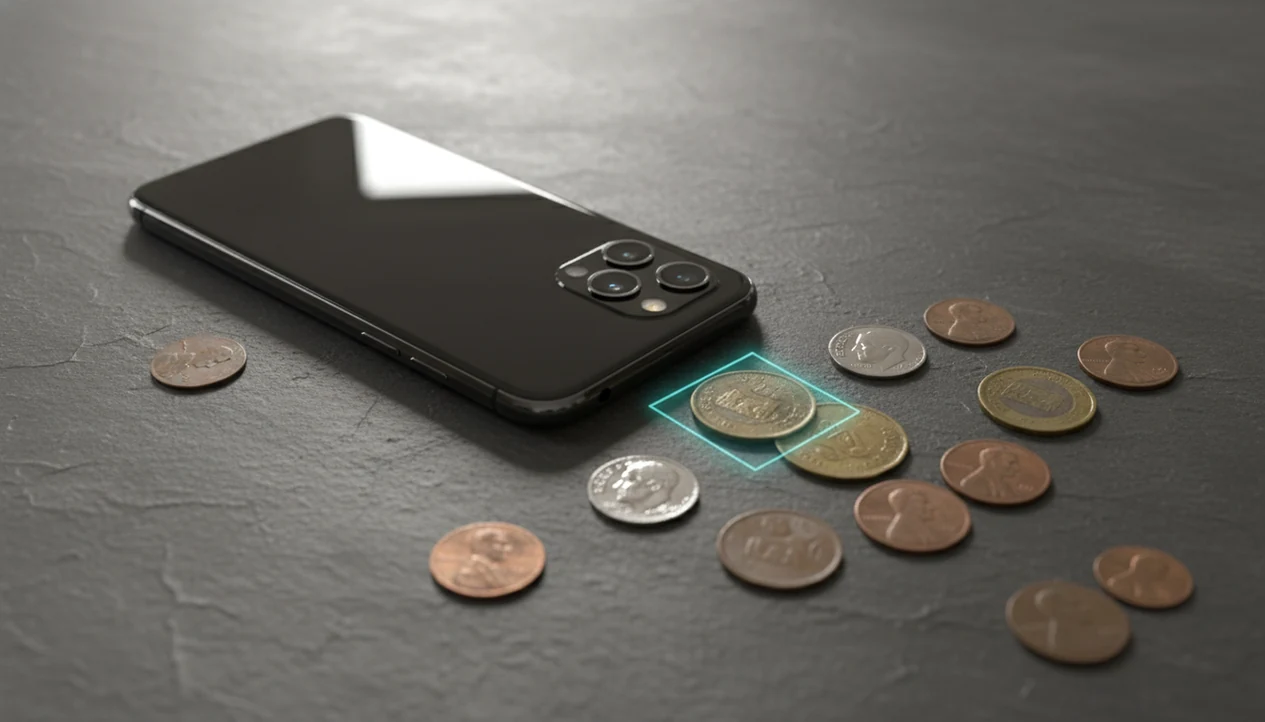


Asian coin identification begins with evidence, not a guess about the country. Photograph both sides, determine which way the designs should face, record every readable character, and note the coin’s metal color, diameter, weight, edge, and central hole. Asia includes many unrelated writing systems and monetary traditions, so a coin that looks Chinese may instead be Japanese, Korean, Vietnamese, Thai, or a modern souvenir. The steps below help narrow the possibilities while avoiding conclusions based on one symbol alone.
Asian Coin Identification at a Glance
Start by separating observable facts from assumptions. Does the coin have a square hole, round hole, portrait, coat of arms, temple, animal, plant, or geometric emblem? Is the writing arranged horizontally, vertically, around the rim, or in four groups surrounding a hole? Count the characters and inspect both sides before attempting a translation.
Next, record the diameter in millimetres and weight in grams using reliable tools. Describe the edge as plain, reeded, lettered, patterned, or irregular. These details can distinguish coins with similar designs and expose pieces that do not match an official specification. Use the world coin identifier for a broad country search, then consult a specialist reference after establishing a likely region and period.
How to Identify an Asian Coin From Pictures
Take separate, sharply focused photographs of the obverse, reverse, and edge. Place the coin on a plain, contrasting background beside a ruler, but do not let the ruler cover any part of it. Soft light from two sides usually reveals worn characters more effectively than direct flash. Keep the camera parallel to the coin so circles remain circular and inscriptions are not distorted.
A photo-matching service can suggest visually similar coins, but it may confuse related types, overlook a small date, or choose the wrong orientation. Compare any suggestion against several independent features: script, design placement, date, denomination, dimensions, and edge. The full coin photo identification guide explains how to capture useful images and verify a visual match rather than accepting it automatically.
Chinese, Japanese, and Korean Coin Characters
Chinese characters appear on coins from several countries, not only China. Japanese kanji and older Korean inscriptions share many character forms, while Vietnamese cash coins historically used Literary Chinese or locally developed characters. Country names, reign titles, denominations, and reading direction provide more useful evidence than the mere presence of a familiar character.
Traditional cash inscriptions often contain four characters around a square hole. Depending on the issue, they may be read top-bottom-right-left or clockwise. Later machine-struck coins often arrange text around the rim and combine characters with Western-style numerals or emblems. Compare exact stroke structure because worn or cast characters can look deceptively alike. For Chinese issues, use the detailed Chinese coin identifier; for unfamiliar writing, consult the world coin script guide.
Thai, Vietnamese, and Southeast Asian Coin Scripts
Thai coins commonly use Thai script and numerals, often with a royal portrait, temple, mythical figure, or national emblem. Modern Thai dates frequently follow the Buddhist Era calendar. Vietnamese coins range from square-holed cast cash with Chinese-style inscriptions to colonial and modern pieces using Vietnamese text in the Latin alphabet. Laos, Cambodia, and Myanmar have distinct scripts that image systems may misclassify when lettering is small or worn.
Southeast Asian trade tokens, plantation money, religious pieces, and fantasy issues can resemble official currency. Look for a denomination, issuing authority, ruler’s name, or country name before assuming an object circulated as money. Colonial coins may use French, English, Dutch, Portuguese, or Spanish alongside local symbols. A script match narrows the search, but the date system and physical specification are necessary to confirm the exact type.
Reading Asian Coin Numerals, Era Names, and Calendars
A visible number is not necessarily a Gregorian year. Japanese coins may use a ruler’s era name followed by the year within that era. Chinese issues may use regnal, Republican, cyclical, or Gregorian dating. Korean coins can contain era-based or Western dates, while Thai coins may use Buddhist Era years, generally 543 years ahead of the Gregorian calendar for modern date conversion.
Identify the script and calendar before converting anything. Copy each numeral in order and note adjacent characters meaning “year,” “era,” or a reign name. Do not convert an incomplete inscription as though it were certain. The first year of an era may be written with a character meaning “first” rather than the numeral one, and historical calendar transitions can complicate simple formulas. Verify the resulting date against the ruler, design, and documented issue range.
Using Holes, Portraits, Animals, and Symbols
A square central hole is strongly associated with East Asian cast cash, but it does not prove age or country. Round-holed coins occur in Japan and several other Asian countries, while modern replicas frequently imitate both forms. Portrait direction, clothing, crowns, hairstyles, and surrounding inscriptions can identify a ruler more reliably than facial resemblance alone.
National emblems are also valuable clues. Dragons, chrysanthemums, sunbursts, rice stalks, temples, lions, elephants, birds, and stars may narrow the issuing country, but many symbols cross borders and periods. Search for the complete combination rather than one motif—for example, “elephant Thai numerals silver coin” is more useful than “elephant coin.” Check whether the symbol is raised, incuse, added later, or part of a countermark.
Confirming Weight, Diameter, Composition, and Edge
Measure diameter with callipers and weigh the coin to at least 0.1 gram, preferably 0.01 gram for small pieces. Compare the results with a reputable catalogue for the exact date and denomination. Allow for modest weight loss from circulation, corrosion, clipping, or an old mounting, but treat a large unexplained difference as evidence that the identification may be wrong.
Do not test composition with acids or aggressive scratching. Color alone cannot reliably separate silver, nickel, aluminium, brass, bronze, or plated base metal. Use the weight, diameter, and composition guide and inspect the coin edge for reeds, lettering, seams, casting sprues, or plating breaks. Never clean the coin to expose details; cleaning can erase evidence and reduce collector value.
Recognizing Replicas, Tokens, and Counterfeit Asian Coins
Many convincing Asian-style pieces are modern replicas, tourist souvenirs, charms, gaming tokens, or privately produced fantasy coins. Warning signs include repeated casting bubbles, a filed seam, soft lettering, artificial dark residue, identical scratches on multiple examples, or weight and diameter inconsistent with the claimed type. An old-looking surface is not proof of age.
Some genuine coins were cast and naturally have rough surfaces, so no single warning sign proves forgery. Compare the piece with authenticated examples from museums, major catalogues, or established auction archives. High-value ancient, gold, or rare silver claims require in-person specialist assessment and, where appropriate, non-destructive metal analysis. Review common coin scams to avoid before paying for attribution, grading, or a supposed buyer.
FAQ
How can I identify an Asian coin with unknown writing?
Photograph both sides, identify the script family, copy the characters in their original order, and record the diameter, weight, edge, and symbols. Compare all these features with a reputable catalogue; script alone rarely confirms an exact coin.
How do I identify a Chinese coin with a square hole?
Orient the four-character inscription correctly and compare its exact strokes, reading order, metal, diameter, and casting style. Square holes also occur on Japanese, Korean, Vietnamese, replica, and charm pieces, so use a specialist Chinese reference before assigning a dynasty.
What year is shown on a Japanese coin?
Many Japanese coins show an era name and an era-year number rather than a Gregorian year. Identify both elements, convert using a reliable era table, and confirm that the design and denomination were issued during the resulting year.
How do I read the date on a Thai coin?
First determine whether the numerals are Thai or Western and whether the year uses the Buddhist Era. For many modern dates, subtracting 543 gives the Gregorian year, but historical exceptions and incomplete inscriptions should be checked individually.
Can a photo identify an Asian coin accurately?
A clear photo can produce useful candidates, especially when both sides are visible. It cannot reliably determine weight, metal, edge details, authenticity, or subtle varieties. Temporary companion tools such as Lens AI on iOS or AI Lens on Android should be treated as a starting point.
Does a square hole mean an Asian coin is ancient?
No. Square-holed coins were produced for long periods, and modern replicas, charms, and souvenirs remain common. The inscription, casting method, patina, dimensions, provenance, and comparison with authenticated examples all matter.
How can I tell whether an Asian coin is valuable?
Establish the exact type, date, mint, variety, authenticity, and condition before looking at prices. Use recent sold results for genuinely comparable examples, not asking prices. Rare or precious-metal pieces should receive professional examination.