
Coin Scams To Avoid With Rare Claims And Online Buyers
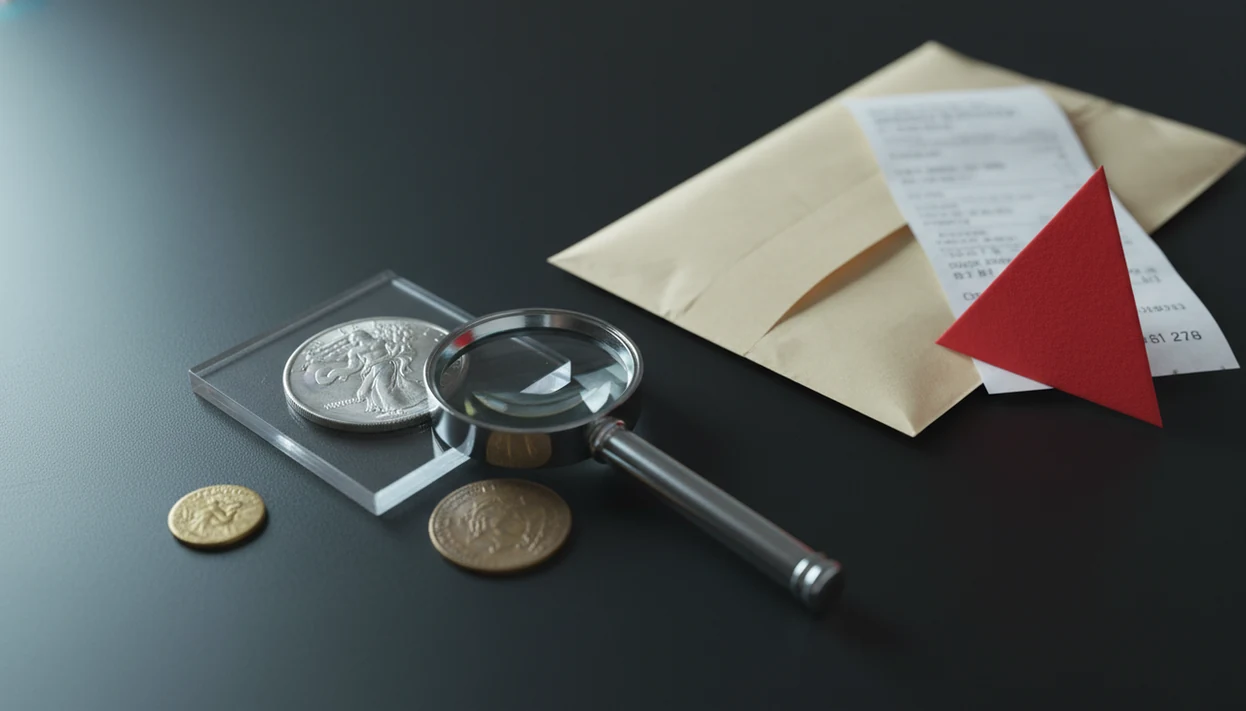


The biggest coin scams to avoid are fake buyers, overhyped rare-coin claims, counterfeit coins or slabs, chargeback tricks, and misleading online listings that hide condition or authenticity problems. Treat every high-value coin sale as a verification process: confirm identity, price context, certification details, photos, payment method, and return terms before you ship or pay.
> Photo-identification apps can help with first-pass coin recognition, rarity clues, and rough value context, but they should not be treated as authentication for expensive, rare, or suspicious coins.
- Verify rare claims with independent grading records, recent sold prices, and clear photos of both sides of the coin.
- Avoid buyers who rush payment, ask you to ship before funds clear, overpay by mistake, or move the deal off-platform.
- Use AI photo identification for first-pass checks, but use professional authentication for expensive, rare, or suspicious coins.
Coin Scams To Avoid At A Glance
Coin scams to avoid include fake buyers, rare coin hype, counterfeit coin scams, fake slabs, chargebacks, and misleading value claims. The safest first response is simple: slow down, verify independently, and never let urgency replace evidence.
This page is about collectible coins and bullion coins, not cryptocurrency scams. The warning still fits a wider fraud environment. The FTC received more than 2.6 million fraud reports in 2023, with reported fraud losses above $10 billion, according to its consumer protection data spotlight source.
A seller weighing a silver half dollar should not be rushed by a buyer who “needs it shipped today.” A buyer should not trust a listing just because the coin looks old. Evidence first. Then a deal.
Five Facts About Rare Coin Scams And Online Buyers
- Misrepresented grading and rarity drive many rare coin scams; a worn common date can be described as scarce if the seller hides condition details.
- High-pressure phrases such as “guaranteed appreciation,” “investment-grade coins,” and “private buyer waiting” are red flags, not proof.
- Counterfeit coin scams include fake bullion, altered dates, copied designs, cast surfaces, and tampered holders.
- Marketplace ratings alone do not prove authenticity; accounts can be hacked, purchased, or built with low-risk sales before a larger scam.
- AI identification can flag design mismatches and rough value context, but it cannot replace expert authentication for high-value coins.
The FBI’s 2023 Internet Crime Report recorded more than 880,000 complaints and over $12.5 billion in reported losses from internet crime source. Coin fraud uses the same online trust tricks: polished messages, fake proof, and pressure to act before you compare against a trusted reference.
How Coin Selling Scams Work Behind The Listing
Coin selling scams work by manipulating trust before the buyer or seller has enough evidence. The usual sequence is an attractive listing or buyer message, urgency, incomplete proof, payment manipulation, and pressure to ship or close fast.
Photos carry a lot of the trick. Harsh lighting can hide scratches. Cropped rims can conceal damage. Missing reverse images can hide a common type. Compression can blur mint marks, and selective angles can make a cleaned coin look more original. Phone photos on a dark wooden table can also make copper cents look redder than they are.
How coin scams work: scammers exploit information gaps, payment reversals, and weak marketplace identity checks. In plain English, they make the coin look safer than it is, then move the money or shipment before the other side can verify.
The GAO found that 20 of 47 brand-name items bought from third-party marketplace sellers were counterfeit source. Coins are different goods, but the online counterfeit pattern is familiar.
Counterfeit Coin Scams, Fake Slabs, And Certification Checks
Does a slab prove a coin is real? No. Plastic holders and printed labels are not proof of authenticity unless the certification record, coin, label, holder, and photos match.
Certification number cross-check
Check the certification number directly on PCGS, NGC, or the relevant grading-service website. Compare the date and mint mark, denomination, grade, variety, holder style, and any available grading-service photo. A beginner turning over a wheat cent under a kitchen light may find the tiny mint mark under the date, but a slabbed coin needs more than that quick check.
Holder and photo mismatch signals
Fake holders can contain counterfeit coins, real low-value coins, or coins that do not match the label. Look for odd fonts, cloudy plastic, wrong label layouts, and a coin that has different toning or marks than the database image.
A photo-identification app can give a first-pass comparison for design, date, mint mark, and rough value context. For expensive pieces, read when to send coin to PCGS or NGC before treating a match as final.
Rare Coin Scams Built On Overhyped Errors And Values
Rare coin scams often describe ordinary coins as rare errors, one-of-a-kind varieties, estate discoveries, or “hidden treasure” pieces without enough evidence to support the claim.
Watch the wording. “Unsearched roll,” “estate find,” “museum grade,” “investment grade,” “guaranteed appreciation,” and “no returns” can all appear in misleading listings. None of those phrases replaces a clear date and mint mark, sharp photos, and comparable sold prices. Compare against sold listings, not active asking prices or viral posts.
Cleaning, damage, environmental corrosion, and altered surfaces can destroy value even when a coin looks old. Wiping dust from a cardboard 2x2 flip is fine, but don’t clean the coin itself.
An ai coin identification, rarity lookup, and collection value estimation app for collectors and beginners can deliver photo-first clues and estimated value range context, not legal authentication or a guaranteed resale price. For photo limits, compare are coin identifier apps accurate.
Safe Coin Selling Scam Checks Before You Ship
Safe coin selling starts with proof before postage. Use these checks before you ship a valuable coin or refund any claimed overpayment.
- Identity record: Require a verified buyer profile, platform messaging history, and a real shipping name that matches the transaction.
- Payment status: Do not ship before funds are properly cleared or difficult to reverse under the platform’s rules.
- Escrow warning: Avoid fake escrow links, off-platform payment pressure, overpayment refunds, courier changes, and unusual “agent pickup” requests.
- Shipping evidence: Use insured shipping, signature confirmation, package photos, and tracking records for valuable coins.
- Listing file: Save screenshots, coin photos, buyer messages, tracking numbers, and return terms in your collection notes.
The Better Business Bureau found about 1 in 4 people who encountered an online purchase scam lost money, with a median loss of $102 source. Small losses teach the pattern. Large coin losses hurt more.
For sellers, platform messaging is often safer than private texting because it preserves the record of price, condition, and delivery terms.
Common Myths About Coin Scams To Avoid
Many coin scams work because beginners overtrust one signal. A slab, rating, photo, or AI result can help, but none should stand alone.
| Myth | Reality |
|---|---|
| A plastic holder always means the coin is genuine. | Counterfeit slabs and fake labels exist, and the coin may not match the certification record. |
| High seller ratings prove authenticity. | Ratings show transaction history, not expert authentication of a specific coin. |
| Counterfeiters only fake extremely expensive rare dates. | Popular bullion, mid-priced key dates, and common-looking pieces can be copied because they move quickly. |
| An AI coin app can fully authenticate any coin from one photo. | AI can flag obvious mismatches, but it cannot test metal, weight, edge details, or surface alteration. |
| Old-looking toning, dirt, or patina always increases value. | Dirt, corrosion, cleaning, and artificial toning can reduce value or make a coin unsellable to careful buyers. |
If you are asking can app tell if coin is fake, the practical answer is “sometimes it can warn you, but it cannot certify.”
When To Get Professional Coin Authentication Or Fraud Help
Get professional coin authentication when the coin is high-value, the slab or story feels wrong, or the sale has legal, tax, estate, or insurance consequences. Get fraud help as soon as a buyer or seller pushes you to change payment, shipping, refund, or communication terms outside the original deal.
A photo check can slow you down, but PCGS, NGC, or ANACS are better suited for expensive or suspicious coins because they examine the coin itself, not just a listing image. For inherited collections, insurance schedules, charitable gifts, or tax-sensitive sales, ask for a written appraisal instead of relying on a casual estimate.
- Pause the transaction if the buyer asks for off-platform payment, a new shipping address, a refund before funds clear, or private texting.
- Contact the marketplace before refunding, reshipping, changing courier details, or agreeing to a new transaction path.
- Save the evidence including listing photos, messages, payment records, tracking, package photos, and certification screenshots.
- Submit the coin to PCGS, NGC, or ANACS when value or authenticity would change the decision to buy, sell, insure, or return it.
- Report suspected fraud to the platform, the payment provider, and IC3 if money, shipping, or identity deception is involved.
Limitations
No checklist catches every coin scam. High-quality counterfeits can fool experienced collectors, AI systems, and sometimes preliminary human reviews.
- Photo-based checks are limited by lighting, focus, cropping, compression, and missing edge or weight information.
- AI coin identification can suggest a likely match and estimated value range, but it cannot test metal content or prove authenticity.
- Marketplace protections vary by platform, category, country, payment method, filing deadline, and shipping proof.
- Certification databases help only when the slab, coin, label, and photos all match the grading-service record.
- Sold-price research can mislead when listings involve cleaned coins, problem coins, shill bidding, wrong varieties, or vague titles.
- Some genuine coins have damage, repairs, or environmental issues that are hard to judge from photos.
- For expensive coins, use reputable dealers, third-party grading, written return terms, and a professional appraisal.
How to use coin scam checks before a sale:
- Photograph both sides in flat light, including the edge for bullion or reeded coins.
- Compare sold prices for the same date, mint mark, variety, and approximate grade.
- Verify certification on the grading-service website before trusting a slab.
- Keep the deal on-platform until payment, shipping, and return terms are documented.
- Pause the sale if the buyer changes payment, courier, address, or refund instructions.
How to Spot Counterfeit Coin Listings Online
Listing red flags include stock photos reused across sellers, stolen slab images, missing edge views, prices far below recent comps, and certification numbers that do not verify on the grading service site.
Check description language for vague “rare error” claims without diagnostics. Before paying or shipping, verify identity, payment protection, and return terms. Pair this with selling coins online safely and fake-coin limits.
FAQ
How do coin scams work?
Coin scams usually combine misrepresented coins, urgency, fake proof, and payment risk. The scammer wants you to trust a claim before you verify the coin, buyer, or funds.
Are rare coin buyers safe?
Many rare coin buyers are legitimate, but sellers should verify identity, payment terms, return terms, and communication records. Be careful with buyers who rush shipping or move the deal off-platform.
Can fake coins be graded?
Reputable grading services reject known counterfeits when detected, but counterfeit slabs and fake labels exist. A slab should be checked against the grading-service database and coin photos.
How do I spot fake slabs?
Check the certification number, holder style, label design, grade, date, mint mark, and available grading-service photo. Any mismatch between the holder record and the coin is a warning sign.
Are Facebook coin buyers scams?
Not all Facebook coin buyers are scams, but social marketplaces can make identity, payment, and dispute protection harder to verify. Use documented messages, safe payment methods, and insured shipping.
What payment is safest for coins?
Safer payments are traceable, platform-supported, and tied to clear buyer and seller protections. Avoid fake escrow links, overpayment refunds, irreversible transfers to strangers, and payment methods with unclear chargeback rules.
Can AI identify counterfeit coins?
AI can flag obvious design, date, mint mark, and value mismatches. It cannot fully authenticate metal content, altered surfaces, or high-quality counterfeit coins from one photo.
Should I sell coins online?
You can sell coins online more safely when you research sold prices, document condition, use platform protections, and ship with insurance and tracking. Expensive or suspicious coins should be authenticated before sale.