
Arabic Script Coin Identification by Country, Numerals, and Date


Arabic-script coins are issued across North Africa, the Middle East, Central Asia, and parts of South Asia, and the writing does not by itself identify an Arab country. Persian, Ottoman Turkish, Urdu, and other languages also use Arabic-derived scripts. Successful identification requires an accurate transcription, the correct numeral and calendar system, and confirmation from the coin’s ruler, denomination, symbols, edge, weight, and diameter.
Arabic-Script Coin Identification at a Glance
Photograph both faces straight on, then rotate the images until the writing sits on a natural baseline and can be read from right to left. Record every word, numeral, emblem, and punctuation-like separator. Note whether the design is entirely calligraphic or includes a portrait, coat of arms, palm tree, crossed swords, star, crescent, eagle, crown, building, or wreath.
Measure diameter and weight and inspect the complete edge. Search first for a country name, ruler, denomination, or distinctive emblem, then verify the date. The world coin identifier can narrow the region, while the world coin script guide helps distinguish Arabic-derived writing from visually similar scripts.
Arabic, Persian, and Ottoman Coin Scripts
Modern Standard Arabic and regional Arabic coin inscriptions often name a country, monetary authority, denomination, and date. Persian uses the same general writing direction and many shared letters but includes additional characters and different vocabulary. Ottoman Turkish was written in an Arabic-derived script before Turkey adopted the Latin alphabet, and Ottoman coins may feature highly stylized imperial calligraphy.
Calligraphic forms can merge letters, omit expected vowel marks, and compress names into emblems. On Ottoman coins, the sultan’s tughra is a formal monogram rather than ordinary running text. Iranian coins may include Persian royal titles, while South Asian coins may contain Persian or Urdu. Identify language from complete words and historical context, not one letter. Preserve dot placement when copying inscriptions because dots distinguish several otherwise similar characters.
Reading Eastern Arabic and Persian Numerals
Arabic-script coins may use Western digits, Eastern Arabic numerals, Persian numerals, or a mixture. Several forms differ only slightly, and worn digits are easily confused—especially zero, two, three, five, six, seven, eight, and nine across regional styles. Write the date one character at a time rather than guessing the entire number from its shape.
Remember that a numeral string is read from left to right even though surrounding words are read from right to left. Determine whether the number represents a date, denomination, regnal year, or fineness before using it. Compare unclear digits with other numerals on the same coin, where engraving style may reveal how a particular mint formed them. A correct numeral reading still needs confirmation from the coin’s documented issue period.
Hijri Dates and Calendar Conversion
Many Islamic coins use an AH date based on the Hijri lunar calendar, while some Iranian and Afghan issues use the Solar Hijri calendar. Ottoman and other coins may include a ruler’s accession year plus a separate regnal year. Modern pieces sometimes display both Hijri and Gregorian dates. These systems cannot be converted accurately by treating every Arabic-script date alike.
First identify the issuing country and likely calendar. A lunar Hijri year is approximately 354 days, so simple subtraction does not give an exact Gregorian date. A conversion tool may produce a range spanning parts of two Gregorian years. Check that result against the ruler, accession date, and known issue listings. If the coin shows an accession year and regnal number, consult a specialist Ottoman or dynastic reference rather than combining them informally.
Finding Country Names, Rulers, Mottos, and Denominations
Country names may appear in formal forms such as “Kingdom,” “Republic,” “State,” or “Sultanate,” not simply the modern short name. A ruler’s personal name can be accompanied by titles meaning king, sultan, emir, shah, or guardian. Religious formulas and national mottos may occupy prominent positions but occur on coins from multiple territories.
Look for denomination terms such as dinar, dirham, riyal, rial, fils, piastre, pound, lira, qirsh, or their local variants. The same name can represent very different values in different countries. Search using a combination of transcribed text, date, denomination, and emblem. If the inscription is incomplete, compare word placement and letter shapes with authenticated catalogue photographs, but label the reading uncertain until all major features agree.
Using Crescents, Eagles, Palms, Swords, and Other Symbols
A crescent and star occur on numerous national and imperial coinages, so they do not identify a country by themselves. Eagles vary more: the Egyptian Eagle of Saladin, Iraqi republican eagles, and other heraldic birds differ in shield and wing details. Saudi coins may show a palm tree above crossed swords, while Ottoman pieces can carry a tughra, crescent, star, wreath, or accession-related inscription.
Crowns, lions, suns, mosques, maps, dates, grain, and coats of arms can narrow the possibilities when combined with text. Examine small central devices and any symbol beneath the date, as they may indicate a mint or variety. Do not use religious imagery to infer age. Many modern coins retain traditional symbols, and replicas often combine plausible motifs without matching any official issue.
Confirming Both Sides, Edge, Weight, and Diameter
An identification based on one face remains provisional. Match both sides to the same catalogue type, including the position of text, separators, wreaths, and symbols. Then inspect whether the edge should be plain, reeded, patterned, or lettered. Edge lettering may contain a motto or denomination, while seams and filing can indicate casting or alteration.
Measure diameter with callipers and weight with a digital scale. Compare these figures with the exact denomination, date, and composition—not merely a visually similar design. Wear may remove a modest amount of mass, but a substantial discrepancy needs explanation. Use the edge identification guide and measurement and composition guide. Avoid cleaning, polishing, scratching, or applying acid to an unidentified coin.
Date Errors, Replicas, and Identification Limits
Apparent rare dates often result from a rotated image, a misread numeral, a different calendar, a weak strike, damage, or a filled die. Compare the questioned digit with every other digit on the coin and with verified examples from the same mint. A date outside the ruler’s reign is more likely to indicate a reading or attribution problem than an undocumented rarity.
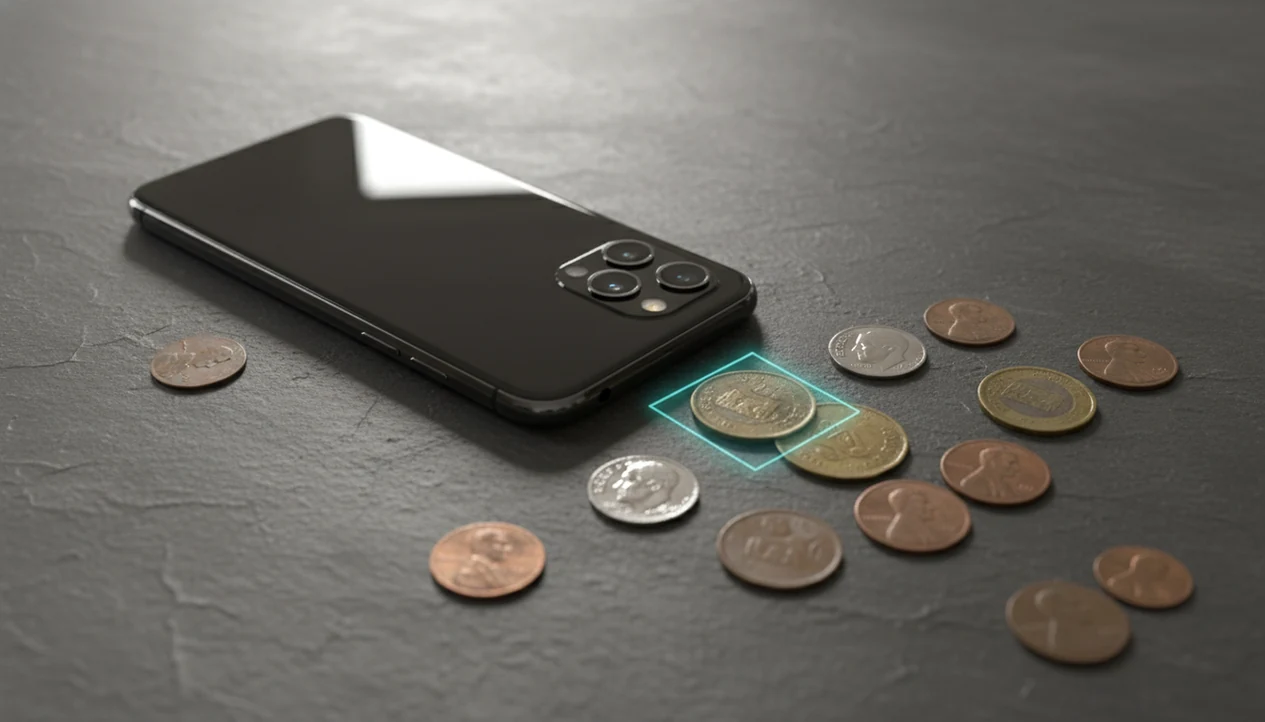
Replicas and counterfeits may show soft calligraphy, casting bubbles, edge seams, incorrect dimensions, artificial patina, or impossible combinations of ruler, date, and emblem. However, genuine hand-struck coins can also be irregular, so visual symptoms are not conclusive. Photo tools—including temporary Lens AI on iOS and AI Lens on Android—can suggest candidates but cannot authenticate metal or manufacture. Valuable ancient, silver, or gold pieces should be assessed by an appropriate specialist; see the ancient coin identifier and coin scam guide.
FAQ
How do I identify a coin with Arabic writing?
Photograph both sides, orient the text right to left, transcribe the inscription, identify the numeral system and calendar, and record the symbols, denomination, edge, weight, and diameter. Confirm all features against a reliable catalogue.
Which country is an Arabic-script coin from?
Arabic script alone cannot establish the country. Search for a formal country name, ruler, denomination, national emblem, and date. Persian, Ottoman Turkish, Urdu, and other non-Arabic languages also use Arabic-derived scripts.
How do I read Arabic numbers on a coin?
Identify whether they are Eastern Arabic or Persian forms, then copy each digit in order. Numeral strings are read left to right even though Arabic words run right to left. Compare worn digits with clearer numbers on the same coin.
How do I convert a Hijri coin date to a Gregorian year?
Determine whether the date is lunar Hijri, Solar Hijri, or an accession year with a regnal number. Use a calendar-specific converter or reference, then verify the result against the ruler and known issue period.
What does a crescent and star mean on a coin?
The motif has been used by multiple empires and countries and is not a unique national identifier. Its style, accompanying inscription, date, denomination, and other symbols are needed to determine the issuing authority.
How can I identify an Ottoman coin?
Look for the sultan’s tughra, accession or regnal information, Arabic-derived Ottoman text, denomination, mint, and characteristic reverse design. Confirm the ruler and date using an Ottoman coin catalogue because similar layouts span several reigns.
Can a photo app read Arabic-script coins accurately?
It can suggest text or visually similar coins, but stylized calligraphy, wear, glare, and unfamiliar numerals cause errors. It also cannot verify weight, metal, edge, or authenticity. Treat every result as a candidate requiring independent confirmation.
How can I tell whether an Arabic-script coin is fake?
Check calligraphy, date logic, mint style, weight, diameter, edge, and composition against authenticated examples. Seams or bubbles are warnings, but no single visual clue proves forgery. High-value pieces require specialist physical examination.