
Indian Coin Identification by Script, Edge Lettering, and Date
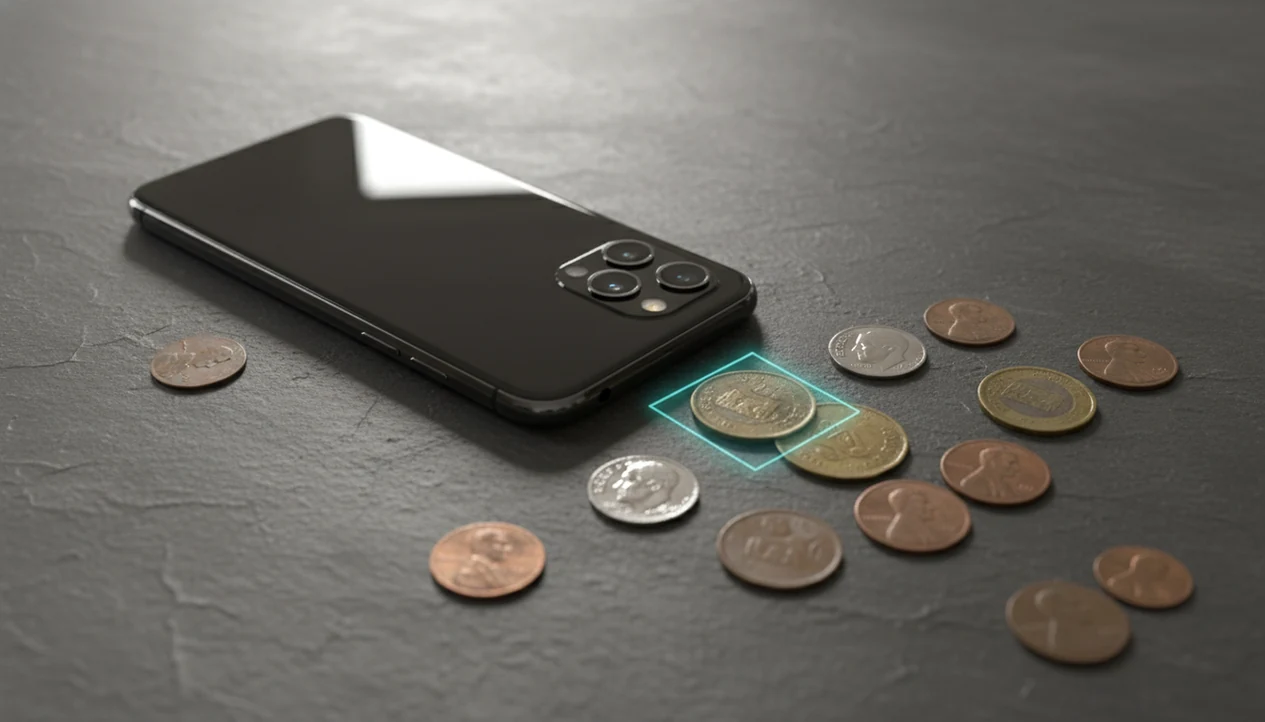


Indian coin identification can involve several governments, hundreds of princely states, multiple scripts, changing calendars, and denominations that no longer circulate. The most reliable method is to classify the coin by period, transcribe its inscriptions, interpret the date, and then confirm the result with its mint mark, edge, weight, diameter, and metal. Photograph both faces before handling the coin further, and never clean an unidentified piece.
Indian Coin Identification at a Glance
Begin with the largest clues. Look for a monarch, national emblem, princely-state ruler, deity, building, animal, wreath, or company name. Record every script present and check whether the text includes India, Bharat, Hindustan, a presidency, a state, or a ruler’s title. Note whether the piece is round, square, scalloped, holed, or irregular.
Measure the diameter, weight, and edge before searching. Then compare the complete evidence with a catalogue entry rather than selecting the first visually similar result. Indian coin types often retain a broad design while changing ruler, date, mint, metal, or denomination. A general world coin identifier can help classify an unfamiliar piece, while the coin script guide helps separate lettering systems.
British India, Princely State, and Republic Coins
British India coins commonly display an East India Company device or a British monarch such as Victoria, Edward VII, George V, or George VI. The reverse may show a denomination, date, wreath, floral design, or writing in several languages. Match the ruler’s title carefully because similar portraits and denominations can span different administrative periods.
Princely-state coinage is substantially more varied. A coin may name a local ruler, state, mint, emperor, or religious formula, sometimes in a regional script and sometimes in Persian. Shapes and manufacturing quality can differ from centrally issued machine-struck money. Republic of India coins generally use the Lion Capital of Ashoka, “भारत” and “INDIA,” a denomination, and a date. Commemorative designs may replace the standard reverse but should still match an official issue specification.
Devanagari, Urdu, Persian, Bengali, and English Scripts
Modern Indian coins often pair Devanagari with English. Devanagari letters typically hang from a horizontal headline, while Bengali has its own rounded forms and headline patterns. Urdu and Persian are written right to left in a connected Arabic-derived script. English may identify the monarch, issuing authority, denomination, or country even when another side uses a regional language.
Do not assume that Arabic-derived writing makes a coin Middle Eastern. Persian was widely used in Mughal and princely-state administration, and inscriptions may contain ruler names, titles, mint formulas, or religious phrases. Transcribe text exactly, preserving dots and character groups because a small mark can change the reading. If the orientation is uncertain, rotate the photograph and compare the suspected inscription with documented examples rather than relying on automated translation alone.
Reading Indian Coin Dates and Numerals
Indian coins may use Western Arabic digits, Devanagari numerals, Persian-style numerals, or dates based on calendars other than the Gregorian system. Some pieces include a regnal year, meaning the year of a ruler’s reign, rather than—or in addition to—a calendar year. A visible four-digit number should therefore be interpreted in context.
Identify the numeral set first, then locate any nearby word or symbol indicating year, reign, or era. Mughal coins may include Hijri and regnal information. Princely-state issues may use Vikram Samvat, Fasli, or another regional calendar. Republic coins normally use Gregorian dates. Do not apply a conversion formula until the calendar is known, and confirm the converted date against the ruler’s lifetime, issue period, denomination, and mint.
Edge Lettering and Security Features
The edge may be plain, reeded, patterned, or lettered. On some modern Indian coins, edge grooves and security patterns distinguish denominations or production varieties that otherwise look similar. Older and higher-value pieces may carry lettering or decorative elements that should match the official type. Photograph the entire circumference in overlapping sections because one image rarely captures all edge evidence.
Edge orientation can vary through normal production, so upside-down lettering is not automatically an error. More serious concerns include a casting seam, tool marks, missing expected details, an incorrect pattern, or an edge that does not match the claimed denomination. The coin edge identification guide explains how to record these features without damaging the piece.
Denominations, Mint Marks, and National Symbols
Look for denomination words and fractions such as rupee, anna, pice, paisa, or their equivalents in Indian scripts. Historical relationships changed over time, so a fraction cannot be interpreted without knowing the monetary system and period. On worn coins, compare the placement of letters and decorative separators rather than guessing from one faint numeral.
Mint marks may appear below the date, beneath a portrait, near an emblem, or elsewhere in the design. Modern Indian issues can use a dot, diamond, star, letter, or no mark to indicate a mint, but meanings depend on the coin and year. Symbols such as the Ashoka lions, chakra, tiger, peacock, grain ears, map, or parliament building can narrow the series. Confirm every mark against a date-specific catalogue.
Confirming Weight, Diameter, Shape, and Metal
Use callipers for diameter and a digital scale for weight. For non-round coins, record the maximum width and the point-to-point or flat-to-flat measurement. Compare the result with a specification for the exact date and mint, since Indian denominations sometimes changed size, metal, or shape while retaining similar inscriptions.
Visual color is only preliminary evidence. Copper, bronze, brass, nickel-brass, stainless steel, aluminium, silver, and plated compositions can change appearance through wear or corrosion. A magnet can provide a non-destructive clue, but magnetism does not establish a complete alloy. Follow the coin measurement and composition guide. Avoid acid, scratch, and density tests unless performed appropriately by a qualified specialist.
Rarity, Value, and Counterfeit Indian Coins
Value depends on exact attribution, authenticity, surviving population, demand, condition, and metal content. A scarce mint-date combination can be worth more than a similar common coin, while harsh cleaning, holes, solder, corrosion, or altered dates may reduce value significantly. Check completed sales for the same type, mint, date, variety, and comparable grade.
Counterfeits range from crude cast copies to altered mint marks and sophisticated struck pieces. Replicas of Mughal, princely-state, colonial, silver, and rare modern errors require particular caution. Compare calligraphy, die style, edge, weight, diameter, and metal with authenticated examples. Online identification—including temporary companion tools such as Lens AI on iOS or AI Lens on Android—cannot certify authenticity. For a potentially valuable piece, obtain an opinion from an established Indian-coin specialist or recognized grading service and review common coin scams.
FAQ
How do I identify an old Indian coin?
Classify its historical period, photograph both sides and the edge, transcribe every inscription, identify the date system, and record its dimensions and weight. Confirm the combined evidence against a specialist catalogue.
How can I read Urdu or Persian writing on an Indian coin?
Orient the connected script right to left and preserve dots when transcribing it. Look for ruler names, titles, mint formulas, and dates. Automated translation may misread stylized calligraphy, so compare the inscription with documented coins from the suspected ruler or state.
What do the mint marks on Indian coins mean?
Modern Indian mint marks can include dots, diamonds, stars, letters, or no mark, usually near the date. Their meanings depend on the year and type; a mark should be verified in a date-specific catalogue rather than interpreted in isolation.
How do I convert the date on an Indian coin?
First identify the numerals and calendar. Indian coins may use Gregorian, Hijri, Vikram Samvat, Fasli, regnal, or other dates. Apply the appropriate conversion only after identifying the system, then check the result against the ruler and issue period.
Why does an Indian coin have writing on its edge?
Edge lettering and patterns can identify a denomination, provide decoration, or deter clipping and counterfeiting. Compare the exact wording, spacing, and pattern with official specifications, while remembering that edge-letter orientation may vary normally.
Are old Indian silver coins valuable?
Some are, but silver content alone does not determine value. Exact type, ruler, mint, date, rarity, authenticity, condition, and collector demand matter. Consult the silver coin identifier and use comparable completed sales after confirming attribution.
Can an app tell whether an Indian coin is counterfeit?
No photo app can certify authenticity. Temporary companion tools such as Lens AI on iOS or AI Lens on Android can help generate identification candidates, but physical measurements and specialist examination remain necessary.