
US Mint Mark Lookup By Coin Type And Mint Location
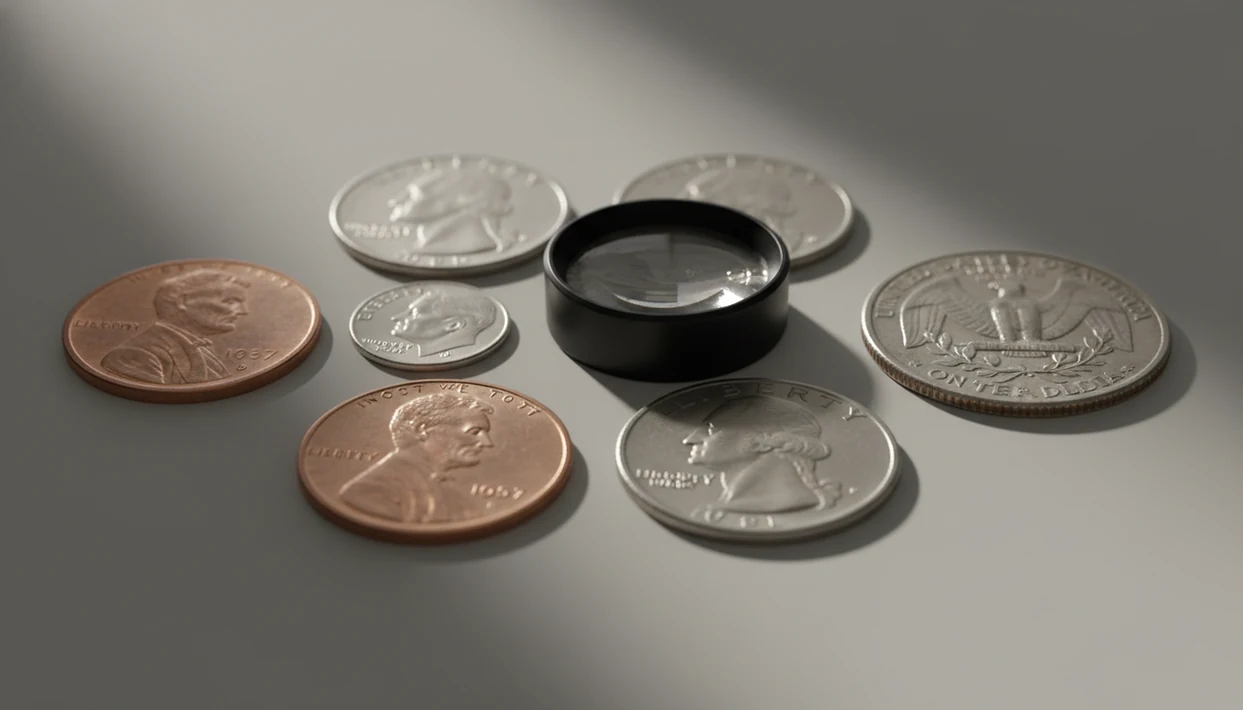


A US mint mark lookup helps you find the small letter or letters on a coin that identify the U.S. Mint facility that struck it, such as P, D, S, W, CC, or O. The exact location depends on the coin type and era, and the mint mark matters because it can separate common coins from scarcer date-and-mint combinations.
Definition: A U.S. mint mark is a small letter or letter pair on a coin that identifies the Mint facility where that coin was produced.
- Common U.S. Mint marks include P for Philadelphia, D for Denver, S for San Francisco, W for West Point, CC for Carson City, and O for New Orleans.
- Mint mark locations vary by denomination and era, so always check the coin type, date, and side of the coin before assuming a mark is missing.
- A mint mark can affect value, but condition, mintage, variety, authentication, and collector demand matter just as much.
U.S. Mint Mark Lookup At A Glance
A mint mark lookup means checking the letter on a U.S. coin, then matching it to the Mint facility and production record. The main marks beginners see are P for Philadelphia, D for Denver, S for San Francisco, W for West Point, CC for Carson City, and O for New Orleans.
No visible mark does not automatically mean rare. Many Philadelphia coins, especially older circulation pieces, were struck without a P. Start with the obverse, confirm the date, then check the usual mint mark location for that denomination.
Small letters matter.
Photo-based coin lookup tools can help identify coins from images and provide rarity, grade, and estimated value range context. Treat any photo-first result as a starting point, not a formal appraisal.
How US Mint Mark Lookup Works
US mint mark lookup works by combining three clues: denomination, date, and mint mark. Together they form the attribution key, meaning the basic identity used to match a coin to the correct Mint facility and production record.
The mark itself points to a facility, such as Denver or San Francisco, but it only makes sense beside the coin type and year. A blank space can be meaningful too: many Philadelphia coins were issued with no visible mint mark, so “no mark” often means normal Philadelphia production rather than an error. Keep the tasks separate as you work:
- Identify the denomination and full date before reading the mint mark.
- Match the mark, or absence of one, to the facility rules for that series and year.
- Use mintage and issue records to understand how common that date-and-mint pair may be.
- Treat authentication, grading, and value estimation as later checks, because a lookup names the coin but does not prove originality, condition, or market price.
5 U.S. Mint Mark Facts Beginners Should Know
- A U.S. mint mark identifies the production facility that struck the coin, not the place where the coin was found.
- P, D, S, W, CC, and O are among the most searched U.S. Mint marks because they appear on widely collected series.
- Philadelphia coins often had no mint mark in many eras, so a blank area near the date is usually normal.
- Mint mark placement changes by denomination and year; a quarter flipped for the eagle side may reveal a mark that was not near the portrait.
- Mint marks influence value only when combined with the date, condition, mintage, survival rate, variety status, and collector demand.
For Lincoln cents, a beginner often turns the coin under a kitchen light to find the tiny letter below the date. That slow check prevents many wrong “rare no mint mark” assumptions.
U.S. Mint Mark System For Coin Production
A U.S. mint mark connects a coin to the facility that struck it and helps collectors match the coin to a mintage record. It is an attribution clue, not proof that the coin is genuine.
The Mint uses multiple facilities because national coin demand is large. In fiscal year 2023, the United States Mint produced about 11.9 billion circulating coins across its facilities, according to U.S. Mint circulating coin production figures (https://www.usmint.gov/about/production-sales-figures/circulating-coins-production). That scale explains why the same denomination and year can exist with different marks.
How U.S. mint marks work is simple: each mark is a production identifier tied to a facility, die preparation system, and recorded output. In plain terms, the letter tells you where the coin was made.
A mint mark can support identification, but it cannot authenticate metal, surface, strike, or originality. Counterfeits and altered coins may show convincing letters, especially on valuable date-and-mint combinations.
Before You Start A US Mint Mark Lookup
Before you start a US mint mark lookup, set up the coin so you can read small details without harming the surface. The goal is to capture the date, denomination, and visible mark under controlled light before making any value assumption.
- Place the coin on a soft, nonabrasive surface, such as a clean cotton towel or felt pad, and handle it with clean hands by the edges.
- Use angled light instead of blasting the coin straight on; a tilted desk lamp often reveals a tiny D or S better than overhead glare.
- Avoid cleaning, rubbing, dipping, or polishing the coin before checking the date and mark, because surface changes can reduce collector interest and hide useful evidence.
- Keep a magnifier, phone camera, and denomination reference nearby so you can compare the correct mint mark location for that coin type and year.
- Record the full date first, then note the mint mark or absence of one in the same line, such as “1946 dime, S” or “1964 nickel, no mark.”
- Set aside coins with heavy damage, odd tooling, suspicious letters, or unusual surfaces for expert review before labeling them rare.
U.S. Mint Mark Letters And Mint Locations
Common U.S. Mint marks map to both active facilities and closed branch mints. The same letter can mean different things in different coin families, so date and denomination must stay attached to the mark.
| Mint mark | Mint location | Beginner note |
|---|---|---|
| P | Philadelphia | Appears on many modern issues, but older Philadelphia coins often had no mark. |
| D | Denver | Usually Denver on modern coins; on certain 19th-century gold coins, D means Dahlonega. |
| S | San Francisco | Found on circulation-era coins and now strongly associated with proof coinage. |
| W | West Point | Often seen on bullion, commemoratives, and selected modern issues. |
| CC | Carson City | A closed branch mint with finite historical output from 1870 to 1893. |
| O | New Orleans | A closed branch mint found on many 19th- and early 20th-century issues. |
A good photo-based coin identification workflow should deliver likely attribution and research direction, not guaranteed authentication or certified value.
How To Use A US Mint Mark Lookup By Coin Type
Use a mint mark lookup by identifying the coin first, then checking the correct location for that denomination and year. The date and mint mark are the basic pair used in most mintage and value references.
1. Identify the denomination and date
- Start with the denomination, then read the full date before judging the mint mark.
2. Check the usual mint mark location
- Inspect the correct side under angled light and modest magnification; a phone flashlight can create glare on prooflike surfaces.
3. Read the letter or confirm no mark
- Compare the visible letter to known U.S. Mint marks, or note that no mark is present.
4. Compare against mintage and rarity data
- Match the date, denomination, and mint mark to mintage records, variety notes, and recent value references.
5. Photograph the coin for a second check
- Take clear photos of both sides when using AI coin identification tools, preferably on a neutral surface without harsh reflection.
For beginners, denomination-first lookup is often easier than letter-first lookup because mint mark locations change by coin series.
Mint Mark Locations By U.S. Coin Denomination
Mint mark locations depend on denomination, design, and era. A quick table helps, but always compare against a trusted reference before assigning rarity.
Cents, nickels, dimes, and quarters
| Coin type | Common mint mark location |
|---|---|
| Lincoln cent | Usually below the date on the obverse. |
| Jefferson nickel | Varies by era; wartime silver nickels show large reverse marks above Monticello. |
| Roosevelt dime | Commonly near the date or portrait area, depending on year. |
| Washington quarter | Often near the date or portrait area on modern issues; older issues may differ. |
Half dollars, dollar coins, and silver dollars
| Coin type | Common mint mark location |
|---|---|
| Kennedy half dollar | Placement varies by era, often near the date or truncation area. |
| Modern dollar coins | Follow series-specific rules, including edge lettering on some issues. |
| Morgan dollar | Usually on the reverse near the wreath. |
| Peace dollar | Usually on the reverse near the eagle or tail feathers. |
If you are sorting cents first, a penny identifier app can help keep date-and-mint notes organized.
Old U.S. Mint Marks And Closed Branch Mints
Historic mint marks attract attention because their facilities are closed and their production is finite. That scarcity can increase demand, but it does not make every worn example valuable.
- Carson City, CC: Carson City coins are collectible because the mint operated only from 1870 to 1893. A seller weighing a silver half dollar may still need the exact date, grade, and authenticity checked.
- New Orleans, O: New Orleans coins appear on many 19th- and early 20th-century U.S. issues, including silver and gold series.
- Dahlonega, D: Dahlonega D gold coins should not be confused with modern Denver D coins.
- Altered historic marks: Branch mint coins may require expert authentication because added or tooled mint marks exist.
Finite output creates collector interest, not automatic high value. Wear, cleaning, damage, and demand still decide the market range.
U.S. Mint Mark Value Checks And Rarity Clues
Does a mint mark make a U.S. coin valuable? Sometimes, but only when the date plus mint mark points to a scarcer issue, stronger demand, or a recognized variety.
The date-and-mint pair is the basic attribution unit. After that, check mintage, survival rate, grade, strike quality, variety status, and recent sale references. Common modern P, D, or S marks often add little premium by themselves.
Proof, bullion, and commemorative coins may follow different rules. Some are made for collectors rather than normal circulation, so their mint marks need series-specific context.
Photo-based lookup can support a first-pass workflow for rarity hints, grade context, and collection organization. A US coin identifier is especially useful when mixed nickels, dimes, and foreign coins come out of an inherited coffee can onto a towel.
A mint mark usually matters most when it changes the coin’s exact catalog identity.
Common Coin Mint Mark Lookup Mistakes
The biggest mistake is assuming no mint mark means rare. On many Philadelphia issues, no visible mark is normal and may point to a very common circulation find.
Do not assume D always means Denver across all U.S. coin history. On certain 19th-century gold coins, D means Dahlonega. That difference is not a small footnote.
Do not use the mint mark alone to estimate value. A low-mintage coin with heavy damage, cleaning, or corrosion may sell for far less than a clean example in the same date-and-mint pair. Wiping dust from a cardboard 2x2 flip is fine; cleaning the coin itself is not.
Also watch for designer initials, privy marks, stars, and decorative letters. They can look important under magnification but are not mint marks. If something looks doubled or misplaced, compare it with an error coin identifier before labeling it a variety.
Limitations
Mint mark lookup is useful, but it cannot prove everything about a coin. Treat it as one identification step, not a final verdict.
- Mint mark lookup cannot authenticate a coin by itself.
- Counterfeits and altered coins may include fake, added, or moved mint marks.
- Wear, corrosion, rim damage, or weak strikes can hide or distort small letters.
- Historical Philadelphia mint mark rules are inconsistent, especially for beginners expecting every coin to show a P.
- Modern bullion and collector issues may not follow circulation coin patterns.
- AI coin identification depends on image quality, lighting, angle, and current reference data.
- A visible mint mark may have no meaningful value premium on common modern coins.
- Dark wooden table photos can make copper cents look redder than they are, which affects condition impressions.
For silver questions, such as “Is this silver or just old?” a dime identifier app can help separate date, composition, and mint mark clues.
Close-Up Mint Mark Photo Setup
Use side lighting and fill the frame with the mint-mark area after you already know the denomination and date. Soft shadows reveal raised letters better than direct flash, which can flatten a small mint mark into glare.
Confirm the expected mint-mark location for that series and year, then compare altered or added marks against authentic references. Pair this lookup with the US coin identifier and key date guide.
FAQ
What is a mint mark on a coin?
A mint mark is the letter or letters on a coin that identify the Mint facility that struck it. Examples include P, D, S, W, CC, and O.
Where is the mint mark on a U.S. coin?
The location depends on the denomination and year. Lincoln cents usually show it below the date, while many Morgan and Peace dollars show it on the reverse.
What does a D mint mark mean on a U.S. coin?
On most modern U.S. coins, D means Denver. On certain 19th-century gold coins, D means Dahlonega.
What does an S mint mark mean on a U.S. coin?
An S mint mark means San Francisco. On modern U.S. issues, S is strongly associated with proof coinage.
What does no mint mark mean on a U.S. coin?
No mint mark often means the coin was struck at Philadelphia. It does not automatically mean the coin is rare.
What is the rarest U.S. mint mark?
There is no single rarest mint mark across all U.S. coins. Rarity depends on the exact date, denomination, mintage, survival rate, and condition.
Do mint marks affect coin value?
Mint marks can affect value when paired with the date, condition, mintage, variety status, and collector demand. The letter alone is not enough.
Can a coin mint mark be fake?
Yes, altered or counterfeit coins may have added or fake mint marks. Valuable coins should be reviewed by a qualified expert or grading service.
How do I check a coin's value using the mint mark?
Identify the denomination, date, mint mark, and condition first. Then compare the coin with mintage data, variety references, and recent market results.