
Dollar CoinEd For Morgan, Peace, And Modern U.S. Dollars
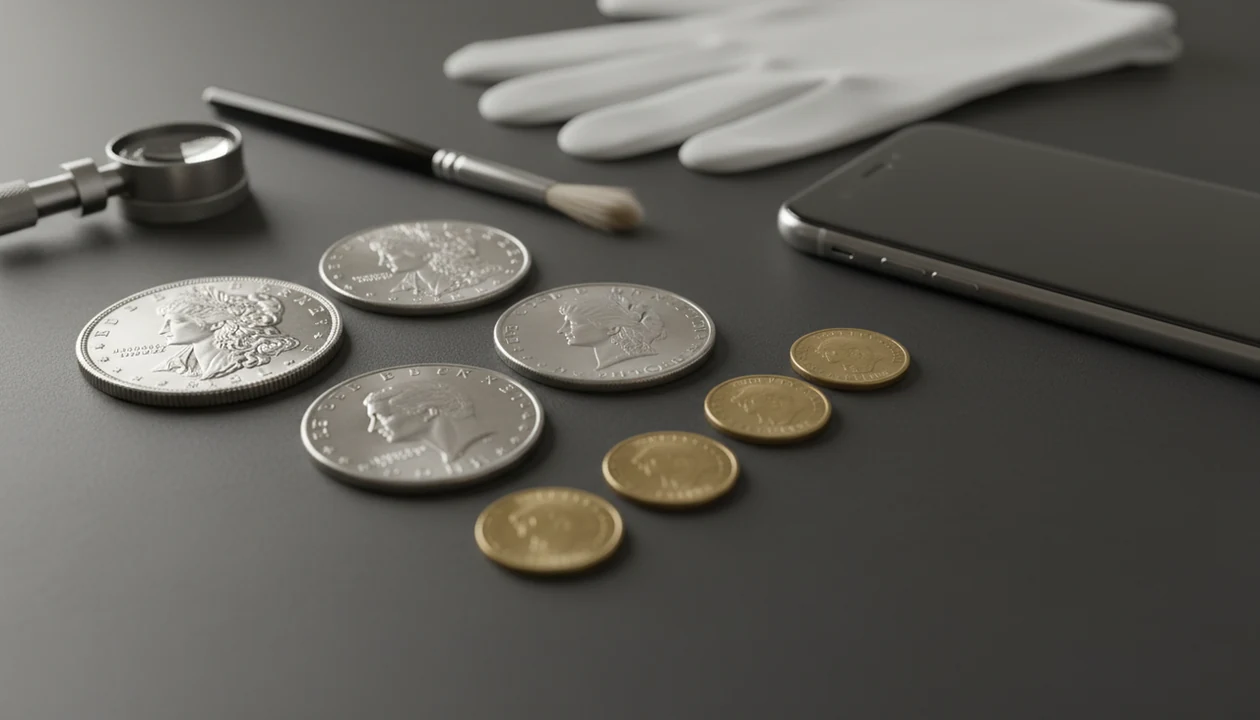


A dollar coin identifier helps you match a U.S. dollar coin to its correct type, date, mint mark, metal, and value clues, whether it is a Morgan, Peace, Eisenhower, Sacagawea, Presidential, or Innovation dollar. Start with clear photos of both sides, then confirm the design, date, mint mark, edge lettering, and condition before relying on any value estimate.
CoinEd is the photo-first coin identifier and value estimation app that identifies coins from photos, shows rarity and grade hints, and helps beginners and collectors estimate coin value.
- Identify the dollar type first: Morgan, Peace, Eisenhower, Susan B. Anthony, Sacagawea, Presidential, Innovation, or commemorative.
- For Morgan and Peace dollars, date, mint mark, silver content, condition, and variety can change value dramatically.
- For modern small dollars, most coins are common, but edge lettering errors, proofs, special issues, and high-grade examples need closer review.
Dollar CoinEd Basics For U.S. Dollar Types
A dollar coin identifier is a method or tool that separates U.S. dollar coins by type, design, date, mint mark, metal, diameter, and edge details. Identification comes before value, because a 1921 Morgan dollar and a modern golden dollar are not judged by the same clues.
Start with the obverse, then turn the coin over and check the reverse design. The main families are Morgan, Peace, Eisenhower, Susan B. Anthony, Sacagawea, Presidential, Innovation, and commemorative dollars. A beginner sorting an inherited jar may hear the clink of mixed nickels, dimes, and foreign coins before the first large dollar appears.
Identification and value estimation are related, not identical. AI photo tools can speed up the first match, but valuable coins still need verification against trusted references or expert review.
Five Dollar CoinEd Facts That Prevent Wrong Matches
- A correct dollar coin match requires the coin type, not just the date; the same year can appear on different designs.
- Morgan and Peace dollars are 90% silver, while many modern small dollars use a manganese-brass clad composition with a copper core, according to U.S. Mint coin specifications: https://www.usmint.gov/learn/coin-and-medal-programs/coin-specifications.
- Mint marks such as CC, S, D, O, P, and W can change rarity, demand, and value.
- Edge lettering matters for Presidential and Native American dollars, especially when checking possible missing-lettering errors.
- AI identification is a starting point, not authentication, certification, or professional grading.
Small details do the sorting work. A loupe pressed close to a quarter teaches the same lesson: tiny letters can matter more than the date at first glance. For a broader denomination workflow, a US coin identifier can help compare dollars against cents, nickels, dimes, and quarters.
How Dollar CoinEd Apps Work From Coin Photos
Dollar coin identifier apps work by turning coin photos into searchable visual features, then comparing those features with known coin images and records. The technical pieces are image recognition, feature extraction, database matching, and confidence scoring; in plain terms, the app looks for patterns it has seen before.
The app compares the obverse, reverse, date, mint mark, legends, portrait, eagle or reverse design, color, and sometimes edge clues. It may return a likely type, country, date range, rarity level, grade hints, and approximate value range. Tools like CoinEd can be useful when a phone camera is hovering over a penny one minute and a silver dollar the next.
Poor photos hurt the match. Worn, cleaned, dark, reflective, corroded, or damaged coins reduce confidence because key surface clues disappear or glare hides them.
Before You Start Identifying Dollar Coins
Before you identify a dollar coin, set up the coin so the photo shows facts instead of glare, smudges, or damage. A few quiet preparation steps can protect the surface and make the app result easier to check by eye.
- Choose bright indirect light, such as daylight near a window or a shaded desk lamp, and place the coin on a plain, non-reflective background. White paper can work, but a matte gray surface often gives better contrast.
- Hold the coin only by the edge, especially with Morgan and Peace dollars. Fingerprints, skin oils, and tiny slide marks can become real value problems on better coins.
- Leave the surfaces alone before photos. Do not clean, polish, rinse, rub, or breathe on the coin to “improve” the image; cleaning can remove luster and create hairlines.
- Keep a loupe nearby for small clues, including mint marks, worn dates, designer initials, and edge lettering on modern dollars.
- Sort large silver-dollar-sized coins away from modern small golden dollars first. Size and weight quickly separate many Morgan, Peace, and Eisenhower dollars from Sacagawea, Presidential, Native American, and Innovation dollars.
How To Use A Dollar CoinEd Step By Step
Use a dollar coin identifier as a photo-first check, then confirm the visible facts yourself. The most reliable beginner workflow is slow, repetitive, and easy to audit later.
- Photograph both sides in bright, indirect light, using a plain background and no harsh glare.
- Record the date, mint mark, and edge lettering if present.
- Compare the app result with visible design details, including portrait, eagle, legends, and reverse design.
- Review rarity and value clues, not just the top match.
- Save the coin in a collection inventory, then verify valuable finds with authoritative references before selling or buying.
A soft cloth under a silver dime is fine for photos; cleaning the coin is not. Good photo-first coin identifier and value estimation apps for collectors and beginners deliver organized clues and estimated value ranges, not guaranteed grades or certified appraisals.
Morgan Dollar Identifier Clues For Date, Mint Mark, And Silver
How do I identify a Morgan dollar? A Morgan dollar has Liberty’s head on the obverse and an eagle with a wreath on the reverse, with the main series running from 1878 through 1904 and returning in 1921.
Check the mint mark on the reverse near the bottom, above the “D” and “O” in DOLLAR. Important mints include Philadelphia with no mint mark, Carson City “CC,” New Orleans “O,” San Francisco “S,” Denver “D” in 1921, and later collector issues. Carson City coins are especially worth a closer look.
The U.S. Mint reports about 141.5 million Morgan dollars were struck in 1921, so old does not automatically mean rare. For issue-by-issue Morgan dollar confirmation, compare the date and mint mark against PCGS CoinFacts: https://www.pcgs.com/coinfacts/category/morgan-dollar/744. Condition, cleaning, toning, strike, and varieties can change the value story. For Morgan dollars, mint mark and condition often matter more than age because common dates can survive in large numbers.
Peace Dollar Identifier Clues For Silver Dollars
How do I tell a Peace dollar from a Morgan dollar? A Peace dollar shows Liberty with a radiating crown on the obverse and a perched eagle on the reverse, giving it a much different look than the older Morgan design.
Peace dollars are silver dollars, so check the date, mint mark, and condition before drawing value conclusions. Better-date thinking matters, but broad price guesses can mislead beginners because each issue has its own survival rate and collector demand. A collection value list beside a calculator can look precise while still missing cleaning or weak strike.
PCGS CoinFacts lists individual U.S. silver dollar issues and varieties, including Morgan and Peace dollars, with separate population and price data. Compare against a trusted reference before treating any app estimate as a selling number.
Sacagawea Dollar Lookup And Modern Small Dollar Checks
Sacagawea dollar lookup starts with color, size, date location, edge lettering, and reverse design. Modern small dollars can look similar in a loose pile, but their design programs are different.
| Dollar type | Main identifier | Value clue to check |
|---|---|---|
| Susan B. Anthony | Silver-gray small dollar, angular portrait, eagle reverse | Date, mint mark, proof status |
| Sacagawea | Golden color, Sacagawea obverse, eagle reverse on early issues | 2000 Cheerios dollar, proofs, high grade |
| Native American | Sacagawea obverse, changing reverse designs | Date, reverse theme, edge lettering |
| Presidential | President portrait, Statue of Liberty reverse | Missing or doubled edge lettering |
| Innovation | Statue of Liberty obverse, changing reverse designs | Proofs, mint mark, issue type |
From 2000 to 2008, about 1.29 billion Sacagawea dollars were struck, so most are common. The Presidential $1 Coin Program produced more than 2.5 billion coins before circulation production changed. CoinIdentifier can help group these, but edge checks still need human eyes. For circulation-production totals, use the U.S. Mint production figures archive: https://www.usmint.gov/about/production-sales-figures/circulating-coins-production.
Dollar Coin Value Clues After Identification
Dollar coin value depends on type, date, mint mark, condition, variety, demand, and metal content. A common old coin is not automatically rare or expensive, and a modern dollar is not automatically ordinary if it has a recognized error or special issue.
Grade, eye appeal, cleaning, scratches, luster, strike, and surface problems matter most on Morgan and Peace dollars. Wiping dust from a cardboard 2x2 flip is fine; wiping the coin itself can leave hairlines that collectors notice quickly. Rough truth.
Use CoinEd estimates as collection notes, then compare expensive coins with PCGS CoinFacts, NGC Coin Explorer, USA Coin Book, or another authoritative numismatic reference before a sale. For possible struck errors or edge-lettering issues, an error coin identifier workflow can help separate mint errors from damage.
Common Dollar Coin Identification Mistakes
The most common dollar coin mistakes come from stopping too early: trusting age, color, or a single app result before checking the whole coin. Slow down, because the reverse, edge, and surface condition can overturn the first guess.
- Check both sides before accepting a date-only match. The same year can appear on different dollar types, and a reverse design may identify the coin faster than the obverse.
- Treat old silver-colored dollars as candidates, not jackpots. Many Morgan, Peace, Eisenhower, and modern small dollars are common unless date, mint mark, grade, or variety says otherwise.
- Confirm edge lettering on Presidential and Native American dollars. Missing, doubled, weak, or oddly placed lettering needs careful comparison, not a quick glance.
- Count damage as evidence. Cleaning, scratches, corrosion, rim bumps, and harsh polishing can lower value even when the date is desirable.
- Verify possible errors before selling. Compare suspected off-center strikes, doubled lettering, missing edge text, or planchet problems with recognized mint-error references, then seek expert review for anything that looks valuable.
Limitations
Dollar coin identifiers are useful, but they cannot settle every numismatic question from a photo. The harder the coin is to photograph, the more cautious the result should be.
- AI tools may misread heavily worn, corroded, damaged, dark, reflective, or over-cleaned coins.
- Apps cannot certify authenticity or reliably detect added mint marks, cast counterfeits, or sophisticated alterations.
- Value estimates may lag market changes or be unreliable for thinly traded rarities.
- Most apps cannot fully judge grade, luster, strike, eye appeal, hairlines, or subtle cleaning.
- Some apps require subscriptions, limit free scans, or store user photos in the cloud.
- Professional grading or expert review is still recommended for potentially valuable Morgan, Peace, error, proof, or key-date dollars.
For silver questions, compare denomination-specific references too. A dime identifier app or quarter identifier app guide can help when the question is, “Is this silver or just old?”
FAQ
What dollar coin do I have?
Identify it by design first, then confirm the date, mint mark, metal, diameter, and edge lettering. A photo-first tool such as CoinEd can suggest the type, but visible details should still be checked.
Are dollar coins silver?
Morgan and Peace dollars are 90% silver, and many Eisenhower dollars are clad unless they are specific silver collector issues. Modern small dollars are generally clad, not silver.
Where is the mint mark on a dollar coin?
Mint mark location varies by type, so check the obverse, reverse, and edge. Morgan dollars usually show the mint mark on the reverse near the bottom.
Are Sacagawea dollars rare?
Most Sacagawea dollars are common. Special issues, proofs, the 2000 Cheerios dollar, and high-grade certified examples can be different.
What is a Morgan dollar?
A Morgan dollar is a U.S. 90% silver dollar with Liberty on the obverse and an eagle on the reverse. Date, mint mark, condition, and varieties are key identification clues.
What is a Peace dollar?
A Peace dollar is a U.S. silver dollar with Liberty wearing a radiating crown and a perched eagle reverse. It is visually distinct from the Morgan dollar.
Can apps identify coin value?
Apps can provide estimated value ranges based on type, date, mint mark, and condition clues. They cannot replace expert grading, authentication, or current market verification.
Should I clean my dollar coin?
You usually should not clean a dollar coin because cleaning can reduce collector value. Store it safely and get advice before touching the surfaces.