
Coin Weight, Diameter, and Composition Lookup for Coin Identification
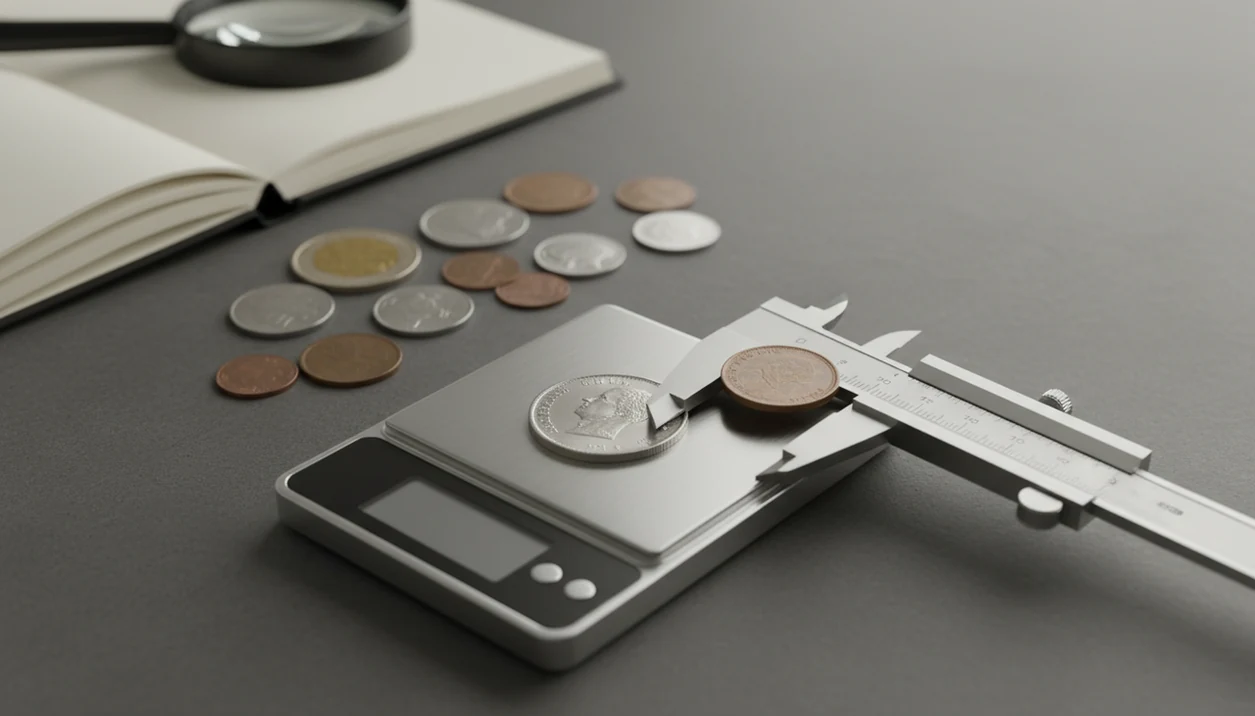


Use a coin weight diameter composition lookup by measuring the coin in grams and millimeters, then matching those numbers with official mint specifications and the coin’s visible design. The best workflow is photo identification first, measurement second, and composition or edge checks third, because a single spec can mislead when a coin is worn, damaged, or counterfeit.
Definition: Coin specifications are the official weight, diameter, thickness, edge, and metal composition standards used to identify a coin by type, denomination, country, and issue period.
TL;DR
- Measure weight with a 0.01 g digital scale and diameter with calipers before comparing the coin to official specifications.
- Use weight, diameter, composition, edge, date, mint mark, and photos together; no single measurement proves identity by itself.
- Large deviations can signal wear, damage, wrong planchet errors, plated counterfeits, or a different coin type.
Coin Weight Diameter Composition Basics at a Glance
Coin weight, diameter, and composition are the three fastest physical checks for confirming a likely coin type. Weight is measured in grams, diameter is measured in millimeters, and composition means the metal alloy, plating, or clad structure used to make the coin.
Official mints set these specifications through law, regulation, or mint documentation. For U.S. circulating coins, the legal weights, diameters, and metal standards are listed in 31 U.S.C. §5112, including the quarter at 5.67 grams and 0.955 inch in diameter source.
Specs narrow the answer. They don't certify it.
Photo-based coin lookup can help by starting with images, then adding specs, rarity hints, and value context. Still, rare coins and suspected counterfeits deserve expert authentication.
5 Coin Specifications Facts for Faster Coin Weight Lookup
- Official specs are broader than weight. Coin specifications often include weight, diameter, thickness, edge style, and composition, not just one number on a scale.
- Weight plus diameter beats either one alone. A worn coin can lose metal, but it usually cannot change into another official diameter without damage.
- Composition changes several clues at once. Metal affects color, magnet response, density, edge layers, and sometimes melt value context. If the coin might be silver, a silver coin identifier workflow adds useful date and alloy checks.
- Damage can shift measurements. Wear, corrosion, cleaning, clipping, bending, holes, and rim filing can all move a real coin away from its expected spec.
- Photos work better with measured specs. AI photo recognition becomes more reliable when a user adds weight and diameter, especially on dark wooden tables where copper cents can look redder than they are.
How Coin Weight Diameter Composition Lookup Works
A coin weight diameter composition lookup works by using photos to narrow possible matches, then using measured specifications to confirm or reject those matches. Image features identify the obverse, reverse design, lettering, date, mint mark, and edge, while the scale and calipers test whether the candidate physically fits.
Good lookup systems use tolerance-aware matching. That means a circulated dime does not need to hit a perfect factory number, but a large mismatch matters. U.S. law lists modern circulating weights and diameters such as the half dollar at 11.34 grams and 1.205 inches, quarter at 5.67 grams and 0.955 inch, dime at 2.268 grams and 0.705 inch, nickel at 5 grams and 0.835 inch, and cent at 3.11 grams and 0.75 inch under 31 U.S.C. §5112 source.
Composition is the next filter. Copper-nickel, silver, gold, plated steel, and clad coins can look similar in weak light, but they behave differently in weight, edge layers, magnetism, and wear.
Coin Diameter Lookup Tools and Measurement Setup
Use a digital scale accurate to 0.01 g and calipers that read millimeters before trusting a coin diameter lookup. Weigh the coin dry, loose, and out of flips, tape, capsules, or stapled holders.
Scale accuracy for coin weight lookup
Place the scale on a flat table, zero it, and weigh the coin by itself. A cardboard 2x2 flip can be dusty enough to bother you, but wipe the holder, not the coin. Cleaning the coin itself can damage surfaces and reduce collector value.
Caliper placement for coin diameter lookup
Measure across the widest point and avoid bent rims, clipped areas, or obvious dents. Record the date, mint mark, edge type, color, magnet response when relevant, and clear photos of both sides. A loupe pressed close to a quarter can reveal a mint mark that the camera missed.
5 Steps to Use Coin Weight Diameter Composition Specs
Use coin specifications as a sequence, not a single yes-or-no test. For beginners, measuring likely candidates is often easier than searching every coin ever minted because the design, country, and date already remove most possibilities.
1. Photograph both coin faces
Start with clear obverse, reverse, and edge photos in even light. A family kitchen light over coin piles is workable if glare is controlled.
2. Measure weight and diameter
Enter or record the exact weight in grams and diameter in millimeters. Keep the raw numbers in your collection notes.
3. Match likely coin specifications
Compare the measurements against likely official candidates first. Date, denomination, portrait, country name, and reverse design should guide the search.
4. Check composition and edge clues
Look for color, edge layers, magnetism, and known alloy changes. For uncertain metal, a tool that can check coin metal can support the visual check.
5. Review mismatches and red flags
Flag major mismatches for more research, professional grading, or counterfeit review. Don't force a match just because the design looks close.
Coin Specifications Chart Examples for U.S., Euro, and Australian Coins
Specifications vary by country, date, mint, and metal era; verify each candidate separately.
| Coin example | Weight | Diameter | Composition notes |
|---|---|---|---|
| U.S. half dollar | 11.34 g | 1.205 in | Modern clad, copper core with 75% copper and 25% nickel outer layers |
| U.S. quarter | 5.67 g | 0.955 in | Modern clad, same outer-layer alloy structure |
| U.S. dime | 2.268 g | 0.705 in | Modern clad, small diameter makes caliper placement important |
| U.S. nickel | 5.00 g | 0.835 in | 75% copper and 25% nickel alloy |
| U.S. cent | 3.11 g | 0.75 in | Legal cent spec; real-world types vary by date and metal era |
| Euro €2 | varies by issue spec | 25.75 mm | Euro common-side diameter per European Commission source |
| Euro €1 | varies by issue spec | 23.25 mm | Diameter helps separate nearby denominations |
| Euro 50 cent | varies by issue spec | 24.25 mm | Larger than €1 despite lower denomination |
| Australia 1966 50 cent | 13.28 g | 31.65 mm | 80% silver, 20% copper per the Royal Australian Mint source |
| Australia 1969 50 cent | 15.55 g | 31.65 mm across flats | 12-sided copper-nickel type |
Never assume coins of the same denomination worldwide share the same specs.
Common Coin Weight Lookup Mistakes and Counterfeit Red Flags
Looking similar in photos does not mean two coins share the same specification. A common modern clad coin, an older silver issue, and a plated counterfeit may all land in the same visual neighborhood.
- Wrong physical spec: wrong weight, wrong diameter, or a diameter that only fits after measuring a damaged rim.
- Wrong edge: missing reeds, incorrect lettering, cast-looking seams, or an edge that does not match the type.
- Wrong metal behavior: odd color, plating bubbles, unexpected magnet response, or impossible alloy clues.
- Damage mistaken for rarity: heavy wear can lower weight, and bending can distort diameter.
- Mint error confusion: a wrong planchet or clipped planchet is possible, but it needs evidence beyond one bad number.
A good ai coin identification, rarity lookup, and collection value estimation app for collectors and beginners delivers likely IDs, spec checks, and organized research notes, not guaranteed authentication or instant certified grades.
Coin Identification Verification with Photos, Specs, Rarity, and Value Context
Final coin identification is a cross-check among images, specifications, date, mint mark, edge, and composition. Start with the obverse, confirm the reverse design, then compare the physical measurements against the most likely official candidates.
Photo identification can suggest likely matches, rarity clues, grade hints, and value context. Use software as a record-building aid, not as a substitute for a grading service when money or authenticity is at stake.
Save measurements, photos, and notes when a coin is worth a closer look. A binder page heavy with state quarters becomes more useful when each slot has date, mint mark, weight, and diameter notes. For world issues, a world coin identifier can help narrow country and denomination before you compare specs.
Limitations
Specification lookup is useful, but it cannot prove everything. Treat mismatches as clues, not final verdicts.
- High-quality counterfeits can match weight and diameter closely.
- Heavy wear, corrosion, cleaning, bending, holes, clipping, and environmental damage can change measurements.
- Official tolerance ranges may be hard to find for some countries, dates, or coin types.
- Composition cannot always be proven from appearance alone without testing.
- Plated, clad, and debased coins can be difficult to distinguish visually.
- A scale or caliper can be miscalibrated and create false mismatches.
- Rare coins, suspected counterfeits, and valuable errors may need professional authentication.
- Melt value is not the same as collector value, especially for silver dates, varieties, and condition-sensitive coins. The melt value vs collector value debate matters before you assume metal content sets the price.
Organized scans and notes help with research, but they do not replace certified grading, metallurgical testing, or an in-hand expert review.
FAQ
How do I weigh a coin accurately at home?
Use a calibrated digital scale that reads to 0.01 g. Remove the coin from any holder, capsule, tape, or flip before weighing it.
How do I measure a coin’s diameter?
Use calipers and measure across the widest point of the coin. Record the result in millimeters and avoid bent, clipped, or damaged areas.
What does coin composition mean?
Coin composition means the metal alloy, plating, or clad structure used to make the coin. Examples include copper-nickel, silver-copper, plated steel, and copper core clad coinage.
Can a coin’s weight identify it by itself?
Weight can narrow possible matches, but it should not identify a coin by itself. Pair it with diameter, design, date, mint mark, edge, and composition.
Why is my coin lighter than the official weight?
A coin may be lighter because of wear, corrosion, cleaning, holes, clipping, or other damage. It can also suggest a wrong planchet error or counterfeit, depending on the rest of the evidence.
Are official coin diameters exact?
Official diameters are target specifications, but real coins can show mint tolerance and measurement variation. Calipers, rim damage, and circulation wear can also affect the reading.
Can fake coins match the correct weight and diameter?
Crude fakes often fail weight, diameter, edge, or composition checks. Higher-quality counterfeits can match basic specs and may require professional authentication.
Where can I find official coin specifications?
Look for mint publications, legal coin specifications, central bank pages, and trusted numismatic catalogs. A coin identifier app can help organize likely matches before you verify them against official sources.