
Error Coin Identifier For Damage, Varieties, And Real Mint Errors
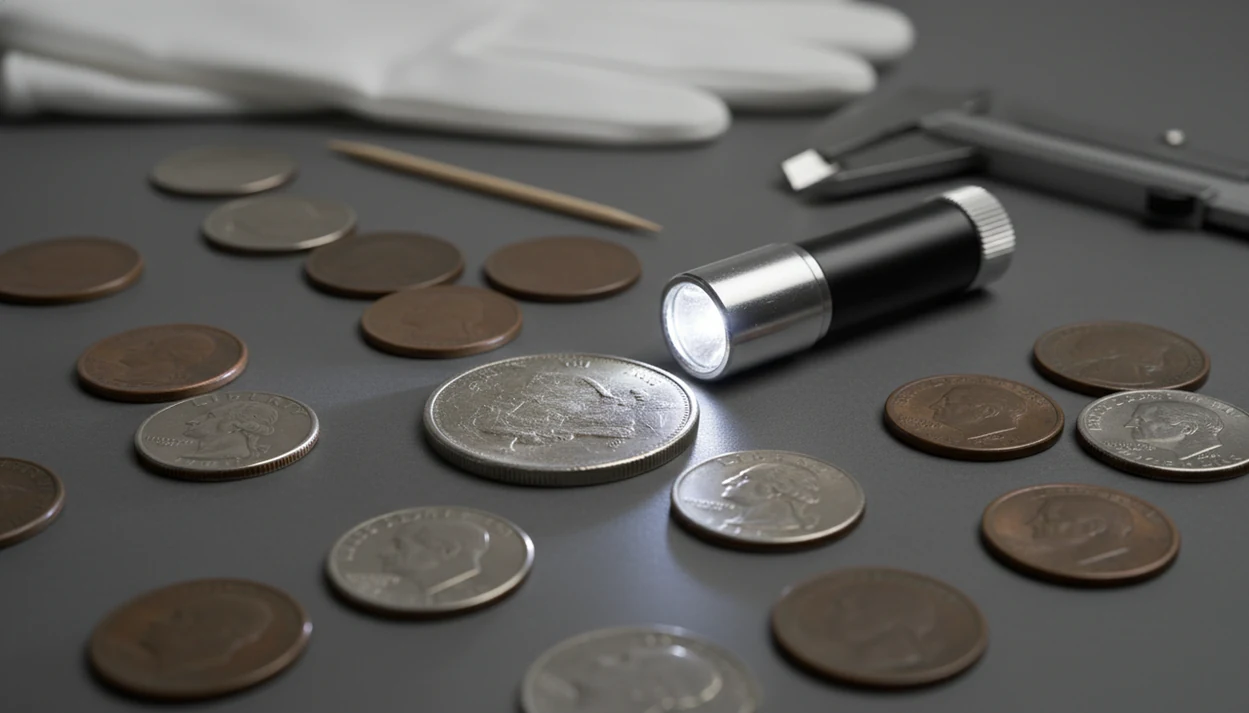


An error coin identifier helps you decide whether an odd coin is a true mint error, a die variety, or ordinary post-mint damage. Start by checking the coin’s date, mint mark, edge, weight clues, and surface damage before assuming it has collector value.
> Definition: A true mint error is a coin made incorrectly during the minting process, while damage after release is post-mint damage and is not classified as a mint error.
- Most strange-looking coins are damaged, not valuable mint errors.
- Real errors usually fit planchet, die, or striking-error categories.
- Use photos, weight, close inspection, and expert confirmation before paying for grading.
Error CoinEd At A Glance
An error coin identifier is a screening method for sorting an unusual coin into three buckets: mint error, die variety, or post-mint damage. It does not turn a strange surface mark into proof of value.
Start with the obverse, then check the reverse design, date and mint mark, edge, and overall shape. A paper coin roll split at the seam can produce one dramatic-looking coin, but many odd marks come from counting machines, heat, tools, or corrosion.
Rarity and value depend on severity, condition, denomination, date, eye appeal, and buyer demand. Tools like CoinEd can help with photo-first coin identification, rarity hints, grade hints, and value context, but the result is still a starting point.
For beginners, ruling out damage first is often better than naming an error quickly because most false finds fail at the surface-check stage.
Five Mint Error Identifier Facts Beginners Need
- A true mint error happens during manufacture, not after the coin enters circulation. A bent quarter from a parking lot is damage, even if it looks dramatic.
- Most real errors fit three families: planchet errors, die errors, and striking errors. Those categories give a mint error identifier a useful first map.
- Post-mint damage must be ruled out before any value talk begins. Scrapes, stains, drilled holes, and squeezed rims fool new collectors every week.
- PCGS, NGC, CONECA, experienced dealers, and local coin clubs are useful confirmation sources for valuable candidates. A phone result is not the same as attribution.
- Value depends on rarity, severity, grade, and buyer demand. The U.S. Mint reported 14.9 billion circulating coins shipped in fiscal year 2022, which gives useful scale for why confirmed mint errors are uncommon compared with normal output (https://www.usmint.gov/learn/reports/annual-reports).
A good photo check finds possibilities, not verdicts.
How Error Coin Identification Works
Error coin identification works by separating an unusual coin into three likely outcomes: mint error, die variety, or post-mint damage. The process is less about naming the odd mark quickly and more about testing whether the feature could have happened before, during, or after the strike.
Start with the fixed clues: date, mint mark, denomination, edge, diameter, weight, and surface texture. Those details narrow the possible planchet, die, and striking-error families. A wrong-planchet candidate should make sense by weight and size; a die variety should show repeatable die-made features; a striking error should show metal flow from the press rather than cuts, heat, glue, or tool marks. Photo matching can compare shapes, rims, letters, and known examples, but it cannot replace in-hand authentication, exact measurements, or formal attribution. If the coin is expensive-looking, has an unusual weight, shows edge questions, or depends on microscopic die markers, measurements and expert review override a photo-based result.
Photo Checks In An Error CoinEd Workflow
Photo-first error identification works by comparing a coin’s visible design against normal examples, known die varieties, and common error categories. The useful sequence is simple: confirm the normal coin type, look for damage signs, then test a possible error label.
How error coin identification works: human experts and image tools both rely on pattern comparison. In technical terms, photo tools may use visual matching and image embeddings, which means the software groups similar shapes, letters, dates, rims, and surfaces. A phone camera hovering over a penny can catch a clear date, but glare can invent doubling where none exists.
photo-first coin identifier and value estimation apps for collectors and beginners deliver structured clues and comparison points, not certified authentication or guaranteed sale prices.
Physical checks still matter. Weight, diameter, magnetism, and edge inspection can separate wrong-planchet possibilities from lookalikes. Dark wooden tables also make copper cents look redder than they are.
Before You Start: Tools For Checking An Error Coin
Before checking an error coin, gather a few simple tools that help you document what is really on the coin. You need clear photos, neutral light, basic measurements, and normal comparison coins before you start naming the odd feature.
- Set up your workspace. Use a phone camera, bright indirect light, and a clean white, gray, or other neutral background so the coin’s color does not look warmer, darker, or redder than it is.
- Measure the coin. Keep a digital scale nearby, plus a ruler or calipers for diameter. A small magnifier helps with the date, mint mark, rim, edge, and suspicious raised or sunken areas.
- Handle it gently. Hold the coin by the edge and do not clean, polish, scrape, rub, bend, heat, acid-test, or otherwise damage it to “see better.”
- Compare normal examples. Pull ordinary coins of the same denomination and similar date range so weak strikes, wear, color, and mint mark placement have a baseline.
- Record the basics. Write down weight, diameter, edge style, date, mint mark, and denomination, then save straight-on photos of both sides, the edge, and close-ups of the odd feature.
How To Use An Error CoinEd App
Use a coin error app as a careful checklist, not as a final judge. The goal is to document the coin well enough to compare it against trusted references and decide whether expert review is sensible.
- Handle the coin safely. Hold it by the edge, remove loose dust from the holder if needed, and never polish or use abrasive cleaning.
- Photograph both sides. Use bright indirect light, a steady phone, and one straight-on image of the obverse and reverse.
- Capture the edge. Add edge photos for clips, broadstrikes, missing lettering, reeds, seams, or collar problems.
- Record the basics. Note the date, mint mark, denomination, country, diameter, and weight if you have a scale.
- Compare the result. Match app suggestions against planchet, die, and striking categories, plus sold-price context.
- Save uncertain finds. Keep photos, measurements, and notes for dealer, club, CONECA, PCGS, or NGC review.
CoinEd and CoinIdentifier are most useful when you treat the photo result as a labeled starting point: save the suggested coin type, possible error family, grade hint, and value context, then verify the finding against measurements, sold prices, and expert references.
Step 1: Identify Coin Errors By Ruling Out Damage
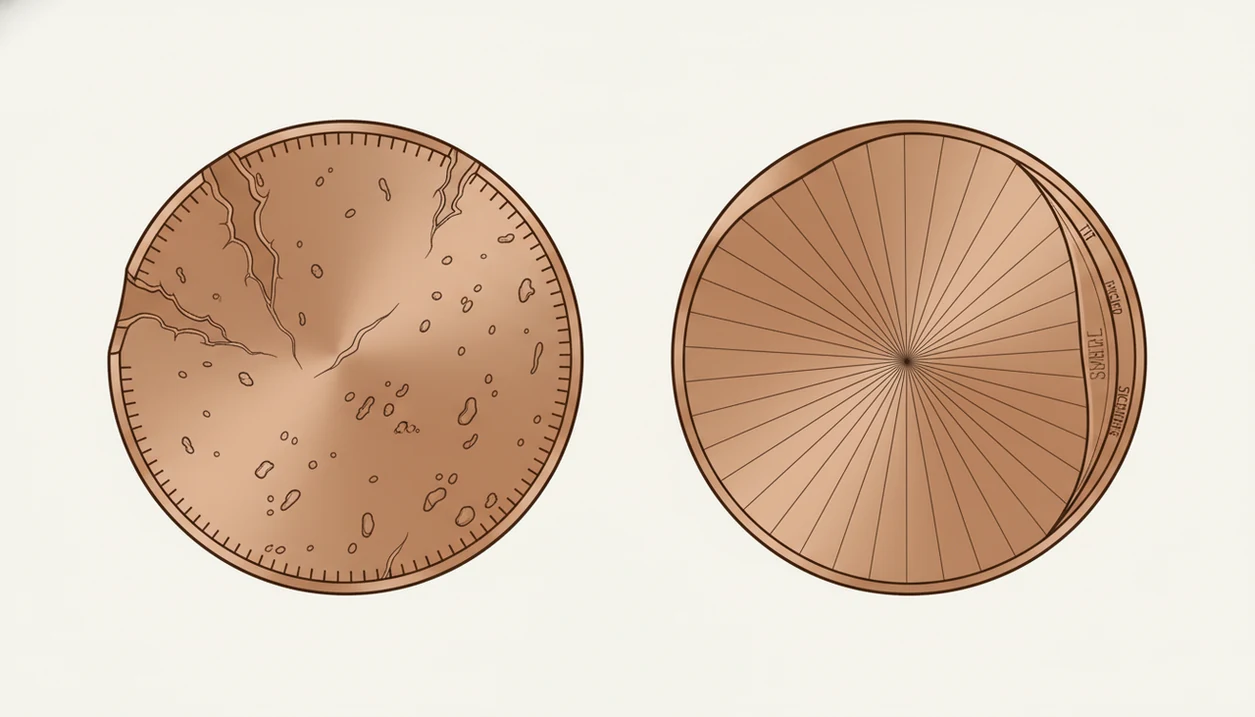
“Is this a mint error or just damage?” is the first question to answer, because damage is far more common than valuable mint mistakes. Common traps include scratches, gouges, corrosion, heat bubbles, flattened details, glue, vise marks, and drilled holes.
Damage usually interrupts metal flow or removes design. A real strike error more often shows displaced metal that still follows the pressure and shape of the minting process. Circulation wear can also mimic weak strikes, especially on high points, rims, and lettering.
Don’t assume a strange color, bent shape, or shiny patch is an error. A beginner turning over a wheat cent under a kitchen light may notice the tiny mint mark under the date, but that same light can also hide old cleaning hairlines. The deeper comparison is covered in the error coin vs damage guide.
Step 2: Match A Mint Error Identifier Category
Once damage looks unlikely, match the coin to a broad error family. Identifying the category helps you research, but it does not prove authenticity, grade, or market value.
| Category | What to look for | Beginner caution |
|---|---|---|
| Planchet errors | Clipped blanks, wrong planchets, laminations, split planchets | Cut or filed edges can imitate clips |
| Die errors | Die cracks, cuds, doubled dies, repunched marks, over-polished dies | Many “extra lines” are scratches or die wear |
| Striking errors | Off-center strikes, broadstrikes, double strikes, wrong collar errors | Flattened coins may be vise or hammer damage |
Planchet Errors
Planchet errors begin with the blank metal piece before striking. If a curved missing section has metal flow and matching rim clues, compare it with a clipped planchet coin guide.
Die Errors
Die errors come from the tool that strikes the coin. Die cracks and cuds can repeat on multiple coins from the same damaged die.
Striking Errors
Striking errors happen when the coin is struck incorrectly. A dramatic off-center strike with a visible date is usually worth a closer look.
Step 3: Compare Doubled Dies, Machine Doubling, And Die Wear
Apparent doubling causes more beginner confusion than almost any other error claim. A true doubled die has doubling built into the die itself, not added by a loose or bouncing strike.
| Doubling type | Typical look | Value context |
|---|---|---|
| True doubled die | Rounded, separated doubling on known design areas | Can carry a premium if listed and confirmed |
| Machine doubling | Flat, shelf-like spread near letters or numbers | Usually little or no premium |
| Die deterioration | Mushy, stretched, worn-die distortion | Common on heavily used dies |
Check the date, lettering, mint mark, and known variety listings before claiming a doubled die. A macro shot of a tiny date helps, but it can also exaggerate flat shelf doubling. For a closer side-by-side, use the doubled die vs machine doubling reference.
Step 4: Check Error Coin Value Context
A possible error needs value context before grading money enters the conversation. Consider rarity, severity, grade, eye appeal, denomination, date, and current collector demand.
The U.S. Mint says it does not appraise coins or provide market values, so sold prices matter more than asking prices when you are estimating an error coin’s value (https://www.usmint.gov/help-center/faqs/coin-collecting). Auction records, dealer buy prices, and completed sales are more useful than a listing that has sat unsold for months.
Common minor errors may have little or no premium. A small die chip on a modern cent can be fun to save, but it may not cover postage in a bubble mailer beside a coin flip.
For most collectors, sold prices are more reliable than asking prices because they show what buyers actually paid.
Common Error CoinEd Myths
- Every weird coin is valuable. Most odd coins are damaged, stained, altered, or heavily worn.
- Small rotation always matters. Minor alignment differences often fall within normal tolerance and may not attract collector demand.
- Every doubled-looking coin is a doubled die. Machine doubling and worn-die distortion are common, especially around dates and lettering.
- An AI app can authenticate and price a coin perfectly. Apps can screen photos, but they cannot replace in-hand grading, variety attribution, or market testing.
- Cleaning makes an error coin easier to sell. Cleaning often lowers collector interest, especially when it leaves hairlines or a bright unnatural patch.
Variety checks can overlap with error checks, so a coin variety identifier is useful when the coin shows repeated die-based features.
When A Mint Error Identifier Needs Expert Verification
Some finds deserve a pause before you sell, grade, or post a price claim. Expert review is wise for expensive-looking pieces, rare dates, wrong-planchet candidates, dramatic off-center strikes, missing-edge-lettering coins, and possible doubled dies.
For higher-value candidates, compare the coin against published attribution and grading resources before paying submission fees. PCGS, NGC, and CONECA each publish error, variety, or certification information that can help you decide whether in-hand review is worth the cost (https://www.pcgs.com, https://www.ngccoin.com, https://conecaonline.org).
- PCGS or NGC: Useful for authentication, grading, encapsulation, and some error attributions.
- CONECA: Helpful for error and variety research, especially when attribution details matter.
- Local coin clubs: Good for first in-hand opinions before paying shipping and grading fees.
- Reputable dealers: Practical when you need market context, not just an error name.
Grading fees, shipping, and attribution costs can exceed the coin’s value. Save original photos, measurements, app results, and collection notes before submission. For off-center candidates, compare the visible date and missing design area with an off center coin guide.
Limitations
An app result or beginner checklist should be treated as screening, not final certification. Error coins can be subtle, altered, or impossible to confirm from photos alone.
- Photo quality, glare, shadows, and angle can create false error signals.
- A photo cannot reliably prove metal composition, exact weight, diameter, or microscopic die markers.
- Heavy wear may hide real errors or make damage look mint-made.
- Market values change, and estimated value ranges are not guaranteed sale prices.
- Subtle die varieties often require specialist references or magnification.
- Counterfeits and altered coins may need in-hand authentication.
- Heat damage, glue, corrosion, and tool marks can imitate mint errors in flat photos.
- Grading, shipping, and attribution fees may cost more than a common minor error is worth.
Keep the coin uncleaned. Wipe dust from a cardboard 2x2 flip if you must, but do not clean the coin itself.
Why Document Error Checks Before You List a Coin
Documenting both sides, the edge, weight, and diameter before listing an error claim protects you from common misattributes such as damage, post-mint alteration, or machine doubling. Clear records also help a buyer or grader understand what you observed.
Compare doubled design elements with the doubled die vs machine doubling guide, and separate genuine mint errors from wear using error vs damage.
FAQ
What is an error coin?
An error coin is a coin made incorrectly during the minting process. Damage that happens after release is post-mint damage, not a mint error.
Is my damaged coin valuable?
Most damaged coins have no extra collector premium. Value may exist only if the odd feature is proven to be mint-made.
What is post-mint damage?
Post-mint damage is any change after a coin leaves the mint, such as scratches, corrosion, bending, drilling, heat damage, or tool marks. It is not classified as a mint error.
What causes off-center coins?
Off-center coins are striking errors caused when the planchet is not properly centered between the dies during striking. Stronger examples usually show part of the design missing and part of the blank planchet visible.
Are clipped coins real errors?
Clipped planchets can be genuine mint errors when the blank was cut incorrectly before striking. Fake clips often show filed edges, tool marks, or missing metal without correct rim behavior.
What is machine doubling?
Machine doubling is flat, shelf-like doubling caused during the strike. It differs from a true doubled die, where the doubling exists in the die itself.
Can an app find coin errors?
A coin error app can screen photos and suggest possible error categories. It cannot guarantee authentication, grade, or exact market value.
Should I grade an error coin?
Grading may be worth considering for rare, dramatic, high-value, or easily misrepresented errors. It may not be worth the cost for common minor errors.
How do I photograph coin errors?
Photograph both sides and the edge in bright indirect light with sharp focus and a scale nearby. Take straight-on images plus close-ups of the date, mint mark, rim, and suspicious feature.