
Gold CoinEd for Photos, Specs, and Expert Review
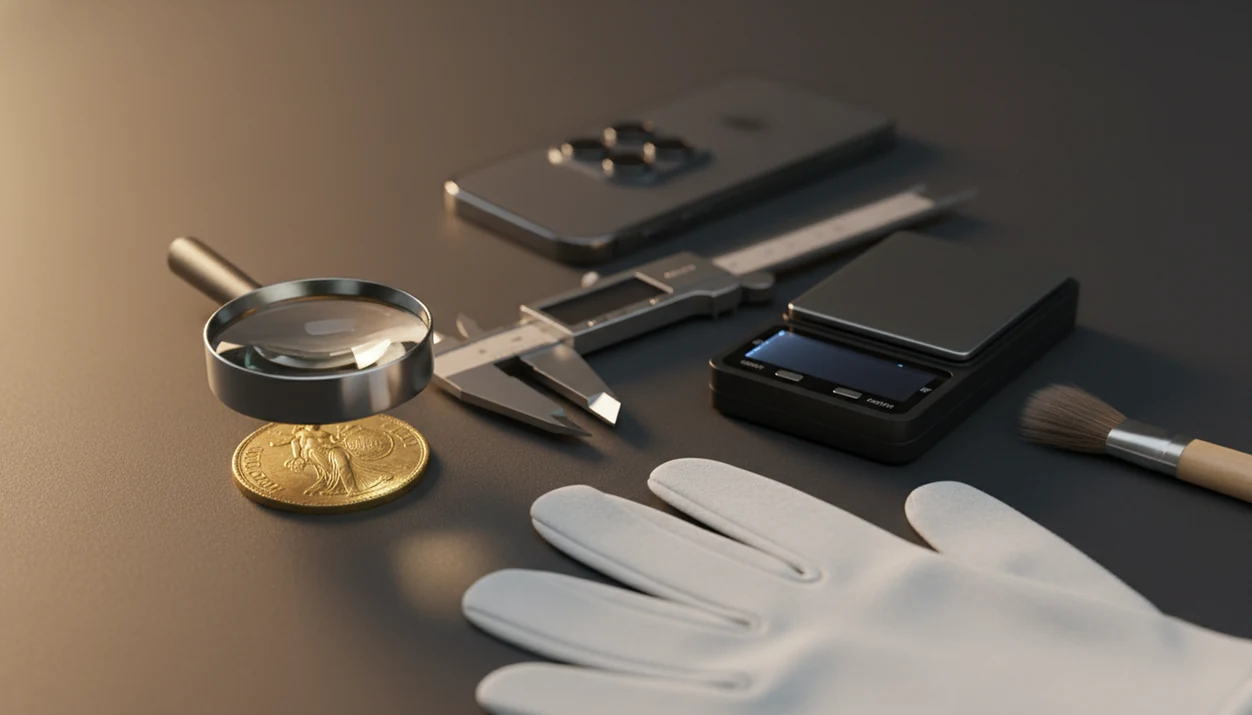


A gold coin identifier can help you match a coin from photos to a likely country, year, denomination, and design type, but it cannot prove the coin is genuine gold. Use photo identification first, then confirm weight, diameter, edge details, and counterfeit risk before buying, selling, or submitting the coin for expert review.
> CoinEd is the photo-first coin identifier and value estimation app that identifies coins from photos, shows rarity and grade hints, and helps beginners and collectors estimate coin value.
- Photo-based identification is useful for naming a possible gold coin, but metal content and authenticity require physical checks.
- Weight, diameter, thickness, edge design, mint mark, and inscriptions are key safety checks for gold coin identification.
- High-value, rare, damaged, or suspicious coins should be reviewed by a professional grader, dealer, or precious-metal testing service.
Scope note: this guide is for preliminary identification and counterfeit-risk screening, not a formal appraisal, investment recommendation, or authentication certificate.
Gold CoinEd At A Glance: Photos, Specs, And Safety Checks
A gold coin identifier is a photo-first tool for matching visible coin details to known designs, countries, dates, denominations, and mint marks. It helps name the coin before you move into the slower safety checks.
Start with the obverse, then photograph the reverse design. Read the legend, date, denomination, portrait, shield, wreath, eagle, or coat of arms. A lamp angled low across a faint mint mark can make one tiny letter change the identification path.
The safe workflow is simple: photo match, specification check, counterfeit screen, then expert review when value or risk is high. App identification is not authentication. It does not test gold purity, internal metal, or whether a plated counterfeit has the right surface color.
For beginners, photo identification is often easier than starting with catalog pages because the visible design narrows the search before measurements and references take over.
How A Gold CoinEd App Works Behind The Photo Match
A gold coin identifier app works by comparing image features from a coin photo against known coin records. The system looks at the obverse, reverse, inscriptions, portraits, symbols, mint marks, rims, and sometimes edge clues.
Under the hood, image recognition turns visible details into image embeddings, which are searchable patterns. In plain language, the app is comparing what your camera sees with stored examples of known coin types. It then returns likely matches, not a legal authentication verdict.
Small setup mistakes matter. A thumb shadow covering a mint mark, flash glare on a proof surface, or a crop that cuts off the rim can push the match toward the wrong type. Wear, cleaning, scratches, jewelry mounts, and damage can also confuse the result.
Similar bullion types and restrikes often need measurement checks after the photo match. A good ai coin identification, rarity lookup, and collection value estimation app for collectors and beginners delivers likely ID, context, and records, not a guaranteed authenticity decision.
How To Use A Gold CoinEd Safely
Use a gold coin identifier as the first pass, not the final decision. The safest approach is to pair the photo match with written notes, measurements, counterfeit screening, and expert review when money or records are at stake.
- Photograph the obverse and reverse in soft, even light, with the full rim visible and no flash glare across the fields. If the coin is in a holder, shoot straight through the clearest part of the plastic.
- Record the inscriptions, date, denomination, mint mark, portrait or symbol, and any edge lettering, reeding, seam, or unusual rim feature before you rely on an app result.
- Compare the coin’s weight, diameter, and thickness with the official specifications for that exact type, date, and denomination. A close photo match with wrong measurements is a warning sign.
- Screen for fake gold coin signs, including weak details, odd surfaces, plated color, bad edges, suspicious seller history, or a value that seems too good for the purchase context.
- Seek expert review before buying, selling, insuring, submitting for grading, or dividing an estate coin. A dealer, grading service, or metal-testing provider can check what a phone photo cannot.
Five Gold CoinEd Facts Every Beginner Should Know
- Clear photos of both sides are the starting point for identifying gold coins; a single angled photo is usually not enough.
- Apps can suggest type, country, year, denomination, rarity signals, and estimated value range from visible design clues.
- Apps cannot directly measure gold purity, weight, thickness, density, or whether a coin is plated.
- Fake gold coin signs require physical checks, and suspicious pieces may need a dealer, grading service, assayer, or XRF test.
- Collection tools help track identified coins, value ranges, measurements, purchase history, and review notes over time.
The pocket check is real.
If you poured an inherited mix of nickels, dimes, foreign coins, and one yellow piece onto a towel, save the quick guesses as collection notes. Tools like CoinEd can help organize the scan, but your scale, calipers, and references still carry the safety work.
Photo Clues That Help Identify Gold Coins Correctly
Good photos help identify gold coins by capturing the design, not just the color. Use a ruler-straight full coin view, both sides, clear inscriptions, date, denomination, mint mark, portrait, coat of arms, wreaths, eagles, shields, legends, and any edge lettering.
Photograph the coin on a plain background with soft light. Avoid flash glare. Dark wooden tables can make copper and brass look redder or warmer than they are, so color alone is unreliable. Brass, bronze, plated tokens, and camera processing can all look “gold” in a photo.
Obverse And Reverse Details
Start with the obverse, usually the portrait or main national symbol. Then check the reverse design for denomination, shield, eagle, wreath, or mint inscription.
Edge Lettering And Rim Shape
Edge photos can separate similar gold coin types and expose mismatched designs. Reeded edges, plain rims, raised lettering, and odd seam lines deserve a closer look.
Weight And Diameter Checks For A Possible Gold Coin
What weight and diameter should a possible gold coin have? The answer depends on the exact coin type, date, and denomination, because genuine bullion and many numismatic gold coins have published standard weights, diameters, and sometimes thicknesses.
The U.S. Mint reports that a 1-ounce American Gold Eagle weighs 1.0909 troy ounces, measures 32.70 mm in diameter, and is 2.87 mm thick (U.S. Mint). That higher total weight reflects the alloyed coin, not one pure troy ounce of total mass.
Use a calibrated scale and calipers. Then compare your numbers against official mint listings or grading-service references. If the coin is a world issue, a world coin identifier can help narrow the country before you look up specifications.
Passing dimensions does not guarantee authenticity. Advanced counterfeits can match weight and size closely enough to require surface study, edge inspection, metal testing, or professional review.
Fake Gold Coin Signs A Photo App May Not Catch
Fake gold coin signs often appear outside the main photo match. A photo app may name the design correctly, but still miss the physical evidence that the coin is wrong.
- Wrong measurements: Incorrect weight, diameter, or thickness can point to plating, base metal, or the wrong coin type.
- Weak design details: Mushy lettering, soft hairlines, flat stars, and strange relief can signal casting or poor dies.
- Bad edges: Seam lines, incorrect reeds, missing edge lettering, or rim bubbles are worth a closer look.
- Odd metal behavior: Unusual magnet response, plated surfaces, or suspicious sound can require testing.
- Risky purchase context: Counterfeit risk is significant in online precious-metal purchases.
Counterfeit risk is not theoretical: the U.S. Mint and grading services publish recurring counterfeit alerts, and OECD/EUIPO estimated counterfeit and pirated goods at up to 3.3% of world trade (OECD/EUIPO).
Avoid destructive acid tests on collectible coins unless a professional recommends them. For non-destructive options, compare with a tool that can check coin metal.
Gold Coin App Results Versus Expert Authentication
A gold coin app is useful for fast identification, rarity clues, value context, and collection organization. Expert authentication is different because it inspects the physical coin, not just the image.
| Method | What it can help with | What it cannot promise |
|---|---|---|
| Gold coin app | Likely type, country, date range, denomination, visual match, collection notes | Metal purity, internal composition, certified authenticity |
| Dealer review | Practical market opinion, surface check, buy/sell context | A formal third-party grade unless submitted |
| NGC or PCGS grading | Authentication, grade opinion, encapsulation, resale confidence | Guaranteed future sale price |
| Metal testing or assay | Composition clues through tools such as XRF or assay methods | Full collector value by itself |
NGC and PCGS are major third-party grading services, and NGC says it has certified more than 60 million coins (NGC). Expert review matters most for rare coins, expensive bullion, suspicious purchases, estate coins, and coins intended for sale. The melt value vs collector value question also matters before treating metal content as the whole price.
Common Gold CoinEd Myths That Create Risk
Several gold coin myths lead beginners to overtrust a match or overvalue a find. The correction is usually the same: identify first, then verify.
A photo app cannot guarantee a coin is real gold. It can compare visible design features, but it cannot see the core metal. A high value estimate also does not mean the coin will sell for that price. Condition, demand, fees, dealer margins, and bullion movement all affect offers.
Clear photos do not catch every counterfeit. Some fakes have convincing portraits and legends but fail weight, edge, or metal checks. Every old gold-colored coin is not gold either. Many tokens, medals, and circulation coins use brass or bronze alloys.
A magnet test alone does not prove authenticity. Some fake coins are not magnetic, and some genuine coin holders or nearby objects can confuse a quick test.
Small tests help. They do not finish the job.
When To Get Expert Review For A Gold Coin
When should you get expert review for a gold coin? Get review before major purchases, sales, insurance records, inheritance division, grading submission, or any decision where a wrong answer would be expensive.
Strong triggers include a high app value, rare date, unusual mint mark, mismatched specs, suspicious seller, damaged holder, altered surfaces, or uncertain metal content. An old dime stuck to pocket lint is one kind of sorting problem. A raw gold coin offered online at a discount is another.
Your options include a reputable coin dealer, third-party grading service, precious-metal assayer, or XRF testing provider. Keep photos, measurements, purchase history, app notes, and seller messages together. Apps such as CoinEd and CoinSnap can be useful for organizing that file before a specialist looks at the coin.
For high-risk coins, professional review is often safer than relying on photos because authentication depends on surfaces, edges, measurements, provenance, and sometimes metal composition.
Limitations
A gold coin app can be useful, but it has firm limits.
- A photo tool cannot confirm metal purity, internal composition, density, or plating.
- AI may misidentify rare, obscure, heavily worn, cleaned, damaged, or locally issued gold coins.
- Color in a photo can shift because of lighting, camera processing, flash glare, and background reflection.
- Estimated value ranges can lag bullion price changes and may not match dealer offers or auction results.
- Some counterfeits need professional inspection, precision measurement, XRF, ultrasound, or grading-service review.
- Apps may have subscriptions, ads, privacy policies, or image-use terms that users should review.
- Do not rely on an app alone for high-value purchases, sales, insurance, estate division, or tax-related records.
If you wipe dust from a cardboard 2x2 flip, do not clean the coin itself. Cleaning can change surfaces, remove original luster, and make later grading harder.
CoinIdentifier can help record a likely ID, but it is not a formal appraisal or authentication service.
FAQ
How do I identify gold coins?
Photograph both sides, read the inscriptions, note the date and mint mark, then compare weight and diameter against the exact coin specification. Valuable, suspicious, or mismatched coins should be checked by a professional.
Can an app detect fake gold?
An app can flag visual concerns such as wrong design details, weak lettering, or an incorrect edge. It cannot prove metal content, purity, plating, or authenticity from a photo alone.
What are fake gold coin signs?
Common signs include wrong weight, wrong diameter, poor details, incorrect edge, seam lines, bubbles, plated surfaces, and suspicious seller history. Any one warning sign is enough to slow down and verify.
Is color enough to identify gold?
No. Brass, bronze, plated coins, toned surfaces, and warm lighting can all look gold in photos.
What weight should a gold coin be?
A gold coin should match the official specification for its exact type, date, denomination, and mint. Use a calibrated scale and compare against mint or grading-service references.
Do gold coins stick to magnets?
Most gold coins should not be strongly attracted to a magnet, but magnet response is only a limited screening check. It cannot prove authenticity by itself.
Are gold coin apps accurate?
Gold coin apps are most accurate with clear photos of common coins. Accuracy is weaker for rare, worn, damaged, cleaned, or obscure issues.
When should I grade gold coins?
Grading may make sense for rare dates, high-value coins, resale, insurance, estate records, or authentication concerns. It is less useful for low-value pieces where grading fees exceed the coin’s likely premium.
Can cleaned gold coins lose value?
Yes. Cleaning can damage surfaces, reduce collector value, and complicate grading even when the coin is genuine.