
Are Coin Identifier Apps Accurate for ID, Value, and Grade?
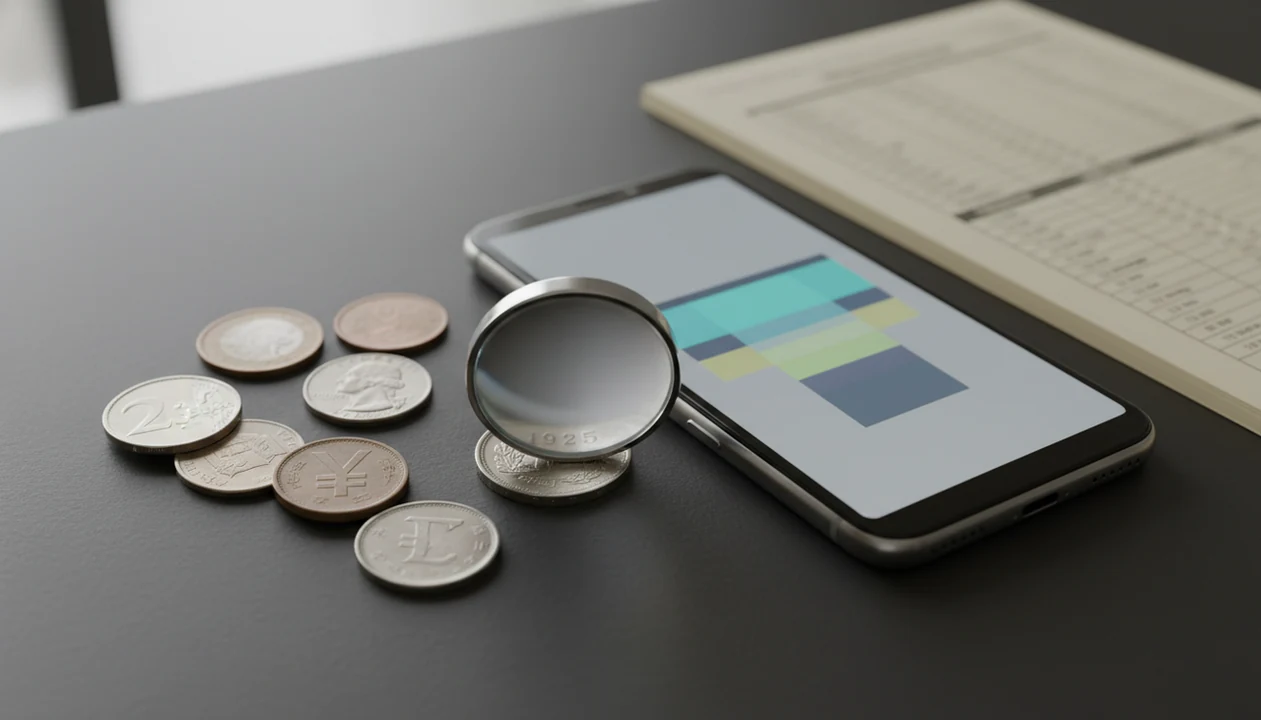


Yes, but only for the right task: are coin identifier apps accurate is easiest to answer for basic identification, where clear photos often work well, while grading, value, rarity, and error claims need verification. Treat any app result as a fast first opinion, not a final appraisal.
> Definition: A coin identifier app uses coin photos to suggest a country, denomination, type, date or mint mark, and sometimes a rough rarity, grade, or value estimate. It is a screening tool, not an appraisal or authentication service.
TL;DR
- Coin app accuracy is strongest for basic ID: country, denomination, type, and often date or mint mark.
- AI coin identifier accuracy drops for grading, cleaned surfaces, rare varieties, mint errors, and exact market value.
- Coin scanner reliability improves when you use sharp obverse and reverse photos, then verify results with price guides, auction records, or professional grading.
Coin App Accuracy by Task: ID, Grade, Value, and Errors
Coin app accuracy is strongest for basic identification, not for final grade, rarity, or sale value. A silver edge flashing in a roll is worth checking, but the app still needs both faces of the coin.
| Task | Typical reliability | Why it varies |
|---|---|---|
| Basic ID | Higher | Country, denomination, portrait, reverse design, date, and mint mark are visible clues. |
| Grade estimate | Lower | Wear, luster, marks, and cleaning can change under light. |
| Value estimate | Moderate to low | Price depends on grade, demand, sold records, and fees. |
| Error or variety claim | Lower | Tiny die markers and damage can look similar in photos. |
A CoinWeek test found CoinSnap identified 14 of 15 coins correctly, strong evidence for basic ID but not for grading or pricing source. Being wrong on a common $5 coin is inconvenient. Being wrong on a key date or rare variety can change a buying decision.
Five Facts About AI CoinEd Accuracy
AI coin identifier accuracy is useful when the question is “what is this coin?” It becomes less dependable when the question is “what is it worth in this exact condition?”
- Apps are generally best at basic visual identification from clear photos of the obverse and reverse.
- A CoinWeek test found CoinSnap identified 14 of 15 coins correctly, but that did not prove grade or value accuracy source.
- Professional grading requires luster, wear, strike, and eye appeal, which flat phone photos cannot fully capture.
- Error detection and rare variety labels should be treated cautiously because genuine mint errors are rare compared with billions of normal coins.
- Any app result should be cross-checked before buying, selling, insuring, or submitting a coin.
For beginners, photo-first ID is often easier than searching a catalog first because the app can narrow the coin type before you compare details.
How CoinEd Apps Work From Coin Photos
Coin identifier apps work by comparing coin photos against visual patterns in a reference database and returning likely matches. The model reads image features, meaning visible shapes and layouts, rather than physically examining the coin.
A typical scan starts with obverse and reverse photos. The app checks legends, portraits, dates, mint marks, rim style, denomination, metal color, and design layout. A beginner turning over a wheat cent under a kitchen light may find the tiny mint mark under the date only after the first scan misses it.
Value context usually comes from reference pricing, rarity signals, and grade hints. It is not a live professional appraisal. A good photo-first coin identifier and value estimation app for collectors and beginners delivers fast sorting and context, not guaranteed authentication or investment certainty.
A 2D image model can miss luster, hairlines, cleaning, weak strike, surface depth, and subtle die varieties.
Photo Quality and Coin Scanner Reliability
Coin scanner reliability often depends more on the photo than the app. Glare, shadows, blur, tilted angles, cropped rims, plastic holders, and a dirty phone lens can all push a scan toward the wrong match.
Use both sides of the coin. Place it on a plain background with full rim visibility. Natural diffuse light usually works better than a harsh desk lamp. Keep the phone close, but let the camera focus before taking the shot.
Dark wooden tables can make copper cents look redder than they are.
Worn dates, hidden mint marks, corrosion, toning, and damage can produce false matches or uncertain results. If a scan says “rare error” from a fuzzy photo, rescan before assuming the app found something special. If the coin is dusty in a cardboard flip, wipe the flip, not the coin; the cleaning question is covered in should you clean coins before scanning.
Why Coin Grading Apps Are Less Accurate Than Professional Grading
Why are coin grading apps less accurate than professional grading? Grading is not just identification; it evaluates preservation, wear, strike, luster, marks, toning, cleaning, and eye appeal.
PCGS grading guidance emphasizes luster, wear, strike, and eye appeal as core grading factors source. Those are partly three-dimensional judgments. Tilt a Morgan dollar under light and a hairline may appear, then vanish in the next phone photo.
Professional grading also has scale behind it: PCGS publishes population and price-guide data for certified coins source, and NGC publishes census data for coins it has certified source. App grades should be treated as hints or ranges, especially above mid-circulated grades.
For valuable coins, professional grading usually works best when authentication, market trust, and consistent grade standards matter more than speed. Our coin grading basics guide explains the Good-to-MS scale before you decide when to send coin to PCGS or NGC.
Common Myths About Rare Coin Scanner Accuracy
Rare coin scanner accuracy is often misunderstood because one confident result can feel like proof. The FTC has warned businesses not to overstate AI performance or imply proof that independent evidence does not support source.
- “If an app says rare, it must be rare.” A normal damaged coin can be mislabeled as an error or scarce variety.
- “AI grading is the same as PCGS or NGC grading.” It is not. Third-party grading includes in-person surface judgment and authentication.
- “A 99% accuracy claim covers everything.” It may refer to narrow basic ID, not grade, value, errors, or rarity.
- “Two apps agreeing on price proves market value.” Two apps may use similar feeds or assumptions.
The discard tray filled with common cents teaches the same lesson: most odd-looking coins are still common. If a result raises counterfeit concerns, read can app tell if coin is fake before spending money.
When to Trust a CoinEd App Result
Trust a coin identifier app more when the coin is common, photos are sharp, both sides match the result, and the answer is conventional. A 1980s Lincoln cent or modern state quarter is a safer app call than a scarce die variety.
Trust it less when the result claims a rare mint error, unusually high grade, scarce variety, or value far above similar sold coins. That is where you slow down. Check a printed or online price guide, auction records, TPG population reports, and dealer opinions for higher-value pieces.
Tools like CoinEd are best used for photo-first identification, rarity context, value estimates, and collection organization, not guaranteed appraisal. Apps such as CoinIdentifier can also help keep collection notes after you verify a coin. If the next step is selling, compare the scan with real sold examples and read about selling coins online safely.
When to Get a Professional Coin Appraisal or Grading
Get a professional appraisal or grading opinion when the coin could change a buying, selling, insurance, or inheritance decision. An app can point you in the right direction, but market trust sometimes matters more than a fast scan.
- Pause when the coin is high-value, a key date, or a suspected counterfeit. Those are the moments where authentication and consistent grading standards carry real weight.
- Verify rare-error or variety claims with a specialist before you list, buy, or pay a premium. A clipped planchet, doubled die, or repunched mint mark needs more than a confident phone result.
- Compare any app value estimate with recent sold auction records, not just asking prices. The number that matters is what similar certified coins actually brought.
- Choose authentication when buyers, heirs, insurers, or dealers will need proof, especially for coins that may be resold.
- Avoid cleaning, rubbing, dipping, or “improving” the coin before review. A dusty old half dollar in a flip may look dull, but altered surfaces can reduce value and make a professional opinion harder.
Limitations
Coin identifier apps have real limits, and the limits matter most when money is involved. Treat the scan as one piece of evidence.
- Photo-only tools cannot fully judge luster, hairlines, cleaning, surface depth, strike quality, or eye appeal.
- Error and variety detection can mislabel normal damage, machine doubling, corrosion, or wear as rare mint errors.
- Pricing estimates may lag market changes and may not reflect realized auction prices, seller fees, location, or buyer demand.
- Database coverage can be weaker for world coins, tokens, medals, ancient coins, counterfeits, and obscure varieties.
- Marketing claims such as 99% accuracy may refer to narrow ID tests, not grading, rarity, or value accuracy.
- Apps should not replace professional authentication for expensive coins, suspected counterfeits, or coins being bought as investments.
- Phone photos taken through scratched holders can hide rim problems or make toning look smoother than it is.
The clink of mixed nickels, dimes, and foreign coins from an inherited coffee can is exactly where apps help. The expensive coin in that pile needs verification.
FAQ
Are coin apps usually accurate?
Coin apps are usually most accurate for basic ID, such as country, denomination, type, date, and mint mark. They are less reliable for exact grade, rare variety attribution, and value.
Can apps identify rare coins?
Apps can flag possible rare coins, but rare coin claims need expert verification. Check variety guides, auction records, and dealer opinions before acting on the result.
Are coin value apps reliable?
Coin value apps give rough estimates, not guaranteed market prices. Compare the estimate with price guides and recent sold records.
Can an app grade coins?
An app can provide grade hints or a likely grade range. It cannot replace professional grading for valuable coins.
Do coin apps detect errors?
Some apps attempt error detection, but this is difficult. They may confuse damage, machine doubling, corrosion, or wear with real mint errors.
Why do coin apps disagree?
Coin apps disagree because photos, databases, AI models, pricing feeds, and confidence thresholds differ. A better photo can sometimes change the result.
Are free coin apps accurate?
Free coin apps can identify many common coins. They may have smaller databases, fewer value tools, or less detailed collection features.
What photos make coin scans more accurate?
Use sharp photos of both sides, full rims, even light, and no glare. Keep the coin flat and the camera focused.
When do I need professional coin grading?
Use professional grading for valuable coins, key dates, suspected errors, counterfeits, or coins being sold. An app result alone is not a formal appraisal.