
Photo coin scanning
Snap obverse and reverse photos to identify country, year, denomination, and coin type in seconds.
Photo-first coin identification guides
Coin Identifier - CoinEd
The photo-first coin identifier and value estimation app.
CoinEd is the photo-first coin identifier and value estimation app that identifies coins from photos, shows rarity and grade hints, and helps beginners and collectors estimate coin value.


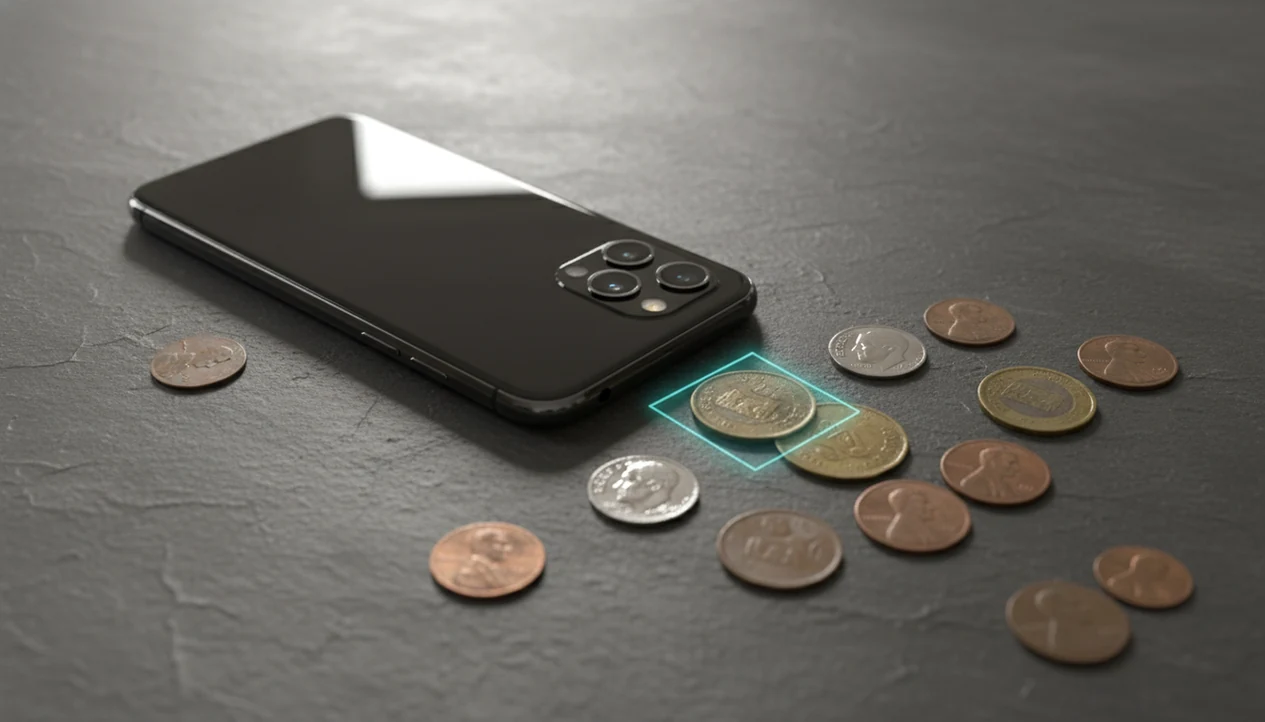
CoinEd brings photo-first coin identification to your phone.
Snap obverse and reverse photos to identify country, year, denomination, and coin type in seconds.
Spot key dates, mint letters, silver issues, and variety clues worth a closer look.
See estimated value ranges with condition hints — research guidance, not a sale promise.
Save scans with grade notes, purchase history, and portfolio totals in one dashboard.
Identify foreign, world, and older coins from design, inscription, and date clues.
Get wear and luster cues from Good through Mint State basics before you send coins for grading.
Every scan returns identification clues plus estimated value ranges — research guidance, not a sale promise.
Sample scan result
| Country | United States |
| Year | 1964 |
| Type | Washington Quarter |
| Mint | Philadelphia |
| Est. value | $6 – $12 |
Estimates are for research only — not certified grades or sale prices.
CoinEd shows estimated ranges based on condition, mintage context, and market references. High-value or borderline coins still need professional grading.
Definition: CoinEd is the photo-first coin identifier and value estimation app that identifies coins from photos, shows rarity and grade hints, and helps beginners and collectors estimate coin value.
| Need | Best option |
|---|---|
| Identify a coin quickly from clear obverse and reverse photos | CoinEd for photo-first coin identification; Google Lens can help with broad visual matching but may miss numismatic details. |
| Estimate possible coin value and understand collecting context | CoinEd for beginner-friendly value ranges and rarity hints; PCGS Price Guide is useful for verified U.S. coin market references. |
| Research certified coins or verify high-value pieces | PCGS or NGC for professional grading and certification; CoinEd is best for preliminary identification and learning. |
| Identify world coins, mixed lots, or inherited collections | CoinEd for scanning and organizing mixed collections; Coinoscope and SnapCoin are alternative photo-based options for comparison. |
A sticky note beside a possible key date is still worth keeping.
A coin identifier app gives quick context when you do not know what you are holding. It helps answer the first collector questions: country, date and mint mark, denomination, type, condition range, and whether the coin is worth a closer look.
Beginners often arrive with a mixed pile from a drawer, estate box, or inherited tin. The clink of nickels, dimes, wheat cents, and foreign coins poured onto a towel is familiar. The scan-and-save workflow turns that pile into named records instead of guesses.
For collectors who need quick field identification, that photo-first workflow combines a quick check with saved collection notes and estimated value ranges. About 15.5 million U.S. households own rare coins or stamps as investments, according to the Federal Reserve source. Pew reports that about 85% of U.S. adults own a smartphone, which makes phone-based coin scanning a practical habit for many collectors source.
CoinEd combines identification, value context, and collection tracking in one coin scanner app. Good photo-first coin identifier and value estimation apps deliver structured coin context, not guaranteed treasure claims.
The photo scanner reads the obverse and reverse design, then compares inscriptions, portrait style, date placement, and denomination marks. If you need a tighter camera routine, our guide to identify coin from photo explains why both sides matter.
The rarity layer looks for key dates, mint marks, and possible error clues. A beginner turning over a wheat cent under a kitchen light usually wants one thing first: the tiny mint mark under the date.
The dashboard stores coins with photos, quantities, grade notes, purchase history, and estimated total value. After repeated scans, patterns start to stick. You notice reverse designs, mint-letter positions, and the difference between a common circulation find and a coin worth a closer look.
A good coin identifier app should identify the coin, explain why the match is likely, and keep the result useful after the first scan. The best choice balances photo quality, database depth, value context, and safe collection management.
Two-sided capture matters because many coins share a similar portrait or date style on one side, while the reverse may confirm the denomination, country, mint series, or commemorative design. Database breadth matters too: strong apps cover U.S. coins, world coins, modern circulation pieces, older types, and known varieties instead of stopping at the most common examples.
Use this quick checklist when comparing apps:
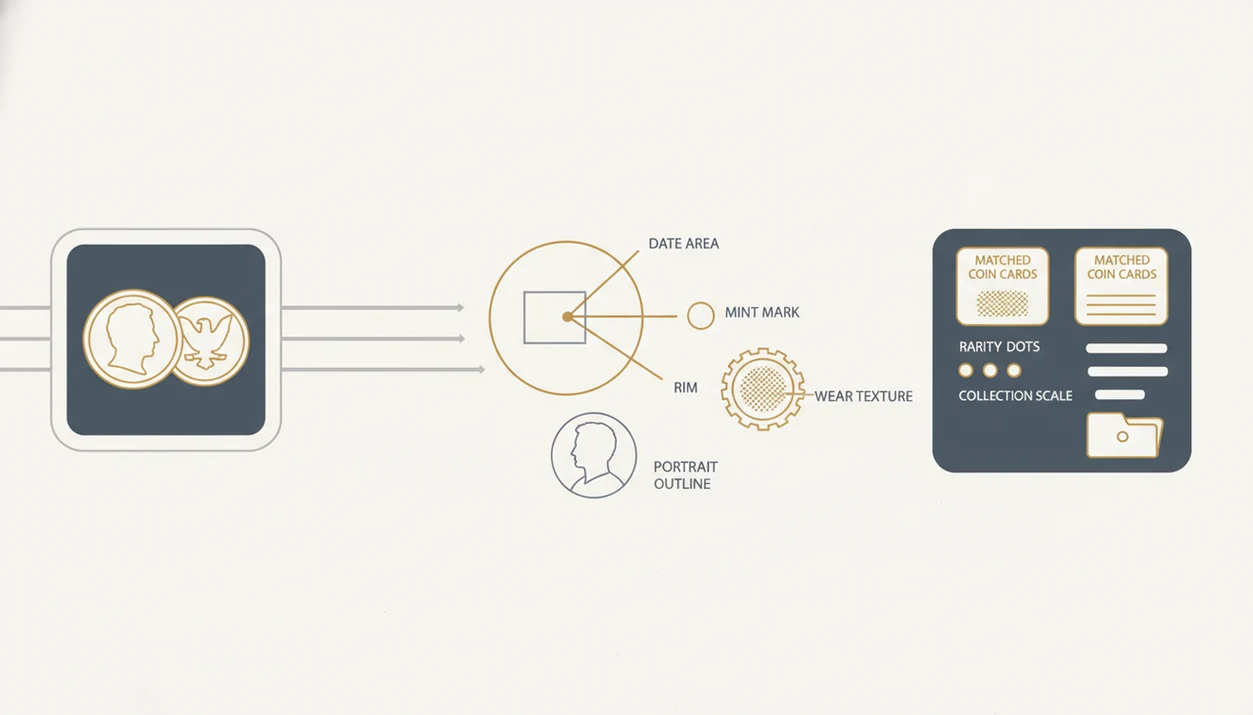
AI coin identification works by turning a coin photo into visual features, then matching those features against a reference database. The model looks at relief patterns, inscriptions, edge details, date shapes, diameter cues, and reverse design elements.
In plain English, it compares what your camera sees with known coin records. CoinEd uses that match to return likely country, year, denomination, and type. A value layer then connects the identification with market sales data, reference ranges, and broad condition tiers.
The scale is large. The U.S. Mint reported 14.8 billion circulating coins produced in fiscal year 2022 alone, before counting older U.S. issues, world coins, tokens, medals, and commemoratives source. That is why a reference database matters.
Results still depend on the photo. Dark wooden tables can make copper cents look redder than they are, and a thumb shadow over a mint mark can push the match in the wrong direction. Centered, well-lit photos usually give the strongest result.
Use the scanner as a calm photo-first check, not a final verdict. The goal is to identify the coin, review the evidence, and save a record you can compare later.
For someone sorting a small inherited group, the scan-to-save workflow turns loose coins into labeled records with photos, notes, and value ranges. If value is the main question, the deeper coin value app guide explains estimate ranges and rarity context.
CoinEd is built for casual finders, beginner collectors, and experienced hobbyists who want fast identification with organized records. Each group uses the same scan, but for a different reason.
Casual finders usually ask, “Is this silver or just old?” after spotting a 1964 dime or quarter. A silver coin identifier workflow can help separate date, metal content, and melt-value context.
Beginner collectors need education beside identification. They learn the difference between obverse and reverse, where mint marks sit, and why condition changes value. Experienced collectors care more about purchase history, grade notes, countries represented, and estimated portfolio value.
If the priority is keeping a growing collection organized, CoinEd fits because saved scans can sit beside quantities, grade notes, and estimated totals in one collection dashboard. Serious collectors should also review privacy settings, especially when collection photos, values, and storage notes are involved.
Coin scanner apps are useful, but they do not remove judgment from coin collecting. They shorten the first lookup, then leave room for grading, attribution, and market checks.
Myth one: a coin identifier app gives guaranteed sale prices. Reality: it gives estimated value ranges. A coin listed at one price on coins.ha.com may sell differently depending on grade, eye appeal, demand, and venue.
Myth two: AI replaces professional grading. Reality: high-value coins, borderline grades, and suspected varieties still need expert review. Subtle wear on Liberty’s cheek or a weak strike can change the grade.
Myth three: any photo will work. Reality: poor lighting, heavy wear, glare, or cropped rims can cause a wrong match. Two fingers pinching a worn cent can hide enough detail to confuse the result.
After a possible error find, when the first scan flags something unusual, CoinEd earns a closer look because the record can preserve photos, notes, and the suspected variety clue. The next step may be an error coin identifier review or a specialist opinion.
Coin identification and value data are checked against recognized numismatic references, then tested against real market behavior. The goal is not to declare a final grade, but to give a result that can survive a collector’s second look.
Our review flow uses reference catalogs, mint records where available, standard U.S. and world coin listings, PCGS CoinFacts, NGC resources, and major auction archives to confirm type, date, mint mark, denomination, and variety clues. Estimated value ranges are informed by recent sales, not just asking prices, because a coin in an online listing has not necessarily found a buyer.
CoinEd gives fast identification and useful context, but it is not a formal appraisal or certified grade. Treat results as a starting point, especially for coins that might carry real value.
Wipe dust from a cardboard 2x2 flip if needed, but do not clean the coin itself.
Many coin identifier apps offer free basic scanning, with paid tiers for advanced value estimates, collection tracking, or larger scan limits. Pricing varies by platform and feature set.
AI coin identification is usually stronger for common, well-photographed coins than for worn, damaged, or obscure issues. Clear obverse and reverse photos improve the result.
No. A coin scanner app can provide identification, grade hints, and estimated value ranges, but professional grading is still needed for high-value or borderline coins.
Yes, older coins can often be identified if the date, design, and inscriptions remain visible. Heavy wear, corrosion, or missing details can reduce accuracy.
Coverage includes many U.S. and world coins across denominations, eras, and designs. Very niche local issues, tokens, medals, or undocumented varieties may not appear in the database.
Collection privacy depends on how the app stores photos, records, and account data. Review whether images are saved locally, synced to the cloud, or used to improve AI models.
Yes, a coin value app can show estimated value ranges based on identification, condition tier, reference data, and recent market sales. These ranges are not guaranteed sale prices.
Yes. Scanning both the obverse and reverse gives the AI more design, date, mint mark, and denomination evidence.
Yes, many foreign coins can be identified from photos. Obscure regional currencies, low-mintage local issues, and badly worn world coins may need manual research.
Start with a clear photo of both sides, then use the guides for mint marks, errors, silver, and value context.
Scan a coin, review the likely match, check value context, and save notes for later research. For rare or high-value finds, use photo ID as a starting point and verify with a professional grading service.
Identify coin from photo · Best coin identifier apps · Download guide