Rare Penny Identifier for Key Dates, Errors, and Copper Clues


A rare penny identifier helps you screen a cent for the few clues that may justify deeper research: date, mint mark, metal composition, condition, and mint errors. Treat it as a first-pass filter, not a guaranteed value or authentication.
Definition: A rare penny identifier is a photo tool, lookup workflow, or checklist that flags pennies with possible collector value based on date, mint mark, variety, error, composition, and condition clues.
TL;DR
- Start with the date and mint mark before researching errors or auction prices.
- AI and photo apps can help, but worn coins, bad lighting, cleaning, and subtle varieties can cause false positives.
- Most pennies are common; professional grading only makes sense when the coin has a known key date, major error, or strong market evidence.
Rare Penny Identifier Clues at a Glance
The fastest rare penny check starts with five clues: date, mint mark, composition, grade, and error type. If those do not point to something specific, the coin is usually a common circulation find.
Old does not mean rare. A dark wheat-back cent, a dirty Memorial cent, or a toned Lincoln cent can still be worth only a small premium. The U.S. Mint produced about 8.4 billion Lincoln cents in 2023, according to its circulating coin production figures source, so rarity is the exception.
Face value comes from law; collector premium comes from the numismatic market. That means demand, condition, and verified attribution matter more than a hopeful photo.
A wheat reverse is only the starting line.
How Rare Penny Identification Works
Rare penny identification works by narrowing a cent from broad type to specific evidence: date, mint mark, metal, condition, and any mint-made error or variety. The goal is not to prove value at first glance, but to decide whether the coin matches a known scarce issue or deserves expert review.
A good workflow uses attribution, meaning the coin is matched to a recognized date, mint, error, or variety, and grade, meaning its condition level. Photos capture what is visible; references explain what those details should look like; sold listings show whether similar verified coins actually brought money. Old age alone is not enough because many older cents were made in huge numbers and remain common in worn grades.
- Read the date and mint mark before checking prices or errors.
- Check the composition only where the date makes copper, zinc, steel, or wrong-planchet questions realistic.
- Judge condition honestly by wear, luster, corrosion, cleaning, and marks.
- Compare suspected errors against trusted images so damage is not mistaken for a mint error.
- Seek expert attribution or grading when the coin has a key date, major error claim, high-grade potential, or sold-listing evidence that justifies the cost.
Five Rare Penny Facts Before Any Key Date Penny Lookup
Before using a key date penny lookup, keep these five facts in view. They prevent most beginner mistakes when a penny looks unusual under a kitchen light.
- A rare penny app or checklist flags possible value; it does not assign final value.
- Valuable pennies depend on date, mint mark, mintage, grade, and variety or error attribution.
- AI apps can misread worn coins, shadows, glare, and subtle doubled dies.
- Well-known Lincoln cent key-date areas include 1909, 1914, 1922, 1931, and 1955 issues that need reference checking.
- Final selling price depends on demand, grading status, and selling venue.
For beginners, date and mint mark research is often better than starting with price charts because it tells you whether the coin belongs in a known scarce category.
Before You Start Checking a Penny
Before you check a penny, set up the coin so the evidence is easy to see and hard to misread. Good light, careful handling, and a damage-first mindset make the later checklist more reliable.
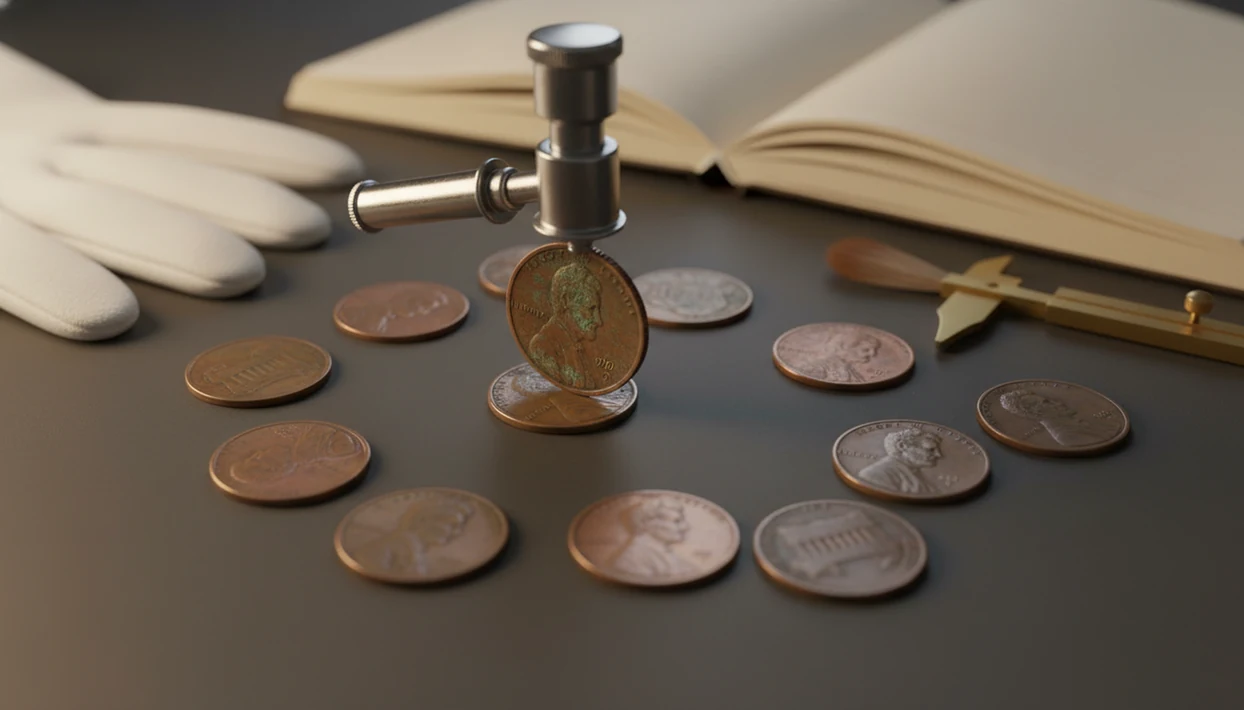
- Use bright indirect light, not a harsh flashlight beam, so glare does not wash out the date, mint mark, or lettering. Add simple magnification and steady the phone on a cup, book stack, or small tripod before taking close-ups.
- Hold the penny by the edges and keep fingers off the faces. Do not clean, rub, polish, or rinse it; a brighter surface can remove the original look collectors want to judge.
- Photograph the obverse, reverse, and any suspicious detail while the coin is flat. Take one full-coin image and one closer image instead of relying on a single zoomed, shaky shot.
- Record the weight only when the date or appearance raises a real composition question, such as copper versus zinc clues, steel cents, or a possible wrong-planchet error.
- Separate obvious scratches, bends, corrosion, glue, cuts, and chemical color from possible mint-made errors before looking up prices.
Rare Penny Identifier App Photo Workflow
A rare penny identifier app works by capturing coin photos, recognizing the coin type, reading visible date and mint mark details, comparing design features, and placing the result in estimated value context. In plain terms, it sorts the penny before you decide whether deeper research is worth your time.
How rare penny identification works: photo tools use image matching and feature comparison to compare the obverse, reverse design, lettering, and surface clues against known coin references. Multiple clear photos help because one image may hide the mint mark, flatten a doubled number, or make copper look redder on a dark wooden table.
Photograph the obverse, reverse, edge, and any close-up areas in bright, even light. A photo tool can help with first-pass sorting, but key varieties still need trusted references and, for higher-value coins, expert attribution.
Rare Penny Identifier Checklist Steps
Use this rare penny identifier checklist before assuming a cent is valuable. The order matters because most false alarms start when someone checks auction prices before reading the coin.
- Photograph both sides in bright, even light, with the penny flat and the camera steady.
- Read the date and mint mark before judging value; start with the obverse on Lincoln cents.
- Check composition clues for copper, zinc, steel, or unusual metal only where the date makes that question relevant.
- Look for major errors such as doubled dies, off-center strikes, wrong planchet coins, or missing mint mark varieties.
- Compare with a reputable reference or recent sold listings before considering professional grading.
A beginner turning over a wheat cent often finds the tiny mint mark under the date only after the second look. That small letter can change the research path.
Key Date Penny Lookup Signals Worth Researching
Key dates matter because collector demand exceeds available supply in collectible grades. A key date penny lookup should identify the exact date, mint mark, and variety before discussing value.
- 1909-S VDB Lincoln cent: High-interest first-year issue with a small designer initial detail.
- 1914-D Lincoln cent: A classic Denver key date where mint mark verification is essential.
- 1922 no D Lincoln cent: A missing mint mark variety that needs careful attribution.
- 1931-S Lincoln cent: A lower-mintage issue often checked by Lincoln cent collectors.
- 1955 doubled die Lincoln cent: A famous doubled die where the date and lettering are the main focus.
Damage, dirt, weak strikes, and worn mint marks can imitate rare signals. Compare any promising find against a trusted reference and recent sold listings. A broader US coin identifier workflow helps when the penny came from a mixed jar with nickels, dimes, and foreign coins.
Valuable Penny Identifier Table for Errors and Damage
A valuable penny identifier should separate mint-made errors from ordinary damage. Many shiny, bent, or oddly colored cents are interesting to look at, but not collectible errors.
| Visual clue | Possible valuable error | Common damage lookalike |
|---|---|---|
| Spread doubling on date or letters | Doubled die | Flat, shelf-like machine doubling |
| Design struck partly off the blank | Off-center strike | Post-mint bending or squeezing |
| Curved missing section | Clipped planchet | Cut, filed, or bitten edge damage |
| No retaining rim, expanded design | Broadstrike | Flattened damage from pressure |
| Bright surface | Original luster | Cleaning, polishing, or chemical shine |
Cleaned and damaged pennies are usually discounted, even when they look bright in photos. Major errors need attribution, clear photos, and often expert review. The same caution applies when comparing with an error coin identifier.
Rare Penny App Versus Manual Penny Value Research
Is there an app that identifies rare pennies? Yes, a rare penny app can screen photos, organize collection notes, save image records, and provide estimated value context.
Manual research is still needed for subtle varieties, grading judgments, cleaned coins, and final sale expectations. A photo-first result may identify the type correctly but miss a weak mint mark or confuse machine doubling with a true doubled die. That is where close comparison against references matters.
A good AI coin identification workflow delivers fast sorting and research direction, not guaranteed authentication or a binding sale price.
A dedicated penny workflow can be useful for quick records after a bank box search or late-night sorting beside bank receipts. If you mainly collect cents, a penny identifier app workflow keeps the date, mint mark, and reverse design notes in one place.
Common Rare Penny Identifier Myths
The biggest rare penny myths come from treating every unusual cent as a scarce coin. The American Numismatic Association explains that value depends on rarity, demand, and condition, and that most coins are worth face value or only a small premium source.
Myth: any old penny is rare. Age helps only when the issue is scarce or demanded.
Myth: all wheat pennies are valuable. Most circulated wheat cents are common.
Myth: a shiny penny must be high grade. Cleaning can make a coin bright and less desirable.
Myth: an app estimate is a guaranteed sale price. It is an estimated value range, not a formal appraisal.
Myth: AI can detect every micro-variety from one photo. It cannot. Subtle die varieties often need magnification and specialist review.
Rare Penny Grading Cost Signals
Professional grading can add trust, attribution, and market confidence for genuinely scarce or high-grade pennies. PCGS guidance notes that third-party graded coins generally sell for higher and more consistent prices than raw coins, but the fee still has to make sense source.
Do not grade every wheat penny. Do not grade an ordinary circulation cent just because it is old, red, or found in a rubber-banded bank envelope. Grading, shipping, insurance, and waiting time can exceed the likely premium.
Consider grading only after four checks line up: date and mint mark, possible error or variety, condition, and recent sold-price evidence. A penny worth a closer look is not always a penny worth submitting.
Wipe dust from the cardboard 2x2 flip if needed. Do not clean the coin itself.
Limitations
A rare penny identifier is useful, but it has real limits. Treat every result as a research lead until the coin is verified.
- AI tools can be wrong when photos are blurry, dark, overexposed, or taken at harsh angles.
- Heavy wear, corrosion, cleaning, and post-mint damage can hide or imitate important features.
- No app can guarantee a sale price or replace professional grading for high-value coins.
- Subtle doubled dies, repunched mintmarks, and die varieties may require expert attribution.
- Price guides and app estimates can lag behind real market demand.
- A conservative checklist may miss obscure or newly discovered varieties.
- Most circulation finds remain face value or low-premium coins after correct identification.
For most collectors, a conservative first-pass check is safer than chasing every online price because it filters common cents before money is spent on grading or selling fees.
FAQ
Is there a rare penny app?
Yes, photo-based coin apps can screen pennies for date, mint mark, type, and estimated value context. CoinEd can help with first-pass checks, but it cannot guarantee authenticity or final value.
What pennies are worth money?
Pennies worth researching usually have key dates, scarce mint marks, major errors, high grades, or rare varieties. Date, mint mark, condition, and verification drive most collector value.
Are wheat pennies always valuable?
No, most circulated wheat cents have only small premiums. Key dates, scarce mint marks, strong condition, or verified errors are the main exceptions.
How do I check a mint mark?
On Lincoln cents, look below the date on the obverse for a small mint mark letter. Use bright light, magnification, and a close-up photo because dirt or wear can distort the mark.
What is a doubled die penny?
A doubled die penny shows true hub doubling in the design, often visible in the date or lettering. It is different from machine doubling, which is flatter and usually less collectible.
Are copper pennies rare?
Copper composition alone does not make most pre-1982 cents rare. The date, mint mark, condition, and variety still matter.
Can cleaned pennies be valuable?
Cleaned pennies can still have some value if they are rare, but cleaning usually lowers collector demand. Bright surfaces from polishing are not the same as original luster.
Should I grade my penny?
Consider grading only when likely value exceeds grading, shipping, and insurance costs. Use date, mint mark, error evidence, condition, and sold listings before deciding.
Where can I sell rare pennies?
Rare pennies can be sold through coin dealers, auctions, coin shows, or peer-to-peer marketplaces. Higher-value coins usually need stronger verification before sale.