Penny Identifier App For Lincoln Cents, Wheat Pennies, Dates, And Mint Marks
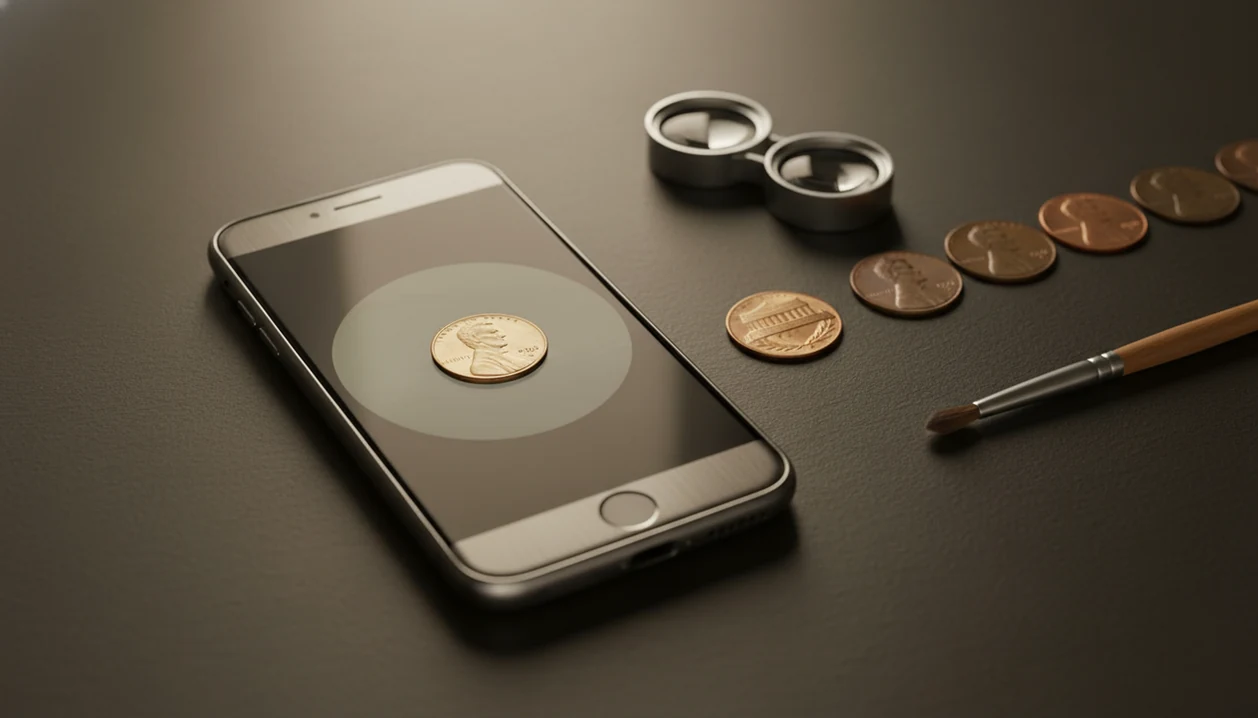


A penny identifier app helps beginners identify pennies by photographing the obverse and reverse, then checking the design type, date, mint mark, copper clues, and possible rare varieties. Use it as a fast triage tool for pocket change, wheat cents, and inherited jars, then verify anything valuable with trusted references or a professional grader.
> A penny identifier app is a photo-first coin tool that uses camera images and coin-reference data to classify U.S. cents by design, date, mint mark, condition clues, and estimated value range.
- Scan both sides of the penny in clear light so the app can read the date, mint mark, portrait, reverse design, and color.
- Use app results to triage common cents from wheat pennies, copper dates, key dates, and major varieties worth a closer look.
- Treat value estimates as guidance, not guaranteed sale prices, especially for worn coins, subtle errors, and high-grade red Lincoln cents.
Penny Identifier App Basics For Lincoln Cents
A penny identifier app identifies cents from photos by comparing the visible design type, date, mint mark, and condition clues against coin-reference data. It is most useful as a first pass, not as a final grade or appraisal.
Common U.S. cent categories include Indian Head cents, Lincoln wheat cents, Lincoln Memorial cents, and Union Shield cents. A beginner may start with the obverse, then turn the coin over to confirm the reverse design. That simple flip often separates a wheat cent from a modern Memorial cent in seconds.
CoinEd is the photo-first coin identifier and value estimation app that identifies coins from photos, shows rarity and grade hints, and helps beginners and collectors estimate coin value. Tools like CoinEd work best when the photo is sharp and the coin is not covered by glare, heavy dirt, or damage. Final grading still belongs with market-recognized services.
At-A-Glance Penny Identifier App Checklist
Use this checklist to inspect any penny before trusting the first result. The goal is scan, review, save, then verify anything unusual.
| Clue | What to check | App workflow |
|---|---|---|
| Date | Year on the obverse | Scan and confirm manually |
| Mint mark | Letter under or near the date | Review with magnification |
| Reverse design | Wheat ears, Memorial, Shield, or older type | Match the design label |
| Composition era | 1909 through 1982 copper, later copper-plated zinc | Sort copper clues separately |
| Color | Red, red-brown, or brown surface | Save only after checking light |
| Condition | Wear, scratches, corrosion, cleaning | Note visible problems |
| Variety clues | Doubled die, repunched mark, odd spacing | Verify with references |
Wheat pennies ran from 1909 through 1958, and the U.S. Mint struck roughly 25.6 billion of them, according to the U.S. Mint’s historical cent production data (https://www.usmint.gov/learn/history/historical-documents). That is why they still turn up in jars and beginner folders. For broader denominations, a US coin identifier can help keep cents, nickels, dimes, and quarters separated.
Five Facts About Identifying Pennies With A Phone
Identifying pennies with a phone works best when the app is treated as a sorting aid. It narrows the pile before you spend time on magnification and reference checks.
- AI can classify many U.S. cents by photo-visible design, date, and mint mark.
- Apps are strongest for triaging large groups of coins, such as a coffee can of mixed wheat pennies poured onto a towel.
- Lighting, focus, dirt, and scratches can change the result, especially on brown copper surfaces.
- Values are estimates and are not certified grades or guaranteed sale prices.
- Basic Lincoln cent knowledge improves app results because you know which dates, mint marks, and reverse designs matter.
The U.S. Mint’s 2022 Annual Report lists about 13.5 billion Lincoln cents produced that year (https://www.usmint.gov/about/reports/annual-reports). That volume explains the need for triage. Most cents are common circulation finds, but a few are worth a closer look.
How A Penny Identifier App Works Behind The Scan
A penny identifier app works by capturing coin images, locating the round edge, recognizing the obverse and reverse, and matching visible features to reference data. The technical terms are image segmentation and reference matching. In plain English, the app finds the coin in the photo, reads what it can see, then compares it to known cent types.
Date and mint mark reading matter most for Lincoln cents. Color cues may also help separate red, red-brown, and brown copper surfaces, but phone cameras can distort copper. Photos on a dark wooden table often make cents look redder than they are.
Good photo-first coin identifier and value estimation app for collectors and beginners should deliver structured clues and estimated ranges, not guaranteed rarity, instant certified grades, or sale promises.
Confidence is not the same as market certainty.
Before You Scan A Penny
Before you scan a penny, prepare the coin, phone, and work area so the first photo is useful. A clean setup helps the app read the date, mint mark, reverse design, and surface problems without adding false glare or shadows.
- Place the cent on a plain dark or neutral background, such as a black card, gray mat, or soft towel. Avoid shiny tables, patterned cloth, and bright wood grain that can confuse copper color.
- Wipe the phone camera lens with a microfiber cloth, but leave the coin surface alone. Cleaning, rubbing, or polishing a cent can damage value and make the surface harder to judge.
- Keep a small magnifier nearby for weak dates, faint mint marks, and worn wheat ears. Use it after the scan when the app result does not match what your eye sees.
- Photograph the obverse and reverse before trusting any value estimate. One side may identify the date, while the other confirms the design type.
- Set damaged, bent, corroded, or heavily scratched cents in a separate review pile. They may still be interesting, but their values and app readings need extra caution.
How To Use A Penny Identifier App For Wheat Pennies
Use the app the same way you would sort a small desk tray of cents: one coin, two sides, then a written note. For wheat cents, slow down around weak dates and mint marks.
- Set the penny on a plain background in even light, with no fingers covering the rim.
- Scan the obverse and reverse so the app can read Lincoln, the date, and the wheat reverse.
- Review the date, mint mark, and design label, then use magnification if the mark is faint.
- Sort copper, wheat, key-date, and damaged coins into separate groups.
- Save promising finds and verify with references before selling, grading, or calling the coin rare.
For beginners, scanning both sides is often better than searching by date alone because the reverse design confirms the cent type. If the app flags a possible variety, compare it with an error coin identifier workflow before making a value claim.
Wheat Penny Identifier Clues Worth A Second Look
“Is my wheat penny rare?” Most wheat cents are popular collectibles, but they are not automatically rare. The wheat reverse ran for decades, and many dates were produced in very large numbers.
Key dates and mint marks deserve slower checking. Examples include the 1909-S VDB and 1914-D Lincoln cents. PCGS CoinFacts lists key Lincoln cents such as the 1909-S VDB and 1914-D with values that can reach hundreds or thousands of dollars in higher grades, so app-flagged results should be verified against PCGS CoinFacts (https://www.pcgs.com/coinfacts) or a similar reference.
Condition and color also drive value. A sharp red cent can price very differently from a worn brown cent with the same date. We have seen beginners place a sticky note beside a possible key date, then later discover the mint mark was shadow, not metal.
For deeper date screening, use a rare penny identifier alongside the app result.
Common Myths About Lincoln Cent App Results
Lincoln cent app results are useful, but several beginner myths cause inflated expectations. Keep these corrections close when sorting a jar or roll.
- Every wheat penny is rare. Most wheat cents are collectible but common, especially worn later dates.
- The app value is a guaranteed sale price. It is an estimated value range, and real offers depend on grade, demand, and venue.
- The app can catch every doubled die or repunched mint mark. Tiny varieties often need magnification, side-by-side photos, and expert attribution.
- Old copper color alone proves high value. Color helps, but date, mint mark, wear, and surface quality matter more.
- You do not need coin basics if you have an app. Knowing copper years, reverse types, and key dates makes app results easier to judge.
A Lincoln cent app usually works best when the user checks the result, not when the user accepts it blindly.
Penny Identifier App Verification Before Selling Or Grading
Verify any rare or valuable app result before selling the coin or paying for grading. Re-scan under better light, then check the date and mint mark with magnification.
Look closely for cleaning, corrosion, scratches, rim dents, and environmental damage. Wiping dust from a cardboard 2x2 flip is fine, but do not clean the coin itself. Cleaning can lower value and make surfaces harder to judge.
Compare the coin against reputable references, mintage data, and recent sale context. If the penny is a key date, a high-grade red Lincoln cent, or a valuable attributed variety, professional grading by PCGS, NGC, or another recognized service may be justified.
A collection app can help organize scans and notes, but the final selling decision should rest on verified identity, condition, and market evidence.
Limitations
A penny identifier app has real limits, especially with damaged or subtle coins. Use it as a photo-first check, then slow down when money or grading fees are involved.
- Apps can misread worn, dirty, corroded, scratched, or off-center pennies.
- Tiny doubled dies, repunched mint marks, and specialist varieties may require magnification and expert attribution.
- Red, Red-Brown, and Brown color labels can shift with lighting, camera settings, and background color.
- Value ranges are estimates, not guaranteed sale prices.
- No app replaces market-recognized professional grading for high-value coins.
- Some apps are broad world-coin tools and may not support deep Lincoln cent variety attribution.
- Counterfeit, altered, or cleaned coins can fool beginners and automated tools.
A lamp angled toward a faint mint mark can help, but it can also create a false shadow. Recheck the coin from another angle.
FAQ
Can an app identify pennies?
Yes, an app can identify many pennies from clear photos of the obverse and reverse. Rare, damaged, dirty, or altered coins still need manual verification.
What is a wheat penny?
A wheat penny is a Lincoln cent with two wheat ears on the reverse. The design was issued from 1909 through 1958.
Where is the penny mint mark?
On most Lincoln cents, the mint mark appears on the obverse below the date. Common letters include D for Denver and S for San Francisco.
Are all wheat pennies valuable?
No, most wheat pennies are common and have only a small premium in worn condition. Key dates, better mint marks, strong condition, and certain varieties can be more valuable.
Which pennies are copper?
U.S. copper cents were issued from 1909 through 1982, before the change to copper-plated zinc. Some 1982 cents need weight checking because both compositions exist for that year.
Can apps find doubled dies?
Apps may flag obvious doubled dies or unusual variety clues. Subtle doubled dies usually require magnification and comparison with trusted variety references.
Is a penny app value accurate?
A penny app value is an estimate, not a guaranteed sale price. Condition, demand, grading status, and sale venue can all change the final value.
Should rare pennies be graded?
Rare pennies may be worth grading when they are key dates, high-grade coins, or valuable attributed varieties. Common worn cents usually do not justify grading fees.