
Coin Edge Identification For Reeded, Plain, And Lettered Coin Edges
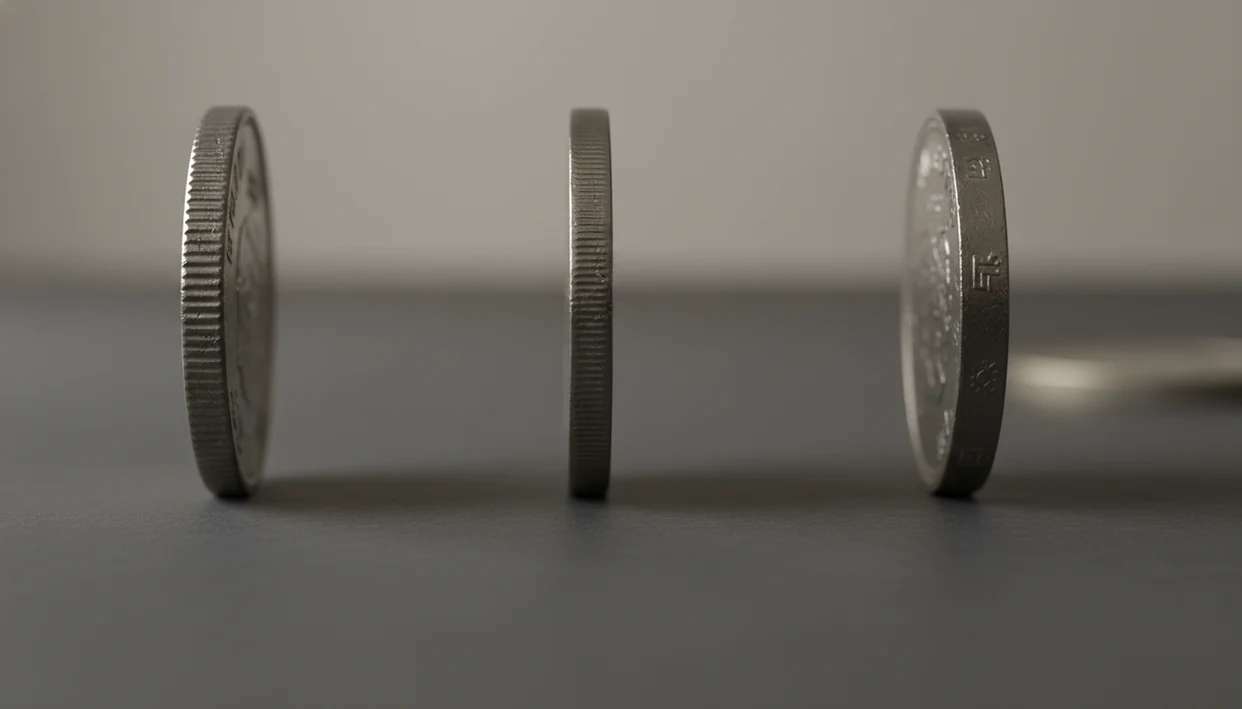


Coin edge identification means checking the side of a coin for reeding, lettering, smoothness, seams, damage, or unusual markings that help confirm its denomination, type, country, variety, and authenticity clues.
Definition: A coin edge is the side surface between the obverse and reverse, separate from the rim, and it may be reeded, lettered, plain, security-patterned, or decorative.
TL;DR
- Reeded coin edges have small grooves that can help confirm denomination, type, and expected mint design.
- Lettered coin edges may include mottos, dates, fineness marks, mint details, or symbols that separate important varieties.
- Plain coin edges are not automatically suspicious, but a smooth edge where reeding or lettering is expected can indicate wear, damage, alteration, mint error, or counterfeiting.
Coin Edge Identification Basics For Beginners
Coin edge identification is the process of reading the side of a coin as a separate identification feature, not confusing it with the raised rim around the face. The rim frames the obverse and reverse. The edge is the narrow band you see when the coin is standing upright.
A reeded coin edge has small ridges or grooves. A lettered coin edge carries words, numbers, symbols, or ornaments. A plain coin edge is smooth and undecorated. These details can support denomination, type, country, variety, and authenticity clues.
Start with the obverse, then the reverse, then the edge. That order matters. A beginner turning over a wheat cent under a kitchen light may find the tiny mint mark first, but the edge still helps confirm whether the coin matches the expected type. Edge evidence should support face-side identification, not replace it.
Five Coin Edge Facts That Change Identification Results
- The edge is not the rim. The edge is the side surface of the coin, and it can carry identification data that the face does not show.
- Reeded edges were historically practical. Grooved edges helped discourage shaving precious metal from silver and gold coins.
- Lettered edges can be data-rich. Inscriptions may include mottos, dates, fineness marks, issuer names, mint details, or symbols.
- Plain edges depend on the coin type. A plain coin edge can be normal on one coin and suspicious on another.
- AI coin identification benefits from edge photos. Ridge spacing, edge texture, inscription layout, and missing details can become machine-readable clues.
For beginners, the edge is often the quickest way to catch a mismatch before chasing a value estimate. One close-up of reeded coin edges can save ten minutes of comparing almost-identical portraits.
Reeded Coin Edge, Lettered Coin Edge, And Plain Coin Edge Differences
Reeded, lettered, and plain edges describe different side surfaces, and each can point to a different identification clue. Decorative and security-patterned edges also exist, especially on modern world coins and commemorative issues.
| Edge type | What it looks like | What it helps identify | Warning signs |
|---|---|---|---|
| Reeded coin edge | Grooved, milled, serrated, or ridged | Denomination, type, expected mint design, possible metal issue | Smooth spots, uneven spacing, filed areas, missing reeds |
| Lettered coin edge | Words, numbers, symbols, mottos, or ornamental inscriptions | Variety, date placement, issuer, fineness, special issue | Missing letters, wrong orientation, weak or altered lettering |
| Plain coin edge | Smooth and undecorated | Normal design for some cents, nickels, tokens, and world coins | Plain edge where reeding or lettering is expected |
For U.S. coins, a dime and quarter feel different from a cent partly because of the edge. For world coins, edge lettering can be the detail that separates one issue from a near match.
Before You Start: Coin Edge Identification Tools And Setup
Before you identify a coin edge, set up a clean, safe, well-lit place to handle and photograph the coin. The goal is to capture the edge as it is, without adding scratches, fingerprints, glare, or cleaning marks that confuse the result.
- Wash your hands and dry them fully, or wear clean cotton or nitrile gloves for coins that may be valuable.
- Prepare soft supports before the coin leaves its holder. A folded microfiber cloth, foam block, or clean soft pad can help the coin stand without scraping the edge or faces.
- Set diffuse light from a shaded window or soft lamp, then clean the phone lens and turn on macro mode or tap-to-focus for close details.
- Gather expected edge references for the date, denomination, country, and type before deciding that odd lettering, weak reeds, or a smooth section is unusual.
- Avoid cleaning, scraping, polishing, or “brightening” the edge before photos. If dirt is present, photograph it first, because removed material can also remove identification evidence.
How Coin Edge Identification Works In Photo-Based Coin ID
Collectors and photo-based tools compare edge traits against expected reference data for a coin type. The useful features include ridge spacing, edge texture, inscription layout, orientation, seams, and missing details. In plain language, the side of the coin becomes another checklist.
A good ai coin identification, rarity lookup, and collection value estimation app for collectors and beginners should deliver structured clues from photos, reference-style context, and cautious value ranges, not instant certified grades or guaranteed authentication.
Edge analysis works best when paired with obverse, reverse, weight, diameter, metal color, and condition. Pew Research Center reports that 91% of U.S. adults own a smartphone, which makes close edge photography practical for many collectors (Pew Research Center, Mobile Fact Sheet). For face-side capture basics, the identify coin from photo guide covers the starting point.
How To Use Coin Edge Identification Before A Value Estimate
Use coin edge identification before relying on rarity or value estimates because an unexpected edge can change the coin type or raise a verification question. Work slowly. The edge is small, and glare hides real detail.
- Photograph the obverse first, keeping the date and mint mark sharp.
- Photograph the reverse next, including the full rim and design.
- Stand the coin upright or brace it safely so the edge is visible.
- Rotate the coin and capture every section of lettering, reeding, or repeated pattern.
- Compare the observed edge with the expected edge type before using a rarity or value estimate.
- Save edge notes with the coin record if the edge looks unusual.
Tools like CoinEd can help organize the photo-first check, but the comparison still starts with what the coin should look like. A coin value app is more useful after the type is confirmed.
When To Photograph A Reeded Coin Edge Or Lettered Coin Edge
When should you photograph a coin edge? Photograph it whenever the edge could separate similar coins, confirm lettering, or reveal damage that affects identification. This is especially useful when two coins share similar obverse and reverse designs.
Take edge photos for coins with expected lettering, security marks, ornamental edges, or repeated patterns. Do the same before valuing high-value, rare, silver, gold, or frequently counterfeited coins. The common question is simple: “Is this silver or just old?” A 1964 dime or quarter makes that question feel practical, not theoretical.
Photograph the edge if the coin appears clipped, shaved, polished, unusually smooth, or altered. A 2014 United States Mint survey reported that 56% of adults had collected coins or saved coins for metal value or design, which makes repeatable edge checks useful for everyday collectors (United States Mint). For phone workflow details, use how to identify coins with phone.
Coin Edge Photo Requirements For Clear AI Identification
Clear edge photos need bright diffuse light, stable positioning, and sharp focus on the side surface. Metal reflects harsh light easily, so a shaded window or soft desk lamp often works better than a bare overhead bulb.
Hold the coin upright without scratching it, or stabilize it between clean, soft supports. If the whole edge will not fit in focus, capture several edge segments. Use macro mode or tap-to-focus on the lettering or ridges. A close-up of reeded coin edges should show spacing, not just a gray blur.
Do not clean or scrape the edge to make details visible. Wiping dust from a cardboard 2x2 flip is fine, but cleaning the coin itself can remove evidence and reduce collector value. Avoid harsh reflections, motion blur, dirty lenses, and cropping off the edge. Dark wooden tables can also make copper cents look redder than they are.
Common Coin Edge Identification Mistakes With Reeding And Lettering
The edge is not just decoration. It can carry the clue that explains why two similar coins are actually different types, varieties, or issues.
Weak reeding does not always mean counterfeiting. Circulation wear, rim hits, polishing, and handling can soften ridges. Missing or faint lettering can also come from wear, damage, mint error, or later alteration. That is why edge findings need context.
Some genuine coins have multiple legitimate edge varieties. Others have edge lettering that can appear in different orientations. Obverse and reverse photos alone may not distinguish every type or variety, especially with world coins, commemoratives, and pieces with security edges. If you are photographing both faces already, the full process in how to scan both sides of a coin pairs well with an added edge pass.
Coin Edge Verification Checks Before Authentication Claims
Coin edge verification should combine the edge with weight, diameter, magnetism where appropriate, metal color, surface style, and known type references. The goal is evidence-based confidence, not a guaranteed authentication from edge photos alone.
- Correct edge type: The observed edge should match the expected plain, reeded, lettered, or security edge for that coin.
- Correct inscription: Lettering should match the known words, symbols, direction, and layout.
- Consistent spacing: Reeds or letters should not suddenly change size without a plausible reason.
- No suspicious seam: A visible seam can suggest casting, joining, or alteration.
- No face-edge mismatch: The edge should not contradict the date, denomination, country, or type shown on the coin faces.
The U.S. Secret Service states that less than 0.01% of U.S. currency in circulation is counterfeit, but collectible coins still need stronger multi-feature checks because rare-coin counterfeits are judged case by case (U.S. Secret Service). For unfamiliar foreign pieces, what app identifies foreign coins can help frame the first comparison.
Limitations
Coin edge identification is useful, but it is not a standalone authentication method. Treat it as supporting evidence within a broader inspection.
- Edge identification alone cannot prove authenticity.
- Skilled counterfeiters may imitate reeding or fake edge lettering.
- Poor smartphone focus, glare, motion blur, and shallow depth of field can hide key details.
- Genuine coins may exist with different edge types because of special issues, errors, or mint variations.
- Heavy wear, polishing, damage, or cleaning can soften reeding or remove lettering.
- AI models may not recognize obscure, newly discovered, or poorly documented edge varieties.
- Edge photos cannot replace weight, diameter, metal testing, provenance, or expert review for high-value coins.
- An estimated value range is not a formal appraisal.
For valuable coins, edge photos are a starting record. Not the finish line. A specialist or grading service may still be needed before selling, insuring, or making an authentication claim.
Indian Coin Edge Lettering and Security Patterns
Some Indian denominations use lettered or patterned edges that help confirm type. Photograph the full circumference in overlapping shots and compare orientation carefully—upside-down lettering is not automatically an error.
For full attribution workflows that include scripts and calendars, see Indian coin identification.
FAQ
What is a coin edge?
A coin edge is the side surface between the obverse and reverse. It is separate from the raised rim around the coin face.
What is a reeded edge?
A reeded edge has small grooves or ridges around the side of the coin. It may also be called a milled, serrated, or ridged edge.
What is a lettered edge?
A lettered edge includes words, numbers, symbols, mottos, dates, issuer details, or fineness marks. It can help identify varieties and special issues.
What is a plain edge?
A plain edge is smooth and undecorated. It may be completely normal depending on the coin type.
Why photograph a coin edge?
Edge photos help confirm type, variety, denomination, and authenticity clues. They are supporting evidence, not a standalone guarantee.
Can edge lettering prove authenticity?
Edge lettering can support an authentication review, but it cannot prove authenticity by itself. Weight, diameter, metal, surface, and expert comparison may still be needed.
Should I clean the coin edge?
No. Do not clean, scrape, or polish the coin edge because it can damage value and remove useful identification evidence.