
App That Tells Coin Value and Explains Why the Price May Vary
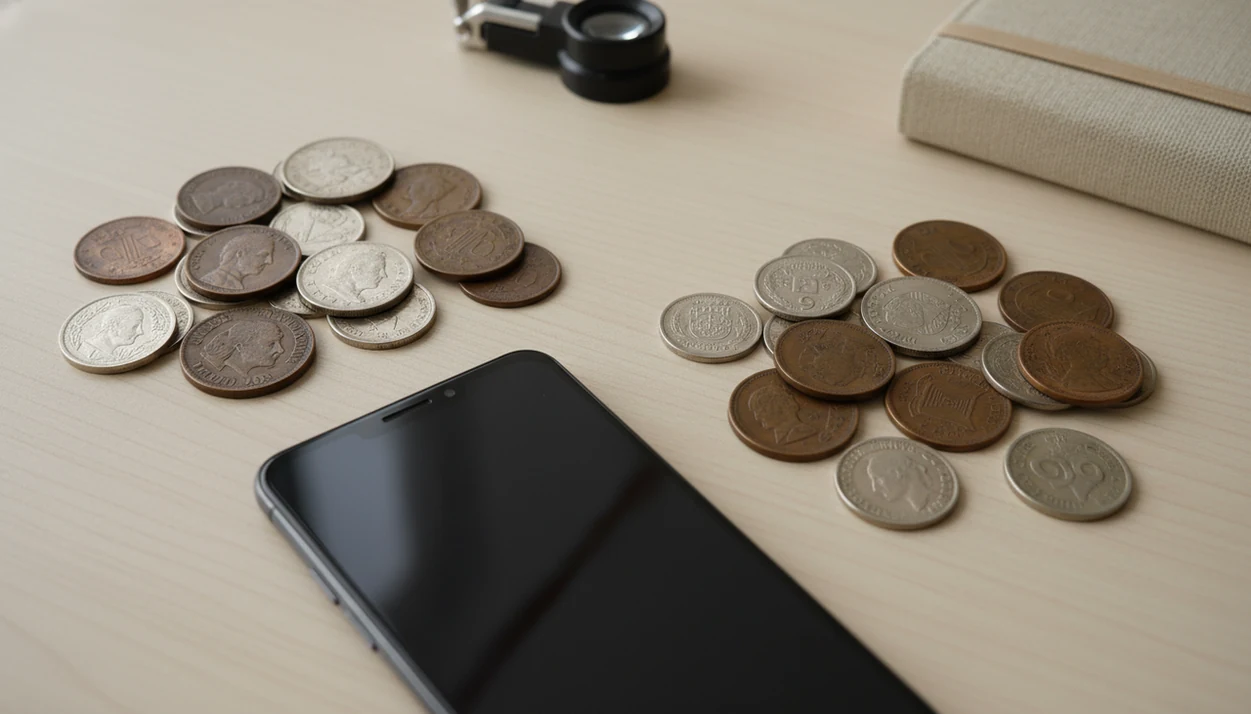
Yes, an app that tells coin value can identify a coin from photos and estimate a value range, but it should not be treated as a guaranteed appraisal. The best coin value apps explain the date, mint mark, condition, metal, rarity, demand, and uncertainty behind the estimate.
> A reliable coin value app identifies coins from photos, shows rarity and grade hints, and helps beginners estimate a realistic value range without treating the result as a certified appraisal.
- A coin worth app is strongest as a first-pass identification and value-range tool, not a final appraisal.
- Value can change sharply with grade, mint mark, errors, demand, and whether prices come from listings or actual sold sales.
- Use clear obverse and reverse photos, then verify promising coins with sold-price research, catalogs, or an expert.
How these apps look
Side-by-side captures of the compared products. Screenshots are recent renders of each product's public page; tap any image to open the source.
What an App That Tells Coin Value Can Actually Do
An app that tells coin value scans coin photos, suggests a likely coin type, and gives an estimated value range based on visible details. It may read the denomination, country, date, mint mark, reverse design, and broad condition clues.
That is identification first. Valuation comes second. A phone photo can help narrow the answer, but it cannot prove the exact resale price a buyer will pay on Tuesday afternoon.
A coin worth app should prefer ranges over one-price answers because grade, demand, and market venue move prices. Photo-first coin value tools are most useful when they combine identification, rarity lookup, and collection organization, especially when a coin tray starts filling with loose wheat cents and state quarters.
Start with the obverse. Then turn the coin over.
A good photo-first coin identifier and value estimation app for collectors and beginners delivers structured clues and next-step research, not an instant certified grade or guaranteed sale price.
Five Facts About Any App to Value Coins
- Coin apps are usually stronger at identifying a coin than proving its exact market value.
- Grade, date and mint mark, surface condition, metal content, and errors can change value significantly.
- A careful app to value coins should show estimated ranges, comparable sales, or market context rather than guaranteed prices.
- Photo quality affects scan coin value results, especially when the rim is cropped or glare hides the mint mark.
- Rare varieties and possible error coins need extra verification because damage, weak strikes, and die markers can look similar.
A beginner turning over a wheat cent under a kitchen light may find a tiny mint mark under the date. That one letter can change the research path. Still, the app result is only a screening point.
For beginners, value-range scanning is often safer than chasing a single number because it keeps condition and uncertainty visible.
How a Scan Coin Value App Works Behind the Picture
A scan coin value app works by capturing a photo, detecting visual features, matching those features to a coin database, then adding rarity and price context. The value estimate depends on match quality, visible condition, and the market data behind the result.
Photo recognition and coin database matching
Computer vision compares shapes, lettering, portraits, dates, mint marks, and reverse designs. In plain language, the app looks for visual fingerprints. Research on modern image recognition shows high classification accuracy is possible when training data are strong, which helps explain why common U.S. coins are often recognized well. For broader context, NIST notes that image-recognition systems depend heavily on image quality, training data, and test conditions: https://www.nist.gov/artificial-intelligence.
The lamp angle matters.
Market data and rarity context
After matching the coin, the app may check mintage, key-date notes, metal type, and recent market examples. The Federal Reserve reports U.S. coin circulation and production data, and the U.S. Mint publishes annual coin production figures, which show why apps are useful filters among ordinary finds: https://www.federalreserve.gov/paymentsystems/coin_currcircvolume.htm and https://www.usmint.gov/about/production-sales-figures/circulating-coins-production.
A US coin identifier workflow is especially helpful for pennies, nickels, dimes, quarters, halves, and dollars because the date and mint mark rules are fairly structured.
Before You Use a Coin Worth App for a Price Estimate
“Before you use a coin worth app for a price estimate, what should you check?” Photograph both the obverse and reverse, keep the full rim visible, use steady light, and avoid glare across shiny fields.
Focus is not a small detail. Research on image-based object recognition shows performance drops when images are blurred, blocked, or taken from poor angles. Coin photos have the same problem. A phone photo on a dark wooden table can also make copper cents look redder than they are.
Check the mint mark, edge, wear pattern, and any odd surface marks before trusting the value range. If you are asking, “Is this silver or just old?” on a 1964 dime or quarter, separate basic identification from higher-stakes valuation.
The full phone workflow is covered in how to check coin value with phone, but the short version is simple: clear photos first, price judgment second.
How to Use an App That Tells Coin Value
Use an app that tells coin value as a step-by-step record, not as a one-tap verdict. The goal is to identify the coin, understand the estimate, and preserve notes for later comparison.
- Clean only loose dust if necessary; do not polish, scrub, dip, or brighten a collectible coin.
- Photograph the obverse and reverse in even light with the full rim, date, and mint mark visible.
- Scan the coin and check whether the app name, country, denomination, and date match what you see.
- Review grade hints, rarity clues, metal notes, and the estimated value range.
- Compare promising results against sold prices, catalogs, or dealer references rather than active listings alone.
- Save the coin to a collection record with photos, notes, and any later verification.
We often wipe dust from a cardboard 2x2 flip, but not from the coin itself. That small restraint can matter.
Why Coin Value App Estimates Vary So Much
Coin value app estimates vary because identification and valuation use different evidence. The coin name may be obvious, but grade, strike quality, demand, and sold-price data can move the estimate far apart.
| Factor | Identification role | Valuation role | Why it matters |
|---|---|---|---|
| Date and mint mark | Confirms issue | Flags key dates or common dates | A tiny “D” beside Roosevelt’s torch can change the search |
| Grade and wear | Shows condition level | Drives price differences | Fine and Mint State are not close markets |
| Mintage | Gives production context | Suggests supply, not demand | Low mintage is not automatic value |
| Metal content | Identifies silver, gold, copper, clad | Adds melt value context | Metal can set a floor, not always a premium |
| Strike and errors | Helps spot unusual features | May add or reduce value | Damage can imitate mint errors |
| Market source | Not part of ID | Changes price expectation | Retail listings often run higher than actual sold prices |
The mintage vs rarity distinction matters here. A scarce coin with weak demand may sell for less than a common coin in exceptional condition.
Common Myths About a Coin Worth App
A single photo cannot produce an exact market value for every coin. It can suggest an identity and range, but a final price depends on grade, surfaces, demand, and where the coin is sold.
Myth one: “Rare” always means expensive. It does not. Rarity without buyer demand may still produce a modest price.
Myth two: the obverse is enough. Often it is not. Reverse designs, mint marks, edges, and small varieties can decide the match.
Myth three: all apps use the same data. They don’t. Some lean heavily on photo matching; others add rarity notes, grade hints, or market references.
Myth four: error detection is easy. It is especially hard because post-mint damage can mimic clipped planchets, off-center strikes, filled dies, or doubled features.
Quarter roll crumbs on the table can make every odd mark feel important. Slow down. Separate damage from mint-made features before assuming value.
When to Verify a Scan Coin Value Result
Verify a scan coin value result when the app flags rarity, a high estimate, a possible mint error, or an unusual variety. The app should narrow the research path, not end it.
Use this decision path:
- If the result is a common circulation find, save it with notes and compare later.
- If the coin appears silver, gold, proof, ancient, or foreign, check a trusted catalog or specialist source.
- If the app shows a high value range, compare actual sold prices, not only active retail listings.
- If the coin may be an error, ask an experienced collector, dealer, or grading service before selling.
- If the coin is inherited or part of a larger group, inventory first and price second.
The clink of mixed nickels, dimes, and foreign coins from an inherited coffee can can make the pile feel urgent. It usually isn’t. For a deeper split, the coin value vs appraisal guide explains when an estimate should become a formal review.
Evidence and Sources Behind Coin Value Estimates
Coin value estimates are strongest when they separate identification evidence from price evidence. A date, mint mark, and design can identify the coin, while mintage, condition, metal content, and real sold prices shape the value range.
Use the evidence in layers:
- Confirm the identity from the coin itself: country, denomination, date, mint mark, portrait, reverse design, edge, and weight when needed.
- Check production context with U.S. Mint annual mintage figures and Federal Reserve circulation data; these help show supply, but they do not prove rarity in collectors’ hands.
- Compare recent auction archives or marketplace completed sales, giving more weight to actual sold prices than active listings or optimistic retail tags.
- Separate melt value, catalog value, retail asking price, and actual sale price, because each answers a different question.
- Escalate valuable or suspicious coins for hands-on grading review, since luster, cleaning, hairlines, strike, and surface problems often cannot be confirmed from a phone photo.
A silver dime may have a metal floor. A key-date dime in the right grade is a different conversation.
Limitations
A coin value app cannot replace a professional appraisal for potentially high-value coins. Estimates are directional starting points, not guaranteed buy or sell prices.
- Wear, luster, strike quality, cleaning, and subtle varieties can be hard to judge from photos.
- Obscure world coins, altered coins, damaged coins, and weak photos can create wrong matches.
- Real-time market value claims can be overstated because venue, buyer demand, and timing matter.
- Retail asking prices may sit far above actual sold prices.
- Error-coin detection is risky for beginners because post-mint damage can look like mint errors.
- A photo may miss edge lettering, weight, magnetism, metal composition, or surface hairlines.
- Certified grading services may reach a different conclusion after hands-on review.
Apps such as CoinIdentifier can help organize photos, value ranges, and collection notes, but they should not be treated as a grading certificate. A free coin value app can still be useful if you understand those limits before relying on the number.
FAQ
Can an app value coins?
Yes, an app can value coins by identifying the coin and showing an estimated value range. It is not a guaranteed appraisal or sale price.
How do I scan a coin to find its value?
Take clear photos of both sides, keep the full rim visible, and scan them in the app. Then review the coin name, date, mint mark, condition hints, and value range.
Which side of a coin should I scan?
Scan both the obverse and reverse whenever possible. Some coins also need an edge photo or close mint mark photo for better identification.
Are coin value apps accurate?
Coin value apps are usually most accurate for common coins with clear photos. Accuracy is weaker for rare varieties, damaged coins, altered coins, and poor images.
Why do coin prices differ between apps?
Prices differ because apps may use different grade assumptions, date and mint mark data, market sources, and sold-price references. Condition and buyer demand also change value.
Can apps detect error coins?
Apps may flag possible error coins, but expert verification is important. Post-mint damage can look similar to real mint errors in photos.
Should I clean coins before scanning them?
Do not harshly clean collectible coins before scanning them. Remove only loose dust if needed, because cleaning can reduce value.
When should I get a coin appraised?
Get a coin appraised or reviewed when it is flagged as rare, valuable, unusual, damaged, altered, or possibly error-related. CoinEd and similar tools are starting points, not final appraisals.