
Ancient CoinEd For Photos, Legends, Symbols, And Expert Caution
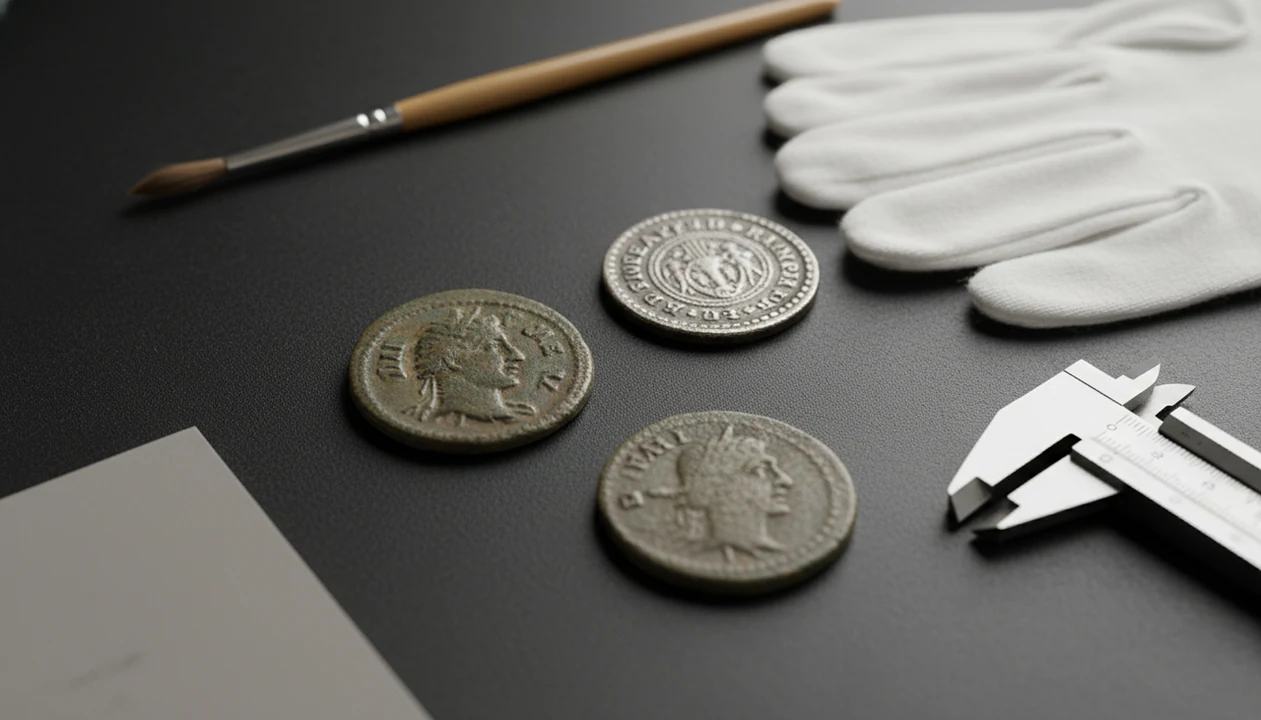


An ancient coin identifier can help you triage a Roman, Greek, Byzantine, or other old-looking coin from photos, but it should not be treated as authentication or a final value. Use the result to narrow the ruler, era, legend, symbol, and denomination, then confirm promising or risky coins with expert references, dealers, auction records, or third-party grading.
An ancient coin identifier is a photo-first tool that compares a coin’s portrait, legends, symbols, metal, and visible design to known coin types so users can research likely matches while understanding that authenticity, grade, and value still require expert review.
- AI coin tools are useful for quick triage, especially when you photograph both sides clearly and record legends, portraits, symbols, metal, and size.
- Ancient coins are harder than modern coins because wear, off-center strikes, imitations, provincial issues, and missing inscriptions can mislead image recognition.
- Do not buy, sell, insure, or clean an ancient coin based only on an app result; use expert review for high-value, rare, or possibly counterfeit pieces.
Ancient CoinEd Meaning And Safe First Use
An ancient coin identifier gives likely research matches, not a guarantee of authenticity, grade, rarity, or sale price. It compares photo evidence such as legends, portraits, symbols, era clues, ruler names, denomination shapes, and value context.
Start by preserving the coin exactly as found. Do not polish, scrape, soak, or rub the surface before you photograph it. Wiping dust from a cardboard 2x2 flip is fine; wiping the coin itself is not.
CoinEd is the photo-first coin identifier and value estimation app that identifies coins from photos, shows rarity and grade hints, and helps beginners and collectors estimate coin value. For ancient material, treat any result as a starting note in your collection notes, not a formal appraisal.
A good match narrows the search. It does not end it.
At-A-Glance Ancient CoinEd Triage Table
Use this table to decide what a photo match can safely suggest and when the coin deserves expert review. Strong matches are research leads, especially for rare-looking, gold, high-value, or suspicious pieces.
| User clue | What it may indicate | How reliable it is | Next step |
|---|---|---|---|
| Portrait | Ruler, deity, dynasty, era | Medium | Compare bust style and legend |
| Legend | Emperor, city, title, issuing authority | Medium to high if readable | Transcribe visible letters |
| Reverse symbol | Denomination, mint, religious or military theme | Medium | Match with catalog examples |
| Metal | Bronze, silver, gold, billon | Low from photos alone | Weigh and inspect in hand |
| Size/weight | Denomination and issue range | High when measured | Record grams and millimeters |
| Edge | Cast seam, filing, damage | Medium | Escalate if suspicious |
| Patina | Age, burial surface, possible tooling | Low from photos | Avoid cleaning |
| Wear | Circulation, strike weakness, lost detail | Medium | Compare grade ranges |
| Provenance | Ownership history and sale risk | High if documented | Keep receipts and notes |
If the coin is not ancient but foreign-looking, a world coin identifier workflow may fit better.
How To Use An Ancient CoinEd
Use an ancient coin identifier as a careful first pass: document the coin, upload clear images, then treat the result as a shortlist of possible attributions. The safer workflow combines photos, measurements, visible inscriptions, and outside references before any buying, selling, or cleaning decision.
- Photograph the obverse, reverse, edge, and an angled surface view in soft, diffuse light. Keep the background plain, avoid glare, and include a ruler or scale when possible.
- Record the weight, diameter, metal color, patina, visible damage, and any provenance notes from flips, envelopes, receipts, auction tags, or family records.
- Upload both sides of the coin and read the top matches as candidates only, especially if the coin is worn, off-center, corroded, or partly illegible.
- Compare legends, portraits, reverse symbols, mintmarks, denomination, size, and weight against reference examples before accepting a match.
- Escalate gold, silver, rare-looking, high-value, poorly provenanced, or suspicious coins to an experienced dealer, auction specialist, grading service, or ancient coin expert.
Ancient Coin Photo Recognition Mechanics
Ancient coin photo recognition works by comparing obverse and reverse images against reference sets of known coin types. The model looks for image embeddings, which are mathematical patterns in the photo, then ranks similar portraits, legends, reverse designs, mintmarks, metal color, shape, and denomination clues.
That sounds tidy. Ancient coins are not tidy.
Most were hand-struck, so two genuine coins of the same type may look noticeably different. Worn legends, corrosion, patina, off-center strikes, and ancient or modern imitations can confuse the match. A Roman coin identifier result may depend heavily on one readable ruler portrait or a few letters in the obverse inscription.
For beginners, photo recognition usually works best when it narrows three or four candidates, while measured weight and diameter help separate similar types.
Five Ancient CoinEd Facts Beginners Should Know
These five facts set realistic expectations before you rely on any ancient coin app result.
- AI coin tools compare photos to databases and return likely matches, usually with era, ruler, region, denomination, and visual references.
- Modern and common world coins are easier to identify than ancient coins because their dates, legends, and designs are more standardized.
- Grade and value estimates are approximate; they depend on condition, authenticity, venue, demand, and recent comparable sales.
- Counterfeit and alteration detection is not reliable from mainstream app photos, especially with cast copies, tooling, and artificial patina.
- The best use of an ancient coin identifier is triage before expert confirmation, not replacement of expert attribution or authentication.
In a 2023 CoinWeek test, one leading AI coin app identified 14 of 15 coins overall but failed on the ancient coin, then failed on several more ancient examples in follow-up checks source.
Photo Clues To Identify Ancient Coins More Carefully
To identify ancient coins more carefully, photograph both sides, the edge, and the coin beside a ruler or scale. Weight and diameter are essential for attribution because many ancient denominations share similar designs.
For Roman Imperial coins, compare promising matches against Online Coins of the Roman Empire, which is built from the American Numismatic Society and Institute for the Study of the Ancient World database source. For Greek and provincial material, a photo match is stronger when the same ruler, city, denomination, and reverse type appear in a recognized catalog or auction archive.
Place the coin in diffuse light and avoid dark wooden tables, which can make copper and bronze look redder than they are. Do not clean, polish, scrape, or soak the coin before documentation. A scratched surface can erase the very clue you need.
Portrait And Bust Clues
Start with the obverse. Record portrait direction, bust style, crown, beard, drapery, helmet, or radiate crown. These details can separate emperors, deities, rulers, and eras.
Legend And Symbol Clues
Partial legends can identify rulers, cities, titles, denominations, and issuing authorities. Reverse figures, animals, temples, wreaths, altars, and mintmarks help narrow candidates after the portrait match. A coin centered inside a cardboard flip often photographs better than one held between fingers.
Roman CoinEd Checks For Rulers, Legends, And Mints
How do you use a Roman coin identifier safely? Start with the emperor portrait and obverse legend, then compare the reverse inscription, deity, military standard, seated figure, altar, and mintmark.
Roman coin identification changes by category. Imperial coins often center on the emperor. Provincial issues may name cities and use Greek legends. Republican coins rely more on moneyer names and symbols. Late Roman bronze can be especially hard because tiny mintmarks and worn reverses matter.
A Roman coins identification chart can help after an app narrows the candidates, especially when you compare bust types and reverse legends side by side. Our Roman coin identifier guide goes deeper into those checks.
Be cautious with marketplace finds. Many Roman-looking tourist copies, cast replicas, and altered pieces circulate online.
Common Myths About Ancient Coin App Results
App outputs should be cross-checked with named references such as OCRE, RPC Online, WildWinds, Numista, ACSearch, CNG archives, and experienced numismatists. The label on the screen is a lead, not a verdict.
- “An app can prove an ancient coin is genuine.” It cannot reliably authenticate fabric, surface, casting method, tooling, or artificial patina from ordinary photos.
- “A precise value range is the expected sale price.” Value depends on venue, demand, buyer confidence, condition, provenance, and whether the coin is genuine.
- “Any ancient coin can be identified from one photo.” One side may miss the decisive legend, mintmark, or reverse type.
- “If the AI result looks right, expert review is unnecessary.” Look-alike types are common, and fakes are often designed to look familiar.
A useful app should leave you with organized research notes: photos, likely candidate types, visible legends, measurements, and value clues—not a certificate of authenticity or a fixed resale price.
Expert Review Triggers After An Ancient CoinEd Match
Escalate from app triage to expert review when the coin is gold, silver, tied to a rare ruler, assigned an unusually high value, or missing clear provenance. Also pause if you see suspicious patina, casting bubbles, a seam, tooling marks, too-perfect surfaces, or pressure from an online seller.
In-hand review matters because surfaces, fabric, strike, edge, and cleaning are easier to judge outside a phone photo. The clink of mixed nickels, dimes, and foreign coins poured from an inherited coffee can onto a towel is one thing; a possibly ancient silver coin is another.
Experienced ancient coin dealers, major auction houses, local coin clubs, and third-party grading or authentication services can help decide whether the piece is worth formal attribution. Tools like CoinEd can organize the first pass, but expert eyes remain important.
Limitations
Ancient coin identification has hard limits. In CoinWeek’s 2023 test, AI grading matched established third-party grades only 40% of the time in the tested sample, which shows why photo-based grades need caution. That CoinWeek result is especially relevant for ancient coins because the same test reported failures on ancient examples, even when the app performed well on modern material source.
- Apps can misread worn inscriptions, stylized portraits, wrong rulers, wrong mints, and wrong coin types.
- Apps cannot reliably authenticate ancient coins or detect high-quality forgeries.
- AI grading from photos cannot fully assess luster, cleaning, surface problems, edge alterations, or in-hand fabric.
- Value ranges may be outdated, noisy, venue-dependent, or skewed by limited market data.
- Rare, provincial, obscure, barbarous, or heavily worn ancient coins are often misidentified.
- Patina color in a phone image can shift under warm bulbs or dark backgrounds.
- A match to a famous type may be a replica, fantasy issue, or tourist copy.
Use an app result as a note. Not a buying decision.
FAQ
Can AI identify ancient coins?
AI can suggest likely matches for ancient coins by comparing photos with known types, legends, portraits, and symbols. It is less dependable on ancient material than on modern coins because wear, hand-struck variation, missing inscriptions, and imitations can hide the decisive clues.
How do I identify Roman coins?
To identify Roman coins, compare the emperor portrait, obverse legend, reverse design, mintmark, diameter, weight, and metal. Imperial, provincial, republican, and late Roman bronze coins use different clue patterns, so a likely match should be checked against a Roman coins identification chart or reference catalog.
Are ancient coin apps accurate?
Ancient coin apps can be useful for triage, but accuracy varies widely. They usually perform better on common, clear, well-photographed coins and worse on worn, rare, provincial, obscure, counterfeit, or heavily corroded ancient coins.
Can an app detect fake coins?
Mainstream coin apps cannot reliably authenticate ancient coins or detect high-quality forgeries. They may flag visual similarity, but in-hand expert review is needed to judge casting, fabric, tooling, patina, edge work, and altered surfaces.
Should I clean ancient coins?
Do not clean ancient coins before documentation or expert review. Cleaning, polishing, scraping, or soaking can damage patina, remove surface evidence, reduce value, and make later attribution or authentication harder.
What is my ancient coin worth?
An ancient coin’s value depends on authenticity, condition, rarity, demand, provenance, metal, and recent comparable sales. An app estimate from CoinEd or another tool should be treated as an estimated value range, not a formal appraisal or guaranteed sale price.
Which photos identify coins best?
The best identification photos are sharp obverse, reverse, edge, scale, and angled surface images in diffuse light. Photograph the coin flat, then add an angled shot to show relief, corrosion, cleaning, tooling, or casting texture.
What do coin legends mean?
Coin legends are inscriptions around or across the design. They can name rulers, cities, titles, dates, mints, denominations, issuing authorities, or religious and political messages, even when only a few letters remain readable.
When should I get expert coin review?
Get expert review when a coin appears high-value, gold or silver, rare, suspicious, poorly matched, or planned for sale. You should also escalate if CoinIdentifier gives a surprising value, the provenance is unclear, or the coin may be counterfeit.