
Identify Worn Date Coin Clues When the Year Is Faint
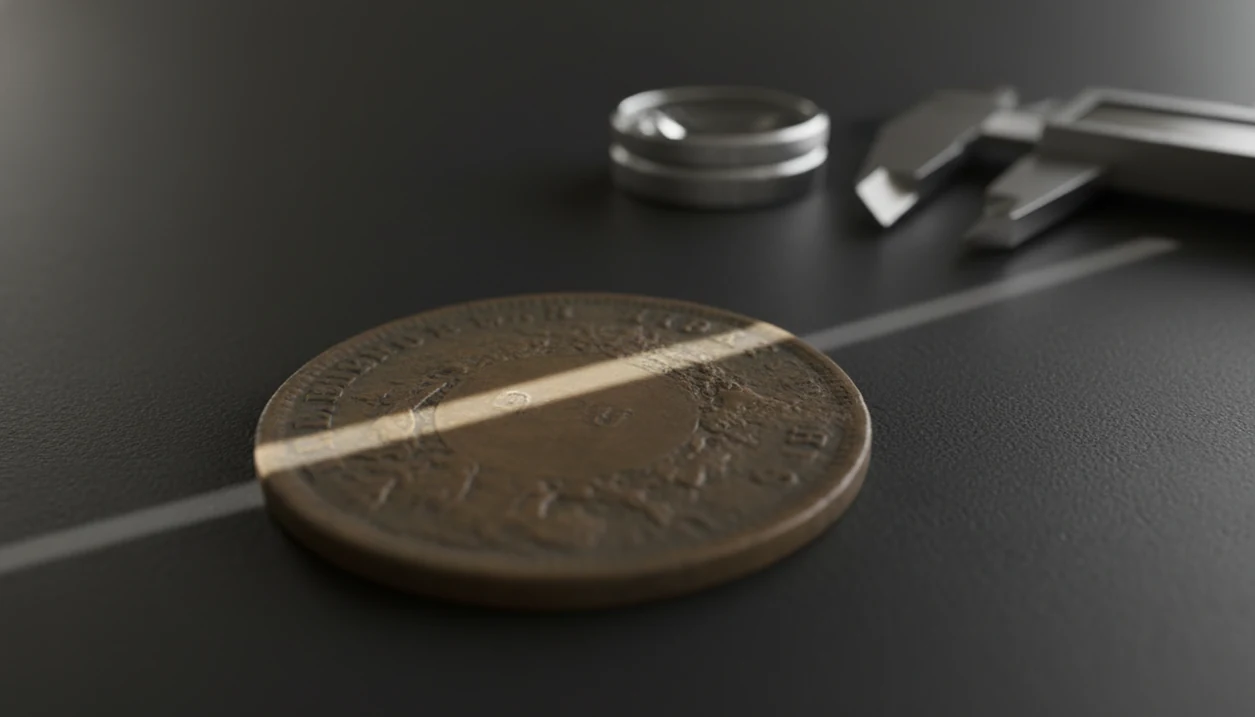


To identify worn date coin clues, start with the coin’s design type, country, denomination, metal, diameter, mint mark position, and any partial digits before trying stronger methods. A missing date often cannot be recovered exactly, but these clues can usually narrow the coin to a type, date range, or shortlist of possible years.
> Worn coin identification is the process of using surviving design, measurement, mint mark, metal, and partial-date evidence to narrow a coin’s identity when the year is faint or missing.
- Photograph both sides under angled light before cleaning, rubbing, or using any chemical date restorer.
- Use denomination, diameter, weight, metal, legends, portrait style, reverse design, and mint mark location to narrow the date range.
- Accept that some slick coins cannot be dated with certainty; treat them as generic low-grade examples unless diagnostics prove otherwise.
Worn coin identification clues that matter first
To identify worn date coin evidence, look first at the parts that usually survive after the numerals fade: design type, denomination, metal, size, legends, and mint mark location. Exact-year identification is not always possible, but type and date-range identification often is.
A beginner turning over a wheat cent under a kitchen light may lose the date first, yet still see Lincoln, wheat ears, “ONE CENT,” and maybe a tiny mint mark under the date area. Those clues matter.
Common circulation wear is far more likely than a mint error. Coins pass through pockets, tills, parking lots, jars, and coin counters for years. The practical question is not “Is it rare?” at first. It is “What evidence is still visible?”
For most worn coins, the safest first label is “possible type and range,” not a confident date.
Five facts about a coin date worn off
- A coin date worn off can often be narrowed by design, mint mark position, metal, denomination, and surviving legend fragments.
- Angled light, macro photos, and image contrast can reveal faint digits that flat room light hides.
- Acid date restorers can damage the surface, change the coin permanently, and reduce collectible value.
- Very slick coins may never yield an exact year, even with magnification or careful photography.
- AI coin identification can help narrow the match, but visible evidence still needs human verification against references.
A U.S. Mint-commissioned survey estimated that about 44 million Americans collected coins or paper money in 2019 (source: https://www.usmint.gov/news/inside-the-mint/coin-collecting-in-america). That means many people eventually meet the same problem: a dark nickel, a smooth dime, or an old copper coin where the year has nearly vanished.
The clink is familiar.
When mixed nickels, dimes, and foreign coins spill from an inherited coffee can onto a towel, the no-date pieces should be sorted slowly, not cleaned fast.
How worn date coin identification methods work
Worn date coin identification works by elimination: match the country, denomination, portrait, reverse design, legends, mint mark, metal, diameter, weight, and edge, then remove impossible date ranges. The missing year is only one data point.
Design diagnostics are the small features that tie a coin to a series or period. Stars, arrows, lettering, rims, wreaths, eagles, portrait style, and reverse design can all restrict the range. A Seated Liberty coin, a Buffalo nickel, and a Standing Liberty quarter do not share the same diagnostic map.
Measurements help when the surface is weak. A ruler, scale, and magnet can separate lookalikes before you chase dates.
AI image matching uses visible features, often through image embeddings, which means the photo is compared by shape, pattern, and texture. In plain terms, an AI coin identifier analyzes what remains on the coin. It cannot read metal that is no longer there.
Before you inspect no-date coin evidence
Do not clean, polish, scrape, soak, rub, or chemically treat a no-date coin before inspection. The film, dirt, toning, and weak relief may be annoying, but they can also preserve tiny visual clues.
Major grading and conservation guidance warns that improper cleaning can permanently alter a coin’s surface and reduce value; see NGC’s conservation overview at https://www.ngccoin.com/coin-grading/coin-conservation/.
Set up simple tools: a phone camera with macro mode, a bright lamp, a soft surface, ruler or calipers, gram scale, magnet, and cardboard coin flip. If you use a flip, wipe dust from the cardboard 2x2 holder, not the coin itself.
Both sides matter because the reverse design may identify the series when the obverse is slick. A worn obverse can still pair with a readable wreath, eagle, shield, building, or denomination.
Record diameter, weight, edge type, metal color, and every visible word before searching. For photo technique, the full basics are covered in how to scan both sides of a coin.
Six worn coin identification steps
Use this workflow to identify coin no date cases without jumping straight to a rare-date guess.
- Photograph both sides under normal and angled light. Keep one straight-on image and one raking-light image for each side.
- Measure diameter, weight, edge, and magnetic response. Write the numbers before comparing pictures online.
- Match denomination, country, portrait, reverse design, and surviving legends. Start with the obverse, then confirm with the reverse.
- Locate the mint mark and compare its position to known date ranges. A mark in the wrong place can eliminate many years.
- Check partial digits and type-specific diagnostics against a guide or app. Compare spacing, not just the apparent number.
- Assign a confidence level: exact date, likely date range, type only, or unknown.
For beginners, this method is often easier than guessing from one faint numeral because every clue must agree before the date claim gets stronger.
Step 1: Reveal faint coin date worn off digits safely
Use raking light, also called oblique light, from several directions before trying anything stronger. Hold the lamp low so shadows cross the date area, then rotate the coin a little at a time.
Take macro photos straight-on and from slight angles. A phone photo on a dark wooden table can make copper cents look redder than they are, so use a neutral cloth when possible. Save the original photo first.
Then edit a copy. Adjust contrast, shadows, sharpness, and black-and-white conversion. The goal is to see surviving relief, not to force a date into the image.
Do not rub pencil lead, foil, erasers, baking soda, or abrasives over the date area. Those tricks can scratch the surface and create false lines that look like digits.
A faint 8 can become wishful 3 very quickly.
Step 2: Narrow no-date coin results by type
No-date coin identification becomes more reliable when each clue eliminates options. Design changes exist partly to differentiate issues by year, series, denomination, and minting period, so small details can carry real weight.
| Clue | What to inspect | What it can eliminate |
|---|---|---|
| Denomination | “ONE CENT,” “FIVE CENTS,” “QUARTER DOLLAR” | Wrong value and wrong size families |
| Diameter | Measure across the widest point | Lookalike tokens or foreign coins |
| Weight | Use a gram scale | Wrong metal or altered pieces |
| Metal | Copper, nickel, silver, clad, brass | Impossible eras or denominations |
| Edge | Plain, reeded, lettered | Different types and some fakes |
| Obverse design | Portrait, Liberty figure, bust direction | Earlier or later series |
| Reverse design | Buffalo, eagle, wreath, shield, monument | Specific type ranges |
| Legend fragments | Partial words and mottoes | Wrong country or issue |
| Mint mark position | Near date, reverse, under design | Date ranges within a series |
Buffalo nickels, Standing Liberty quarters, Seated coinage, and older silver types can often be narrowed by type. Exact dates still need proof.
Step 3: Check mint mark locations on worn coins
A mint mark is a small letter or symbol that shows where a coin was made. On worn coins, it can outlast the date or sit in a protected area that stays readable longer.
Mint mark placement varies by series and date range. Inspect both sides, including the area near the date, under wreaths, near eagles, beside monuments, and around the lower reverse. On some Lincoln cents, a Philadelphia coin may have no mint mark at all, which surprises many beginners squinting under the Lincoln Memorial.
No mint mark does not always mean damage. It can mean Philadelphia for many U.S. coins, but rules differ by denomination, year, and special issue.
Confirm the mint mark rule in a series-specific reference before you label the coin. A wrong mint assumption can turn a common circulation find into a fake rarity on paper.
Step 4: Use partial digits for worn coin date matches
“How do I identify a worn coin if I can only see one digit?” Use the visible digit as a filter, not a final answer.
A first digit may separate centuries. A last digit may create a shortlist of possible years. A curved bottom, flat top, or open loop can help, but compare digit placement, spacing, height, and style against known examples. Do not read the number in isolation.
Worn 3, 8, 9, and 0 shapes are easy to confuse. Harsh light can also make scratches look like numeral edges. Build a shortlist, then eliminate impossible combinations using type, mint mark, metal, and reverse design evidence.
Wishful reading is the usual trap. It turns common coins into imaginary key dates, especially when price comparison tabs are already open on a laptop.
A partial digit is useful only when the surrounding diagnostics agree.
AI photo checks for no-date coin cases
Photo-first identification tools can quickly suggest coin type, country, denomination, and likely date range when the date is weak. CoinEd can help organize visible clues from both sides, but treat the result as a starting point, not proof of an exact date.
Crop tightly, avoid glare, capture both sides, and include the edge if it is reeded, lettered, or otherwise distinctive. Retake the coin under angled light if the first result depends on a shadowed date area. If you want a broader photo workflow, use an identify coin from photo process before judging rarity.
A good photo-based identification workflow delivers structured clues and conservative ranges, not an instant certified grade or guaranteed rare coin.
Verify rare or valuable-looking matches with a price guide, specialist reference, or knowledgeable collector. CoinIdentifier can help sort the evidence, but it cannot reconstruct completely missing digits.
Common myths about a coin date worn off
Myth 1: No visible date means no identification is possible. The better belief is that design, metal, size, legends, and mint marks may still narrow the coin.
Myth 2: Acid date restorers increase value. They may reveal a hidden date on some coins, but they permanently alter the surface and usually reduce collector appeal.
Myth 3: Every no-date coin is a rare error. Most are normal circulation wear, environmental damage, or abrasion after minting.
Myth 4: AI can always recover the exact date. AI can compare visible details and suggest likely matches. It cannot prove a digit that is gone.
Myth 5: Cleaning helps experts read the coin. Cleaning can remove toning, scratch the field, and destroy weak evidence.
For old jars and mixed lots, an app that identifies old coins can help sort types first. The final claim still rests on physical diagnostics.
Value checks after worn coin identification
After worn coin identification, value depends on which value category applies: face value, bullion value, common-date collector value, or key-date value. Heavy wear usually lowers value dramatically unless the coin is rare enough to remain desirable.
The common question is, “Is this silver or just old?” A 1964 dime or quarter raises a different value question than a worn modern clad coin. Metal content, exact date, mint mark, and condition all matter.
Price guides often show very large gaps between generic low-grade common dates and low-grade key dates. That is why collectors try to recover or infer dates, but uncertain dates should be priced conservatively.
Document the evidence behind any tentative date. Save photos, measurements, mint mark notes, and comparison references. If you use a coin value app, treat the result as an estimated value range, not a formal appraisal.
Verification checklist for worn date coin confidence
Use confidence categories before labeling, selling, or storing a worn coin: confirmed exact date, probable date, possible range, type only, and unidentified. A coin can be interesting without being fully solved.
Compare at least two independent references before treating a worn coin as rare. A guidebook plus an auction archive, grading-service explainer, or experienced collector can prevent a costly misread.
Save original photos and notes in a collection record. Cardboard flips labeled in pencil work well for temporary sorting, especially when the coin needs more research later. Include “date uncertain” if the claim depends on partial digits.
Ask a dealer, grading service, or specialist forum when the coin appears to match a key date, rare variety, precious-metal type, or counterfeit-prone issue.
For inherited groups, organized notes are often more useful than fast guesses.
Evidence Sources for Worn Coin Identification
Good worn coin identification uses references for facts and experience for judgment. The safest record separates source-backed details, such as denomination standards and mint mark rules, from expert interpretation of weak marks, shadows, and partial digits.
- Start with official or major references for the basics. U.S. Mint pages, standard guidebooks, and major catalog references can confirm denomination names, metal changes, design periods, mint facilities, and normal mint mark placement.
- Check grading-service guidance before changing the surface. PCGS, NGC, ANACS, or conservation notes can help you understand why cleaning, alteration, polishing, or chemical treatment may hurt authentication and value.
- Compare values conservatively. Use auction archives, realized-sales records, and current price guides only after the type, date range, mint mark, and grade range are reasonably supported.
- Label judgment clearly. “Reverse matches Buffalo nickel” is a reference-backed type claim; “last digit may be 8” is an expert read unless the shape, spacing, and other diagnostics all agree.
- Keep screenshots or notes with the coin. A future reviewer should be able to see which facts came from references and which conclusions came from your inspection.
Limitations
Worn coin identification has hard limits. Some coins simply no longer contain enough surviving evidence to support an exact date.
- A very slick coin may only be identifiable by broad type, metal, or denomination.
- Completely missing metal cannot be read by AI, photography, magnification, or contrast editing.
- Acid date restoration permanently alters the surface and does not restore original collectible value.
- Damage, corrosion, environmental wear, counterfeits, and post-mint alterations can mimic diagnostics.
- Partial digits can be misread, especially under wishful thinking or harsh lighting.
- Price guides assume accurate identification, so uncertain dates should be valued conservatively.
- Some exact diagnostics require specialist books, expert review, or authenticated comparison examples.
Photo-identification tools can organize visible clues and suggest likely matches, but a photo result is not a formal appraisal. If a worn coin might be expensive, get a second opinion before selling, insuring, or submitting it.
FAQ
Can you identify a coin without a date?
Many no-date coins can be narrowed by type, design, metal, size, legends, and mint marks. Some cannot be identified to an exact year.
How do I read a worn coin date?
Use angled light, macro photos, magnification, and contrast adjustment on a copy of the image. Do not rub or scrape the date area.
Are no-date coins worth anything?
Most no-date coins are low-value common worn pieces. Some are worth checking if the type, mint mark, or metal suggests a rare issue.
Should I clean a worn coin?
No. Cleaning can remove evidence, damage the surface, and reduce collector value.
Do date restorers hurt coin value?
Yes. Acid-based date restorers permanently alter the surface and usually reduce collectible value.
Can AI find a missing coin date?
AI can identify visible design clues and likely date ranges. It cannot prove digits that are completely gone, including in CoinEd results.
Where is the coin mint mark?
Mint mark locations vary by series and may appear near the date, on the reverse, under design elements, or be absent for some mints. Check a series-specific reference.
Is a no-date coin an error?
Usually not. Most missing dates come from circulation wear, damage, corrosion, or abrasion after the coin left the mint.