
Can an App Tell If a Coin Is Fake From Photos Alone?
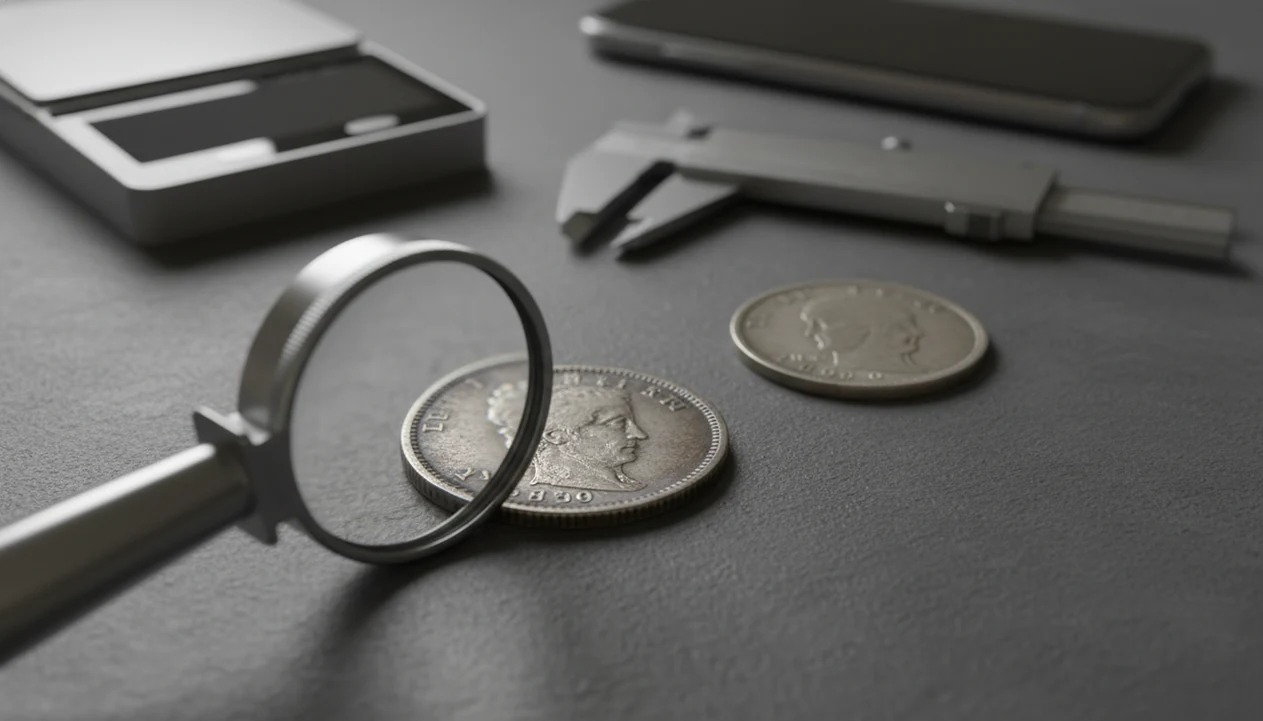


No, can app tell if coin is fake is best answered with a cautious “not with certainty”: a photo app can flag obvious visual problems, but it cannot formally authenticate a coin from images alone. Use an app for identification, rarity clues, and value context, then get professional authentication for valuable, gold, rare, altered, or suspicious coins.
Definition: A fake coin app is a photo-based coin identification tool that may spot visible red flags but does not replace in-hand authentication by a numismatist or third-party grading service.
- Photo-based coin apps are useful for quick ID, date/mint checks, rarity hints, and ballpark value research.
- Apps cannot test weight, diameter, thickness, edge work, metal composition, die transfer, or other physical counterfeit signals.
- Professional review is required when a coin is valuable, gold, rare, unusually clean, altered-looking, or inconsistent with known references.
Can App Tell If Coin Is Fake: The Practical Answer
A coin app can help identify a coin and flag obvious visual mismatches, but it cannot guarantee authenticity from photos alone. Treat the result as triage, not certification.
Tools like CoinEd identify coins from photos, show rarity and grade hints, and help beginners and collectors estimate coin value. That is useful when you’re checking a date and mint mark, comparing the reverse design, or building collection notes. It is not the same as proving a coin is genuine.
A successful photo match only means the image resembles a known coin type. A high estimated value range also does not prove the coin is real, original, or market-ready.
For high-value, rare, gold, or suspicious coins, the safe next step is professional authentication. A beginner turning over a wheat cent under a kitchen light may find the tiny mint mark under the date, but a camera still cannot weigh the cent or test its metal.
Scope and Safety Disclaimer
This page is for educational coin research, not professional authentication. App results can help you organize clues, but they should not be treated as proof that a coin is genuine, gradable, insurable, or safe to sell.
Do not make buying, selling, insurance, auction, or grading decisions from photos alone. A clear image can still hide wrong weight, plated metal, altered edges, added mint marks, tooling, cleaning, or other problems that require in-hand review. If a coin appears valuable, gold, rare, ancient, error-related, altered, or simply suspicious, take the slower route.
- Use the app result to record the likely country, denomination, date, mint mark, and visible design match.
- Compare the coin with reputable references, but avoid making authenticity claims from that comparison alone.
- Escalate valuable or questionable pieces to a professional numismatist, dealer, or third-party grading service.
- Check local laws, platform rules, and marketplace policies before handling, listing, returning, or destroying suspected counterfeits.
When in doubt, describe what you know, not what you hope the coin is.
At-a-Glance Fake Coin App Reliability Table
Photo apps are useful for visual comparison, not physical authentication. Use this table to separate app-assisted clues from tests that need tools or expert review.
| Check | Can a photo app help? | Why it matters | When to escalate |
|---|---|---|---|
| Visual design match | Yes | Confirms the basic coin type | If the portrait or reverse looks off |
| Date/mint combination | Yes | Some combinations are impossible or rare | If a key date or rare mint mark appears |
| Legends | Yes | Misspellings and wrong wording can expose copies | If lettering differs from references |
| Portrait/device details | Yes | Style and relief should match the issue | If details look mushy or distorted |
| Obvious cast surfaces | Sometimes | Bubbles or grainy fields can be warning signs | If the surface looks poured or pitted |
| Weight | No | Counterfeits often miss official weight | Use a precision scale |
| Diameter | No | Wrong planchets can be slightly off | Use calipers |
| Metal composition | No | Alloy matters for gold, silver, and copper coins | Use XRF or expert testing |
| Edge re-engraving | Limited | Altered edges can hide tampering | Inspect under magnification |
Visual checks are triage. Physical checks are authentication work.
How Coin Counterfeit Detection Apps Work From Photos
A coin counterfeit detection app works by turning a coin photo into visual data, then comparing that data with reference images. The usual workflow is photo upload, cropping, feature extraction, pattern matching, database comparison, and confidence scoring.
In plain terms, the app looks for image patterns. It may compare the obverse portrait, reverse design, date shape, mint mark area, lettering, and overall layout. Research on automatic coin classification has reported type-recognition accuracies around 96–99% in controlled settings, but that research concerns classification, not full counterfeit authentication source.
Recognition accuracy does not equal authentication accuracy. A photo-first check can say “this looks like a 1943 steel cent,” but it cannot prove the planchet, weight, or surface history. Dark wooden tables can make copper cents look redder than they are. Glare, focus, cleaning, dirt, wear, and camera angle all change what the app sees.
Five Facts About Authenticating Coins From Photos
These five facts are the safest baseline for anyone trying to authenticate coin from photo results. They keep coin identification, value estimation, and authentication in separate lanes.
- No current smartphone app can guarantee a coin is genuine from one photo.
- Coin apps are strongest at identifying coin type, denomination, country, date range, and visible design.
- Apps may catch wrong designs, impossible dates, incorrect mint marks, or mismatched legends.
- Apps cannot measure weight, alloy, thickness, edge alterations, specific gravity, or internal structure.
- Valuable or suspicious coins should be reviewed by a professional numismatist or third-party grading service.
A good photo-first coin identifier and value estimation app for collectors and beginners delivers organized research signals, not legal certification or auction-grade authentication.
If you’re deciding whether scanner results are dependable for everyday use, the broader question of are coin identifier apps accurate depends on the coin type, photo quality, and reference coverage.
Visual Clues a Fake Coin App May Flag
A fake coin app may flag clues that are visible in a clear photo, especially when the uploaded coin conflicts with known reference images. The strongest photo clues are design, date, mint mark, lettering, and surface style.
Design and date mismatches
An app can compare the obverse and reverse against the expected type. Wrong portrait, wrong reverse design, incorrect date range, impossible mint mark, or mismatched denomination are all worth a closer look. A tiny D beside Roosevelt’s torch, for example, matters only if that date and mint combination is valid.
Surface and lettering clues
Off-style lettering, inconsistent relief, mushy details, casting bubbles, seam-like rims, strange color, and harsh cleaning can all raise suspicion. None is definitive by itself.
Photograph both sides, the edge if possible, and close-ups of the date and mint mark. Wipe dust from the cardboard 2x2 flip if needed, but don’t clean the coin itself.
Physical Tests a Coin Counterfeit Detection App Cannot Perform
A photo app cannot perform the physical tests that often separate a genuine coin from a convincing counterfeit. Weight, diameter, thickness, specific gravity, magnet response, edge study, and metal composition all require the coin in hand.
Collectors usually start with a precision scale, calipers, a small magnet, and a loupe. More advanced checks may use a microscope or XRF analyzer, which can identify surface metal composition without cutting into the coin. Destructive tests are not appropriate for collectible coins.
Sophisticated counterfeits can photograph well. They may copy the portrait, reverse design, and legends closely enough to pass a quick image match, then fail weight or alloy analysis. A ring test can be risky and inconsistent, especially for valuable coins, damaged coins, or pieces in holders.
For most collectors, in-hand measurements are better than photo-only judgment because counterfeits often fail outside the camera’s view.
When to Escalate From CoinEd to Professional Authentication
When should an app result stop being enough? Escalate when the coin has a high estimated value, gold or silver content, a key date, a rare mint mark, an error claim, ancient origin, trade dollar type, altered surface, or suspicious online purchase history.
Use CoinEd results to gather the likely ID, date and mint mark, reference matches, estimated value range, and collection notes before contacting a dealer or grading service. That preparation helps you ask cleaner questions. It does not replace authentication.
Third-party grading services such as PCGS and NGC examine coins in hand, assign opinions, and may encapsulate coins that meet their standards. For example, PCGS describes authentication and grading as an in-hand expert review process rather than a photo-only determination source. Outcomes are not guaranteed. If you are unsure about timing, our guide on when to send coin to PCGS or NGC covers practical triggers.
Counterfeiting remains a real risk. The U.S. Secret Service reports about 20 million counterfeit U.S. banknotes, worth roughly $120 million, in circulation at any given time source.
Common Myths About Fake Coin App Accuracy
A fake coin app cannot certify any coin from one photo. It can help you research the coin, compare visible details, and decide whether the piece deserves closer review.
One common myth is that 96–99% recognition accuracy means 96–99% counterfeit detection accuracy. It does not. Those figures usually refer to identifying a type or class under controlled conditions, not finding altered dates, plated cores, transfer dies, or deceptive surfaces.
Another myth says a high app value means the coin is genuine and investment-grade. A value estimate is approximate. It may not account for grade, market liquidity, cleaning, damage, counterfeit risk, or buyer confidence. If you plan to list a piece, review selling coins online safely before making claims.
AI also does not replace professional grading services. CoinIdentifier can help organize what you saw in the photos, but app outputs should be treated as research signals, not legal, auction, or numismatic guarantees.
Limitations
Photo-based coin checks have real limits. The safest rule is simple: use the app to organize evidence, then escalate anything valuable or suspicious.
- Photos cannot measure weight, thickness, diameter, metal composition, specific gravity, or interior structure.
- Apps can misidentify rare varieties, error coins, damaged coins, cleaned coins, and underrepresented counterfeits.
- Image quality, lighting, glare, focus, dirt, wear, and camera angle can distort results.
- Value estimates are approximate and may not reflect grade, authenticity, market liquidity, or altered surfaces.
- High-value, gold, rare, ancient, or suspicious coins should not be bought, sold, insured, or submitted to auction based only on an app result.
- Edge lettering, reeded edge tampering, casting seams, and tool marks may require magnification and in-hand rotation.
- A convincing counterfeit may match the app’s reference image but fail alloy or weight checks.
Privacy also matters. If you photograph valuable pieces, read about coin app privacy before uploading images or sharing collection details.
FAQ
Can an app detect fake coins?
An app may flag visible red flags such as wrong designs, impossible dates, or mismatched legends. It cannot guarantee a coin is genuine from photos alone.
Can photos prove a coin is real?
Photos alone cannot formally prove a coin is real. Authentication usually requires in-hand inspection, measurements, and sometimes metal analysis.
What is a fake coin app?
A fake coin app is a coin identification app that may show counterfeit-warning clues from photos. It is not a substitute for professional authentication.
Are coin scanner apps accurate?
Coin scanner apps can be accurate for identifying common coin types from clear photos. Counterfeit detection is harder and requires more than image matching.
Can AI authenticate rare coins?
AI can assist research by comparing visible details with references. Rare coins still need expert inspection before buying, selling, grading, or insuring.
Can an app test coin metal?
No, an app cannot test coin metal from a photo. Metal composition requires physical tools such as XRF analysis or other in-hand testing.
Do fake coins weigh differently?
Many fake coins weigh differently from genuine examples. Some sophisticated counterfeits may be close, so weight is only one authentication clue.
When should I grade a coin?
Consider professional grading when a coin appears valuable, rare, gold, silver, error-related, ancient, or suspicious. App results can help prepare notes before submission.
Is a coin scanner app a counterfeit detector?
A coin scanner app is mainly for identification, rarity lookup, and value context. Treat scanner results as research signals, not certification that a coin is genuine.