
What To Expect After Identifying Silver Coins in a Jar
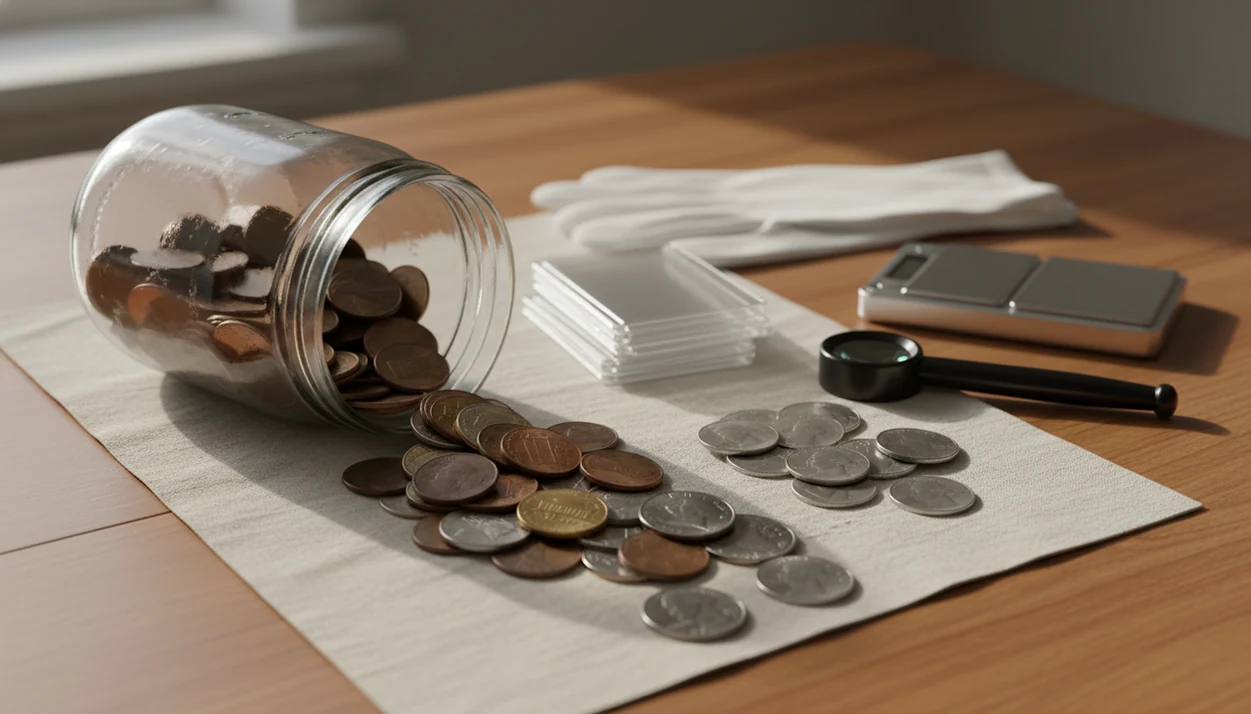


After a jar coin turns out to be silver, what to expect after identifying silver is a short evaluation process: protect the coin, confirm the silver type, estimate melt value, check for collector premium, document it, and compare keep-or-sell options. Do not clean it before you know whether the date, mint mark, condition, or variety makes it worth more than metal value.
> Definition: A found silver coin is a coin whose value may come from both its precious-metal content and its numismatic appeal based on date, mint mark, condition, rarity, and demand.
TL;DR
- Handle silver coins by the edges, avoid cleaning, and move them into safe holders before researching value.
- Check both melt value and collector premium because many common silver coins are worth near silver price while scarcer dates can be worth much more.
- Use photos, date and mint-mark notes, app screening, and at least one professional appraisal before selling valuable or inherited pieces.
Silver Coin Next Steps After a Jar Find
Found silver coin next steps after identifying a silver coin in a jar: stop handling it, do not clean it, separate it, photograph it, identify it, estimate value, then decide whether to keep, appraise, grade, or sell. That order protects the coin before you know what you have.
A silver find is not always a quick cash-out. Value can come from metal content, collector demand, or both. The clink of mixed nickels, dimes, and foreign coins poured from an inherited coffee can onto a towel can feel exciting, but slow sorting matters more than guessing.
Use a photo-first check to record the obverse, reverse design, date and mint mark. A photo-identification app can help screen a group quickly, but an app result is not a guaranteed appraisal.
How Silver Coin Value Steps Work
Silver coin value has two main parts: melt value is the coin’s silver weight multiplied by the current silver spot price, adjusted for purity, while collector premium is extra value from date, mint mark, grade, rarity, variety, and demand.
For U.S. coins, regular-issue dimes, quarters, and half dollars dated 1964 or earlier are 90% silver, according to the U.S. Mint's circulating coin specifications (https://www.usmint.gov/learn/coin-and-medal-programs/circulating-coins). Kennedy half dollars from 1965 through 1970 contain 40% silver. A Silver Eagle is simpler because each bullion coin contains 1 troy ounce of .999 fine silver, per the U.S. Mint American Eagle silver bullion specifications (https://www.usmint.gov/coins/coin-medal-programs/american-eagle/silver-bullion).
That is why two silver coins from the same jar can price very differently. A worn common-date Roosevelt dime may sit close to melt. A better-date coin with sharp detail may be worth a closer look. For beginners, the melt value vs collector value debate is the safest starting point because it keeps metal price and numismatic value separate.
Five Silver Coin Facts to Check First
Before selling or storing silver, check these five facts. They keep the process calm and reduce the chance of damaging a coin that needed more research.
- Do not clean, polish, dip, or scrub silver coins. Cleaning marks can lower collector premium even when the silver content stays the same.
- Record the date, mint mark, denomination, country, and visible condition. Start with the obverse, then confirm the reverse design.
- Separate bullion-like coins from possible collectible coins. Silver Eagles and worn common coins are not researched the same way as scarce dates.
- Common-date silver often tracks melt value, but rare dates and high grades may carry premium. Compare against a trusted reference before assuming.
- Values are snapshots. Silver spot prices and collector demand both change.
About 1.36 billion Morgan and Peace silver dollars were produced from 1878 to 1935, according to the U.S. Mint, so not every old silver dollar is automatically rare.
Before You Start Sorting Silver Coins
Before you sort silver coins, prepare the table so the coins are protected before they leave the jar, envelope, or roll. A few minutes of setup can prevent fingerprints, scratches, lost notes, and mixed-up holders.
- Clear a steady work surface and cover it with a soft towel or tray. Add a bright lamp and keep a magnifier nearby so you can check dates and mint marks without dragging coins across the table.
- Wash and dry your hands before touching common pieces by the edges. For sharper, older, or better-looking coins, use clean cotton gloves and slow movements.
- Remove food, drinks, jewelry cloths, polish, dips, and household cleaners from the area. A spill or a quick “shine” can do more harm than years of normal toning.
- Prepare labels before coins go into flips, tubes, capsules, or 2x2 holders. Write the date, mint mark, denomination, country, and any temporary ID number first.
- Set aside inherited envelopes, receipts, handwritten notes, and old holder inserts. Keep them with the group as possible provenance instead of throwing them away during sorting.
How to Use a Silver Coin Identification Workflow
Use a repeatable workflow when a jar, roll, or inherited group contains possible silver. A steady process works better than pulling out the shiniest coin first.
- Set up a clean, soft, well-lit work area. Use a towel, tray, or soft cloth so dropped coins do not hit a hard surface.
- Sort coins by denomination, country, and date range without cleaning them. Keep U.S., world, and unknown pieces in separate rows.
- Photograph both sides and any mint mark. A lamp angled toward a faint mint mark often reveals more than overhead room light.
- Run photo identification and rarity lookup in a screening tool. Use the result for organized clues and notes, not instant certified grades or guaranteed sale prices.
- Log estimated melt value, possible collector premium, and storage location. Use one note per coin or per matched group.
- Flag uncertain, high-value, or unusual coins for dealer or grading-service review. Don’t guess on varieties, errors, or unusually sharp coins.
Step 1: Protect Silver Coin Surfaces Before Value Checks
Protect the coin before you try to improve its appearance. Hold silver coins by the edges, preferably over a soft towel or tray, and avoid touching the fields with bare fingertips.
Do not rub, polish, use baking soda, dip coins, erase spots, use jewelry cloths, or apply household cleaners. Toning is not the same as dirt. Some collectors accept natural toning, and some prefer it when the color appears stable and original.
Hands off.
Hairlines, wiped surfaces, and chemical brightness can reduce collector premium even if melt value remains. If the coin came in an envelope, paper label, or family note, keep that material separately. Wipe dust from a cardboard 2x2 flip if needed, but do not clean the coin itself. Provenance can matter, especially for inherited groups.
Step 2: Estimate Silver Melt Value and Collector Premium
Estimate value as a range, not a promise. Melt value starts with today’s silver spot price, the coin’s actual silver weight, and its purity; collector premium comes from market demand for that exact type.
| Value step | What to check | Why it matters |
|---|---|---|
| Melt value | Silver spot price, weight, purity | Sets a rough metal floor for common silver |
| Date and mint mark | Year, mint letter, variety clues | Some issues are scarcer than others |
| Condition | Wear, luster, damage, cleaning | Grade can change collector premium sharply |
| Sold comparisons | Completed sales, not asking prices | Asking prices can be unrealistic |
| Screening range | App or guide estimate | Helps prioritize, but is not a final sale price |
Check silver spot price on the day you estimate value. Then compare sold prices for similar date, mint mark, and grade. Low-grade common coins may sit near melt, while key dates can exceed melt by a wide margin. A silver coin identifier can help organize the first pass.
Step 3: Set Up Silver Coin Storage for Inherited Coins
Silver coin storage should prevent abrasion, moisture exposure, and mix-ups. Use inert flips, cardboard 2x2s, capsules, tubes, or archival albums made for coins.
Avoid PVC plastic, damp basements, garages, attics, and loose jars for long-term storage. The American Numismatic Association commonly recommends stable storage near 65–70°F and 35–45% relative humidity to help reduce corrosion and unwanted toning. A bedroom closet is usually safer than a garage shelf.
Label each holder with the date, mint mark, denomination, photo ID, and estimated value range. If you use collection notes, match each photo to a storage location. Separate higher-value coins from bulk silver so they are not accidentally sold by weight. A coin tray lined with velvet slots can help during sorting, but long-term holders still need labels.
Step 4: Choose Keep, Appraise, Grade, or Sell Options
After documentation, choose the next step based on value, uncertainty, and family goals. Not every silver coin belongs in a grading submission.
| Option | Fits best when | Watch out for |
|---|---|---|
| Keep | Sentimental pieces or family sets matter | Store and label them so details are not lost |
| Sell as common silver | Coins are worn, common, and near melt | Compare bullion buyer and dealer payouts |
| Appraise | Coin is rare, high grade, unusual, or inherited | Ask for itemized notes, not one lump number |
| Grade | Certification could increase trust or resale value | Fees can exceed the gain on common coins |
| Auction or marketplace | Better coins need wider buyer reach | Photos, descriptions, and fees matter |
Get at least one professional opinion for coins flagged as rare, high grade, error, or unusually valuable. Compare local dealer offers, online marketplaces, auctions, and bullion buyers. Do not accept the first offer for an inherited group without counts, photos, and an itemized understanding.
Common Silver Coin Mistakes After Identification
Most beginner mistakes happen after the exciting part. The coin is identified, then a rushed cleaning, sale, or storage choice causes the real loss.
- The “every silver coin is rare” mistake. Many silver coins are common circulation finds and trade close to melt.
- The “make it shiny” mistake. Cleaning tarnish can create hairlines and make a collectible coin less desirable.
- The “one-number jar” mistake. A jar should not be valued only by face value or only by melt value.
- The “one guide is final” mistake. Online guides are useful, but they are not formal appraisals.
- The “old storage is fine” mistake. Loose jars, PVC sleeves, garages, and humid drawers can damage surfaces.
- The “sell first, document later” mistake. Photograph counts and better coins before any inherited group leaves your table.
For world pieces mixed into a jar, a world coin identifier can prevent accidental sorting by size alone.
Limitations
Silver identification and value checks have real limits. Treat early results as screening, then verify important coins before selling or insuring them.
- AI coin identification can misread dates, mint marks, toning, weak strikes, counterfeits, and subtle varieties.
- App value estimates are screening ranges, not guaranteed sale prices.
- Professional opinions can differ, especially on grade, originality, and eye appeal.
- Silver spot prices and collector demand change, so value is time-sensitive.
- Third-party grading fees can exceed the value increase for common or low-grade coins.
- Online buyers, local dealers, bullion shops, and auctions may offer different payouts.
- Some natural toning or minor appearance change can occur despite careful storage.
- Phone photos taken on a dark wooden table can make copper cents look redder and silver coins look darker than they are.
A photo log can help organize images and notes, but uncertain high-value coins still deserve human review.
FAQ
Should I clean silver coins after identifying them?
No. Cleaning, polishing, dipping, or scrubbing silver coins can lower collector value even if the coin looks brighter.
Are all silver coins rare or valuable?
No. Many silver coins are common and worth mainly their melt value, while scarce dates, mint marks, varieties, and high grades may carry extra premium.
How do I value silver coins from a jar?
Start with melt value, then check the date, mint mark, denomination, condition, and recent sold prices for similar coins. Treat app and guide values as ranges, not final sale prices.
How do I find the mint mark on a silver coin?
Mint-mark location depends on the coin type, denomination, and year. Check a trusted reference for that exact design before deciding a mint mark is missing.
Should I send my silver coins for grading?
Third-party grading may be worthwhile for rare, high-grade, error, or unusually valuable coins. It often does not make sense for common low-grade silver because fees may exceed the added value.
How should I store silver coins after identifying them?
Store them in inert holders, capsules, tubes, or archival albums in a cool, dry, stable place. Label each coin with date, mint mark, denomination, photo ID, and estimated value range.
Where can I sell silver coins safely?
Common silver can be compared through local dealers, bullion shops, online marketplaces, and auctions. Get itemized offers and consider a professional appraisal before selling valuable inherited coins.