
Off Center Coin Guide For Real Mint Error Clues
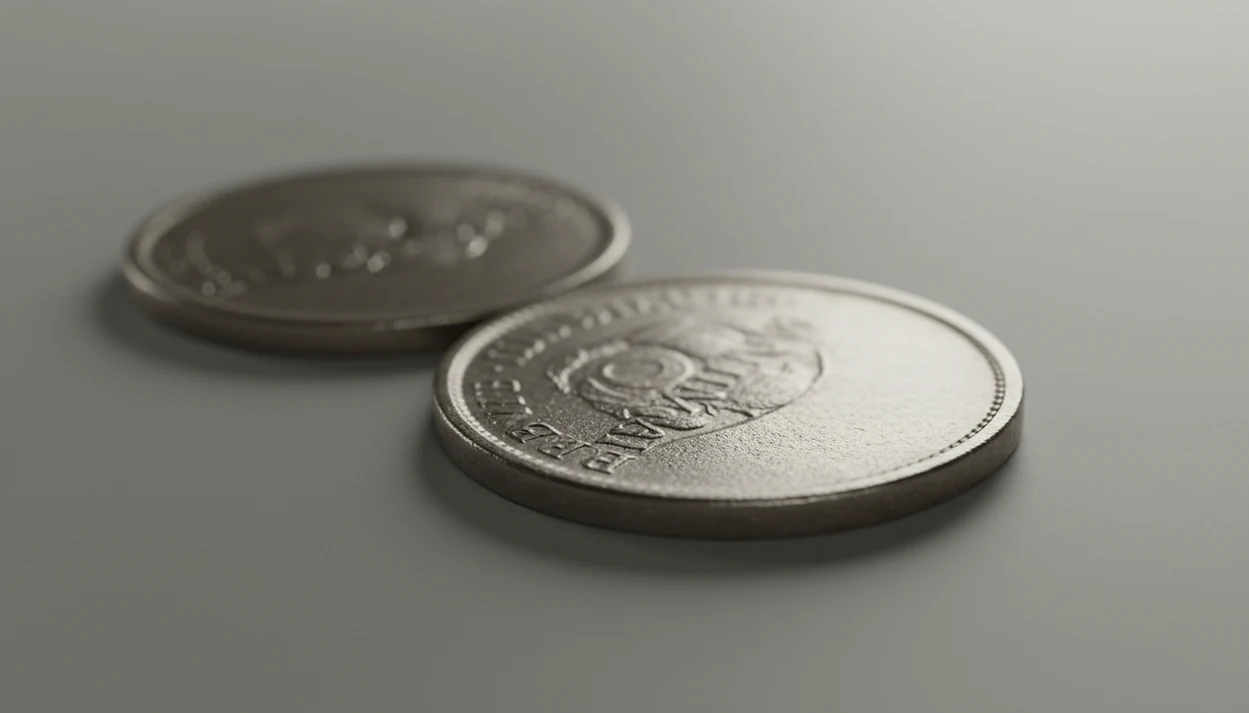


A true off center coin has part of the design missing because the planchet was not centered between the dies, leaving a blank crescent of metal on the opposite side. This off center coin guide shows how to judge the percent off-center, date visibility, denomination, and common damage lookalikes before you estimate value.
Definition box: An off center mint error is a struck coin whose design is visibly shifted off the planchet because the blank coin was mispositioned during the minting strike.
TL;DR
- Real off center coins show missing design plus exposed blank planchet, not just a thick rim or uneven wear.
- Value usually depends on off-center percentage, visible date, denomination, condition, and collector demand.
- Clear full-coin photos of both sides help AI tools and human experts separate mint errors from damage.
Off Center Mint Error Definition And Must-Know Clues
An off center mint error is a striking error caused by a misaligned planchet, not by wear after the coin leaves the Mint. The key clue is simple: part of the design is missing, and the opposite side of the coin shows a plain blank crescent of metal.
A slight design shift alone is not enough. Many normal coins have minor centering differences, and some have one rim that looks wider than the other. A true off center coin should look like the dies struck only part of the blank.
Start with the obverse.
The U.S. Mint produced about 14.5 billion circulating coins in fiscal year 2023. Source: U.S. Mint circulating coin production tables, https://www.usmint.gov/about/production-sales-figures/circulating-coins-production. At that scale, even strong quality control can still let a small number of off center mint error coins escape into rolls, bags, and change jars.
Five Off Center Coin Guide Facts Beginners Should Know
- Off center errors happen during striking. A genuine off center coin is made when the planchet sits partly outside the die area during the strike, not when a coin is bent, cut, or scraped later.
- Percent off-center is a major value factor. Collectors often describe the error as 5%, 20%, 50%, or more off center based on how much design is missing.
- Visible date and denomination matter. A dramatic misstruck coin can be harder to verify if the date, mint mark, or denomination is gone.
- Lookalikes are common. Broadstrikes, misaligned dies, clipped planchets, and damage can resemble an off center strike at first glance.
- Photos must show the whole coin. Full obverse, full reverse, and a clear date area are needed for reliable review by people or an error coin identifier.
A coin balanced on a white napkin usually photographs better than one held between fingers.
Before You Check An Off Center Coin
Before you check an off center coin, set up a safe, simple work area so you do not add damage while trying to identify damage. The goal is to handle the coin once, photograph it clearly, and keep any metal or age questions separate until you know what you have.
- Handle the coin with clean hands, or better, hold it only by the edge so fingerprints do not cross the date, rim, or blank crescent.
- Place it on a plain white or gray surface before taking photos, because busy fabric, wood grain, and colored backgrounds can hide the rim.
- Avoid cleaning or testing it with rubbing, bending, filing, dipping, or acid, since those actions can lower collector interest and confuse the evidence.
- Gather a ruler, magnifier, and strong light so you can see the full rim, estimate the off-center percentage, and check whether the date is readable.
- Separate suspected silver or older coins for composition research first, especially if the date, color, weight, or denomination looks unusual.
Off Center Coin Strikes Inside The Minting Press
Off center coin strikes happen when a blank planchet feeds into the coining chamber but fails to sit fully between the obverse and reverse dies. The dies only impress the design where the metal is actually under them.
That is why one area shows missing design while the opposite area remains blank. The technical idea is die coverage: the design transfers only across the part of the planchet covered by the dies during the strike. In plain English, the coin was not all the way in place.
Extreme errors can lose the date, portrait, denomination, or key reverse design. That hurts identification, even when the strike looks dramatic.
From 1965 to 2019, the U.S. Mint struck over 1.1 trillion Lincoln cents. Source: U.S. Mint circulating coin production tables, https://www.usmint.gov/about/production-sales-figures/circulating-coins-production. That huge production total helps explain why modern off center cents are seen more often than similar errors on halves, dollars, or older denominations.
Six Safe Steps For Using This Off Center Coin Guide
Use this process before you clean, sell, or label a suspected misstruck coin. Wipe dust from the holder if needed, but do not clean the coin itself.
- Set the coin on a plain surface with good light, such as a white card or neutral cloth.
- Photograph the full obverse and reverse without cropping the rims or blank crescent.
- Check for missing design and exposed blank planchet on the opposite side.
- Estimate percent off-center by comparing the blank crescent with the full coin diameter.
- Record the date, mint mark, denomination, and condition in your collection notes.
- Compare against lookalikes or upload photos to an app that identifies coin errors.
Slow down here.
For beginners, a photo-first check is often safer than repeated handling because the coin can be reviewed without rubbing or bending the metal.
Off Center Coin Value Factors: Percent, Date, And Denomination
How much is an off center coin worth? Off center coin value usually depends on percent off-center, visible date, denomination, age, metal, condition, eye appeal, and current collector demand.
Pieces around 40% to 60% off center with a readable date are often desirable because they look dramatic while still proving what the coin is. Farther off-center is not always better. If the date is gone, a buyer may see a striking curiosity instead of a clearly attributable error.
Modern cents and dimes are often less valuable unless the error is bold, clean, and easy to verify. Larger denominations, older coins, silver issues, and unusual combinations can be worth a closer look. In a 2022 Harris Poll commissioned by the U.S. Mint, 16% of U.S. adults reported owning a coin collection, which helps explain steady demand for clear mint errors. Source: U.S. Mint coin collector survey release, https://www.usmint.gov/news/press-releases.
Simple value score
Give one point each for dramatic percent, visible date, readable denomination, strong condition, and unusual type. A five-point coin deserves closer research, not an automatic appraisal.
Off Center Mint Error Lookalikes And Damage Checks
Off center mint errors must be separated from lookalikes because similar shapes can come from different causes. The fastest check is whether the coin has missing design plus a true blank crescent.
| Coin problem | Main clue | How it differs from an off center strike |
|---|---|---|
| Off center strike | Missing design and blank crescent | Planchet was partly outside the dies during striking |
| Broadstrike | Coin spreads outward | Usually keeps the full design, just wider and flatter |
| Misaligned die | One side looks shifted | Often affects one side more, without a true blank crescent |
| Clipped planchet | Curved or straight missing metal | Metal was missing before strike, not just unstruck |
| Post-mint damage | Bends, cuts, scrapes, distortion | Damage happened after minting and may disturb metal flow |
A lamp angled toward a faint mint mark can help, but do not press, bend, file, acid-test, or clean the coin. For borderline cases, the error coin vs damage comparison is often the next useful check.
Misstruck Coin Photo Checklist For AI Identification
Good misstruck coin photos show the full object first, then the details. AI tools and human reviewers both need the date area, mint mark area, rims, and blank crescent to evaluate the strike.
- Full obverse: Photograph straight down with the entire rim visible.
- Full reverse: Keep the same distance and lighting as the obverse photo.
- Date and mint mark close-up: Add this only after full-coin photos are saved.
- Blank crescent view: Make sure the unstruck metal is not hidden by glare.
- Neutral image settings: Avoid filters, heavy shadows, angled shots, and tight cropping.
A photo-first coin-identification tool can organize images, surface rarity clues, and provide estimated value context, but it should not be treated as a certified grade, authentication, or guaranteed sale price.
The Federal Reserve found that 11% of adults used some type of financial or investment app daily, which reflects growing comfort with app-based tools. Source: Federal Reserve Economic Well-Being of U.S. Households report, https://www.federalreserve.gov/publications/economic-well-being-of-us-households.htm.
Off Center Coin Verification Before Selling Or Grading
Before selling or grading, compare the coin with known examples from reputable error coin references, auction archives, dealer listings, and collector communities. Look for matching traits: missing design, blank crescent, normal metal surface, and a plausible date and denomination.
Third-party grading may help when the coin is valuable enough, the error is dramatic, or the buyer needs independent authentication. However, grading fees can exceed the premium on minor modern errors. A common off center cent with a weak date may not justify the cost.
Auction records and dealer experience guide value because there is no complete public population database for every surviving off center coin. Use an app or folder system to keep obverse, reverse, date, mint-mark, and blank-crescent photos together before asking a dealer or experienced error collector for confirmation.
Limitations
Off center coin identification has real limits, especially from photos. Treat every value range as research guidance, not a formal appraisal.
- There is no complete public database of all surviving off center mint errors.
- Low-resolution or cropped photos can cause AI tools and human reviewers to misjudge the error.
- Market prices can change when temporary collector interest rises or fades.
- Minor modern off center coins may not be worth third-party grading.
- Some lookalikes require expert review to separate from true mint errors.
- A value estimate is not a guaranteed sale price.
- Dark wooden tables can make copper cents look redder than they are.
- Cleaning, bending, or “testing” the coin can reduce collector interest.
If the coin might be silver, confirm the date and composition separately. The common question is still, “Is this silver or just old?”
FAQ
What is an off center coin?
An off center coin is a mint error where part of the design is missing because the planchet was not centered during striking. It should also show exposed blank planchet, often as a crescent.
Are off center coins valuable?
Some are valuable, but value depends on percent off-center, visible date, denomination, condition, and collector demand. Minor modern examples may bring only a small premium.
How off center is my coin?
Estimate the percentage by comparing the missing design and blank crescent with the coin’s full diameter. A half-blank look is often described near 50% off center.
Does the date need to show?
A visible date usually improves verification and value because it confirms the coin type and year. Dateless off center coins can still be collectible, but they are harder to attribute.
Is my coin damaged instead?
Damage often shows bends, cuts, scrapes, crushed rims, or distorted metal after minting. A true off center strike shows missing design with unstruck blank planchet.
Can off center errors be fake?
Damage can imitate the look of an off center error, especially when metal is cut or flattened. Genuine examples have mint-made striking characteristics that should match both sides of the coin.
Should I grade an off center coin?
Grading may be useful for a dramatic, valuable, or hard-to-verify off center coin. For minor modern errors, grading fees may exceed the likely premium.