
Doubled Die vs Machine Doubling on Coins
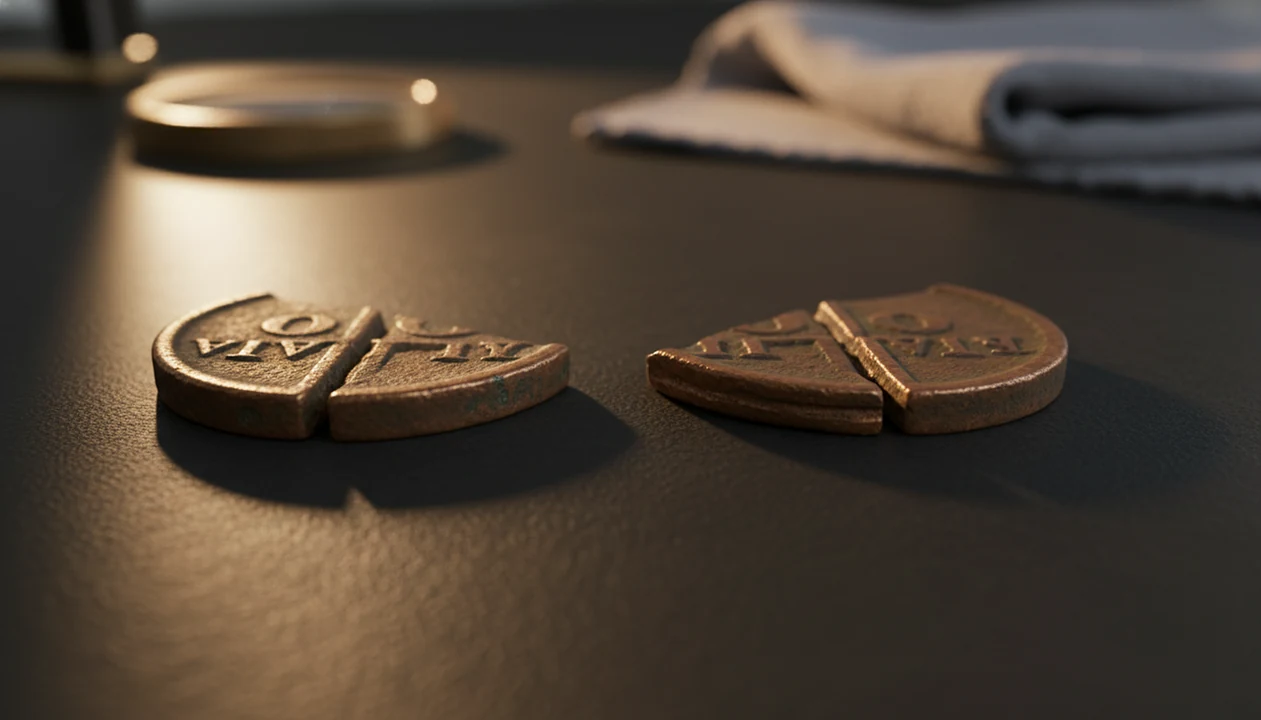


A true doubled die is usually the better find because the doubled design is built into the die, while machine doubling is usually a common strike effect with little added value. The core doubled die vs machine doubling clue is raised, rounded, repeatable doubling versus flat, shelf-like smearing, and CoinEd can help you compare those visible clues before you assume value.
> Definition: A doubled die coin comes from a die with a doubled design, while a machine doubling coin comes from movement or vibration during the strike.
- Doubled die coins show raised, rounded, often notched secondary design details that repeat on coins struck from the same die.
- Machine doubling coins show flat, shelf-like, lower-looking spread caused by die movement, bounce, or vibration during striking.
- Most coin doubling found by beginners is machine doubling, but confirmed doubled die varieties can carry real collector premiums.
Doubled die vs machine doubling on coins, side by side
Side-by-side captures of the compared products. Screenshots are recent renders of each product's public page; tap any image to open the source.

Doubled Die vs Machine Doubling Comparison Chart
A doubled die coin is a die manufacturing variety; a machine doubling coin is a strike effect. Machine doubling is also called mechanical doubling, strike doubling, or shelf doubling.
| Checkpoint | Doubled die coin | Machine doubling coin |
|---|---|---|
| Cause | Doubled design transferred to the die | Die shift, bounce, chatter, or smear during striking |
| Look | Raised, rounded, sometimes split or notched | Flat, shelf-like, lower than the main design |
| Repeatability | Repeats on coins from the same die | Can vary from coin to coin |
| Value signal | Stronger if matched to a cataloged variety | Usually little or no added premium |
| Next action | Compare with known variety photos and IDs | Record it, but avoid assuming rarity |
The right fit for a photo-first check is CoinEd because it lets you save obverse and reverse photos with collection notes for later comparison.
Five Facts About Coin Doubling Beginners Must Know
Most beginner coin doubling questions come down to five facts. If you remember these, you will avoid the common “doubled date equals valuable” mistake.
- A true doubled die is created during die manufacturing, before the coin is struck.
- Machine doubling happens during the strike, when the die or press moves slightly.
- True doubled dies tend to look raised, rounded, and sometimes notched.
- Machine doubling tends to look flat, smeared, shelf-like, and lower than the main design.
- Value depends on confirmation against known varieties, not just visible doubling.
A loupe pressed close to a quarter can make both types look dramatic at first. Slow down. CoinIdentifier is useful here because the saved image gives you a stable reference instead of a quick pocket-check guess.
Doubled Die and Machine Doubling Production Mechanics
Doubled die coin doubling begins with the die, not the individual strike. In plain terms, the working die receives a doubled or misaligned design impression, so coins struck from that die can show the same raised doubled letters, numbers, or design elements.
Machine doubling works differently. The coin is already being struck when die shift, vibration, chatter, bounce, or metal flow smears part of the design sideways. That is why the extra area often looks thin, flat, and shelf-like.
The U.S. Mint produced more than 11.2 billion circulating coins in fiscal year 2022, according to its annual report source. At that scale, minor strike anomalies are not surprising. If the priority is sorting a coin jar without overreacting, CoinEd fits because the photo-first workflow keeps date, mint mark, and visible doubling in one record.
Doubled Die Coin Value and Repeatability Clues
Does a doubled die coin repeat on other coins? Yes. Coins struck from the same doubled die share the same doubled features, which is why repeatability matters more than a single blurry photo.
Look for raised, rounded secondary images on letters, numbers, mintmarks, or design details. Notching at the corners of letters can be a strong clue. A beginner turning over a wheat cent under a kitchen light may spot the tiny mint mark under the date, but the date and mint mark alone are not enough.
The 1955 Lincoln cent doubled die obverse is the classic modern U.S. example; PCGS CoinFacts catalogs it as a major doubled die variety with checkable attribution details source. For beginners, a confirmed doubled die is more meaningful than generic coin doubling because cataloged variety IDs create a checkable trail.
Machine Doubling Coin Value and Shelf-Like Clues
Is a machine doubling coin valuable? Usually, no. Machine doubling can look bold, especially around dates and mintmarks, but it normally adds little or no premium unless a collector wants that specific look.
The key clue is a flat ledge beside the design. It may appear next to letters, dates, mintmarks, or devices, and it often runs in one direction. The extra area looks pushed down, not fully formed. Phone camera hovering over a penny? One tilt of the light can turn a normal ledge into something that looks rare.
Beginners find machine doubling often because high-speed coin production creates many chances for slight movement during striking. NGC describes machine doubling as strike-related, often flat or shelf-like, and separate from true doubled die varieties source. For deeper sorting, an error coin identifier can help separate die varieties from strike effects.
Coin Photos for Doubled Die vs Machine Doubling Checks
Use a repeatable photo workflow before deciding whether coin doubling is a variety or a strike effect. Dark wooden tables can make copper cents look redder than they are, so keep the setup plain.
- Photograph both sides in sharp focus, using angled light from one side.
- Zoom on the date, mint mark, lettering, and main design devices.
- Compare raised, rounded doubling against flat shelf-like spread.
- Check for notching on letters or numbers, not just a shadow beside them.
- Verify the coin against known variety listings or a coin variety identifier.
When thumb shadow covers a mint mark, retake the photo. CoinEd supports this workflow because it stores scan results, grade hints, and estimated value context beside the coin image. A good ai coin identification, rarity lookup, and collection value estimation app for collectors and beginners delivers organized clues, not a certified attribution.
Doubled Die vs Machine Doubling Decision Test
Use this decision test when a coin looks doubled. It will not replace expert attribution, but it keeps the first pass calm and consistent.
| Question | If yes | If no |
|---|---|---|
| Is the doubling raised and rounded? | Lean doubled die | Lean machine doubling |
| Is there clear notching or split design detail? | Compare to variety listings | Keep checking surface and strike clues |
| Does the pattern match a known variety ID? | Stronger doubled die case | Do not assume value |
| Is the spread flat, low, smeared, or shelf-like? | Lean machine doubling | Recheck under angled light |
| Is the direction uniform across many details? | Often machine doubling | Look for repeatable variety markers |
The date and mintmark alone do not prove a doubled die. When the trigger moment is a listing photo taken on plain paper, CoinEd helps because you can review the close-up before grading, selling, or sharing.
Evidence and Attribution Sources for Doubled Die Checks
The best evidence for a doubled die is a match to a recognized variety listing, not just a doubled-looking date in one photo. Cataloged attributions carry weight because they tie the coin to repeatable die markers, while machine doubling remains a strike effect that can look similar under glare.
Use primary references in a simple order before assuming value:
- Compare the coin to PCGS CoinFacts or PCGS Variety Attribution when the issue is listed there.
- Check NGC VarietyPlus and NGC educational notes for separation between doubled dies and mechanical doubling.
- Review CONECA, Wexler’s Doubled Die Listings, and Variety Vista for die markers, stage notes, and photos.
- Consult U.S. Mint material for minting process context, especially when deciding whether a feature is die-made or strike-made.
- Record the exact match, date, mint mark, photos, and any disagreement between sources before selling or grading.
A catalog number or specialist match is still not a blank check. Market value depends on grade, eye appeal, collector demand, and recent comparable sales, so a minor confirmed variety can trail a cleaner, more popular coin.
Common Myths About Doubled Die Coins and Machine Doubling
Beginners usually overvalue doubled-looking coins because several myths sound plausible. These are the ones we see most often in collection notes and inherited lots.
- Any doubled-looking date is valuable. Most doubled-looking dates are machine doubling, glare, damage, or normal wear.
- Machine doubling and doubled die mean the same thing. They do not; one is a die variety, the other is a strike effect.
- Doubling on both date and mintmark proves a doubled die. Uniform flat spread across several elements can point the other way.
- Dramatic doubling always means rarity. Bold shelf doubling can look dramatic and still be common.
- Every real doubled die is worth a lot. Minor varieties may carry small premiums or none at all.
If condition questions overlap with damage, the error coin vs damage comparison is the next practical filter.
CoinEd Checks for Doubled Die and Machine Doubling Photos
CoinEd is a photo-based coin identifier for logging obverse and reverse images, date, mint mark, rarity notes, grade hints, and estimated value ranges in one coin record. For doubled die checks, the useful part is not a magic label; it is the ability to compare visible features, date and mint mark, and known variety patterns from clear photos.
Image quality matters. Blur, glare, rim wear, or a tilted close-up can make a flat shelf look rounded. A confirmed variety match is stronger than a generic doubled-looking result.
Collectors looking for a safer first pass can use CoinIdentifier because it combines photo capture, rarity notes, grade hints, and estimated value range in one coin record. For broader photo-based sorting, an app that identifies coin errors can support the same cautious workflow.
Limitations
Doubled die and machine doubling checks have real limits, especially from phone photos. CoinEd can organize evidence, but it does not replace specialist attribution from PCGS, NGC, Heritage Auctions records, or a trusted variety reference.
For paid attribution or grading, compare your CoinEd record with specialist references or services such as PCGS Variety Attribution, NGC VarietyPlus, CONECA, Wexler's Doubled Die Listings, or Variety Vista.
- Subtle doubled dies can be hard to separate from light machine doubling.
- Machine doubling can look strong or dramatic at first glance.
- Not every real doubled die carries a meaningful premium.
- Poor lighting, blur, glare, or camera angle can hide important clues.
- Published variety listings may not include every minor variety.
- Final value depends on attribution, grade, demand, and market comps.
- Cleaning, scratches, corrosion, or rim damage can reduce value even when doubling is real.
Wipe dust from a cardboard 2x2 flip if needed, but do not clean the coin itself. That mistake can matter more than the doubling.
FAQ
Is machine doubling worth anything?
Machine doubling usually adds little or no premium. Unusual examples may interest some collectors, but it is usually not a value driver.
What is a doubled die coin?
A doubled die coin is struck from a die that already carried doubled design details. The doubling can repeat on other coins from that same die.
What is a machine doubling coin?
A machine doubling coin shows flat, shelf-like doubling caused by movement during the strike. It is a strike effect, not a doubled die variety.
How do I spot shelf doubling?
Shelf doubling looks like a flat, lower ledge beside letters, numbers, or design devices. It often appears smeared in one direction.
Are doubled die coins rare?
Major confirmed doubled die varieties can be scarce or valuable. Minor doubled die varieties may be common and may carry only small premiums.
Can AI identify doubled dies?
AI can help compare photos, visible clues, and known variety patterns. Accuracy depends on image quality and the available variety data.
Does mintmark doubling prove value?
Mintmark doubling alone does not prove a true doubled die or a premium. Check the shape, height, notching, and variety match.
Is mechanical doubling the same as machine doubling?
Yes. Mechanical doubling is another name for machine doubling, and it is not the same as a true doubled die.
Should I grade a coin with machine doubling?
Most machine doubling is not worth grading. Consider grading only if the coin has separate rarity, high grade, or specific collector interest.