
Tool That Can Check Coin Metal by Specs and Photos
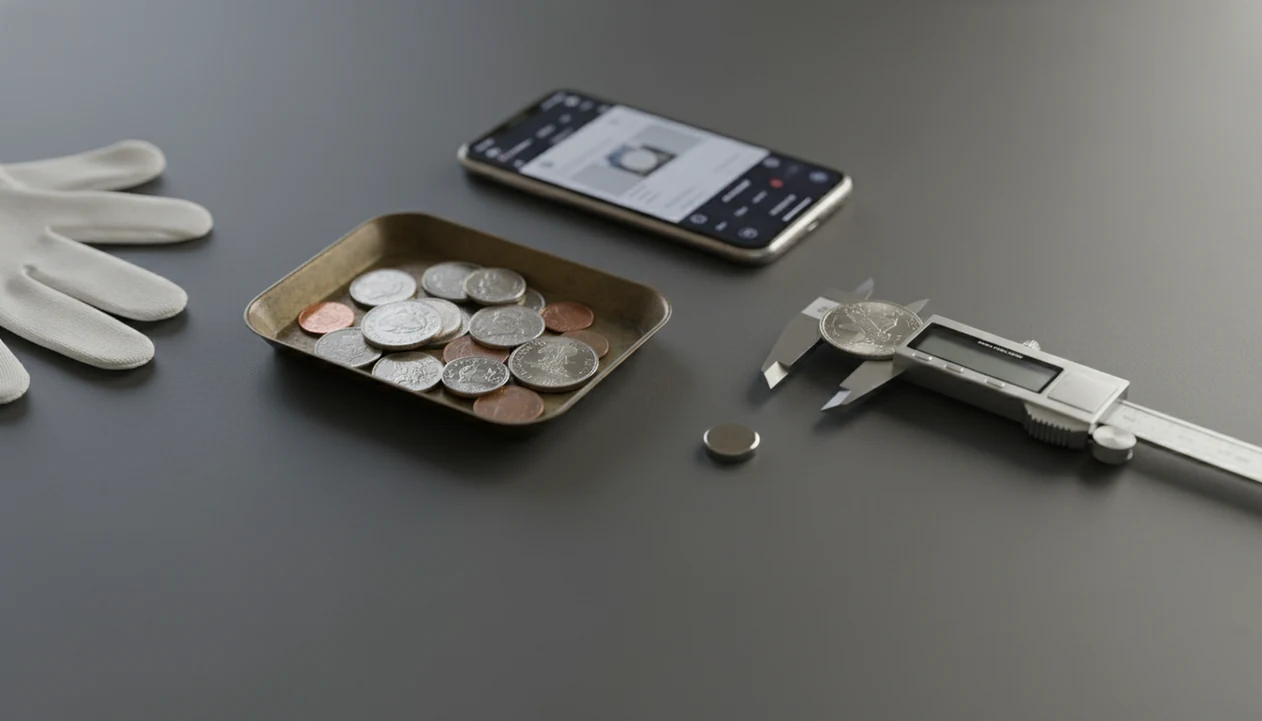
The best tool that can check coin metal combines photo identification, official composition lookup, and non-destructive checks like weight, diameter, edge, magnetism, and optional XRF or resistivity testing. A phone app can identify the coin and show expected metal specs, while a scale, caliper, magnet, and professional analyzer help confirm whether the coin matches those specs.
> A coin metal checker is a non-destructive workflow or device that compares a coin’s observed traits against official metal, weight, diameter, edge, and date specifications.
- Start with photo identification and a coin composition lookup before testing metal.
- Confirm the result with weight, diameter, thickness, edge, magnetism, and sound checks.
- Use XRF or electrical resistivity for higher-value coins, but still cross-check plated or altered pieces.
Coin Metal Checker Definition for Specs, Photos, and Safe Testing
A coin metal checker is a non-destructive workflow or device that compares a coin’s observed traits against official metal, weight, diameter, edge, and date specifications.
In normal collector use, the phrase can mean an app, database, handheld verifier, XRF analyzer, resistivity tester, or a combined workflow. A phone app does not directly scan silver, copper, nickel, or gold through the camera. It identifies the coin visually, then compares that identity with composition data.
A photo-first identifier can help identify coins from images, show likely rarity and grade hints, and give beginners a starting point before checking metal specs. Treat photo ID as the first clue, not a lab result.
Do not scratch, drill, file, or acid test collectible coins. Once the surface is damaged, the evidence and value can both change.
At-a-Glance Coin Weight Diameter Metal Checks
App lookup plus weight and diameter is the practical beginner baseline for coin metal checking. No single method is definitive for every counterfeit, plated piece, or altered coin.
| Method | What it checks | Best use case | Cost level | Main weakness |
|---|---|---|---|---|
| Photo lookup | Likely coin type and expected specs | First pass ID | Low | Does not sense metal |
| Scale | Weight against official standard | Bulk sorting and silver checks | Low | Wear can reduce weight |
| Caliper | Diameter and thickness | Counterfeit screening | Low | Needs careful placement |
| Magnet | Ferrous response | Fast rejection test | Low | Many fakes are non-magnetic |
| Ping test | Ring and tone | Silver suspicion checks | Low | Noise and damage affect sound |
| Electrical resistivity | Conductivity-style match | Bullion verification | High | Device limits vary |
| XRF | Surface elemental analysis | Precious-metal review | High | Plating can mislead |
A nickel stack beside empty wrappers is where this gets useful fast. Sort the obvious matches first, then slow down on the odd weights.
Five Facts About Coin Composition Lookup Tools
A coin composition lookup is only as good as the coin identity behind it. Start with the obverse, reverse design, country, denomination, date and mint mark before trusting the metal result.
- A coin composition lookup depends on denomination, country, date, mint mark, and variety.
- Modern U.S. circulating dimes, quarters, half dollars, and dollar coins use clad 91.67% copper and 8.33% nickel composition, according to the U.S. Mint source.
- American Silver Eagles are .999 fine silver, 31.103 grams, and 40.6 mm in diameter, according to the U.S. Mint source.
- Modern UK one pound coins are bi-metallic, with a nickel-brass outer ring and nickel-plated inner disc, per the Royal Mint source.
- XRF and resistivity testers can help, but surface readings and plated fakes still need cross-checks.
For U.S. silver questions, a silver coin identifier can narrow the date range before you test.
Before You Start: Coin Metal Checking Tools and Setup
Before you start checking coin metal, set up clean measuring tools and a repeatable note-taking routine. The goal is to capture the coin’s condition and specs before fingerprints, pressure, or holder interference change what you see.
- Calibrate a 0.01 gram scale on a level surface, especially when small weight differences separate one composition from another.
- Clean the caliper jaws, then measure diameter gently across the widest point without pinching or flattening the rim.
- Photograph the obverse and reverse under neutral light before heavy handling, using the same background for later comparisons.
- Keep magnets away from slabs, flips, capsules, soft holders, and delicate storage materials until you are ready for a controlled check.
- Record the date, mint mark, weight, diameter, edge style, lighting, holder status, and test conditions in one place.
This setup feels slow at first, but it prevents the usual “I measured it twice and got two answers” problem. Good notes also make a later dealer, grader, or buyer conversation much easier.
How a Tool That Can Check Coin Metal Works
A tool that can check coin metal works by matching identity first, then testing whether the physical coin fits the expected specification. The data flow starts with photo recognition, which identifies the likely coin and retrieves official specs for composition, weight, diameter, thickness, and edge.
After that, user measurements are compared against expected tolerances and known issue data. A quarter flipped for the eagle side may look ordinary in the photo, but the date and edge can change the entire metal question.
XRF is surface elemental analysis. In plain English, it reads what elements are present near the coin’s surface. Electrical resistivity is a conductivity-style metal verification method; it checks how the coin responds to an electrical signal.
Portable XRF can be highly accurate on flat precious-metal samples, but coin shape, plating, toning, and surface layers still matter. Good photo-first coin identifier and value estimation apps for collectors and beginners deliver organized clues, not instant certified authentication.
How to Use a Coin Metal Checker Without Damaging Coins
Use a coin metal checker as a sequence, not a single yes-or-no gadget. For beginners, photo ID plus measured specs is often safer than chemical testing because it preserves the coin surface.
- Photograph both sides of the coin in good light, with the camera square to the surface.
- Identify the coin by country, denomination, date, mint mark, and design.
- Look up official composition, weight, diameter, thickness, and edge specs.
- Measure weight and diameter with a scale and caliper, then compare the results.
- Add magnet, ping, resistivity, XRF, or expert grading only when value or uncertainty justifies it.
Small errors add up.
If you are checking a 1964 dime or quarter and asking, “Is this silver or just old?”, start with the date. Then use a silver dime identifier or silver quarter identifier before moving to advanced tests.
Best Coin Metal Checker Tools by Collector Use Case
A practical coin metal checker setup depends on the coin’s value, risk, and how often you test. A beginner sorting pocket change does not need the same tools as someone reviewing bullion or slabbed rarities.
- Photo-first coin identifier app: Fits beginner lookup and collection notes. Tools like CoinEd help identify the likely coin before you compare metal specs.
- Precision scale and caliper kit: Fits bulk sorting, roll hunting, and repeat checks. Keep the scale level and calibrate it often.
- Magnet and sound checks: Fit quick screening, especially when the coin should not react to a magnet. Background noise can ruin the ping test.
- Professional XRF or precious metal verifier: Fits bullion, slabbed coins, and high-value review. Some advanced analyzers can test through thin holders or slabs, depending on sensor design and holder material. Named options collectors may encounter include Sigma Metalytics precious metal verifiers and handheld XRF lines such as Thermo Scientific Niton or Evident/Olympus Vanta, though device capability varies by model.
For half dollars, a silver half dollar identifier can prevent testing the wrong composition year.
Common Coin Composition Lookup Mistakes
The most common mistake is treating one passing test as proof. Magnet testing alone is not enough because many counterfeit metals are also non-magnetic.
AI photo identification does not directly sense metal content. It recognizes design features and then points you toward the expected composition. If the coin is worn, cleaned, corroded, bent, or plated, weight, sound, dimensions, and surface readings can all shift.
Phone photos on a dark wooden table can make copper cents look redder than they are. That affects visual judgment, not chemistry.
Date ranges matter because the same denomination can change metal composition across years. World coins add another layer, since obscure types, varieties, and error coins may need catalog confirmation or expert review. A world coin identifier helps when script, ruler portrait, or country is unclear.
Verification Checklist for Coin Weight Diameter Metal Matches
Is the coin metal check strong enough to trust? A pass means the photo identity, official composition, expected weight, expected diameter, edge details, and non-destructive test behavior all point to the same coin.
A caution result means one mismatch appears, but it could have a normal explanation. Wear, rim damage, wrong variety, scale error, holder interference, or database uncertainty can all create one odd reading.
A fail or expert-review result means several clues disagree. Watch for suspicious plating signs, wrong weight-density relationship, incorrect edge, or high-value stakes. For valuable coins, get professional grading, dealer review, or advanced lab testing before buying, selling, or insuring.
The keeper pile beside a coffee mug is fine for common finds. For a four-figure coin, slow down and document every measurement.
Limitations
No coin metal checker guarantees 100% authenticity in every case. Use these limits before relying on any result.
- XRF and many analyzers primarily read the surface layer, so thick plating or hidden cores can be missed.
- Professional XRF and resistivity devices can be expensive for casual collectors.
- DIY ping tests can be affected by wear, damage, holders, table surface, and background noise.
- Cheap scales, calipers, and magnets can create false confidence if they are inaccurate or used alone.
- Coin databases and AI identifiers can be incomplete for obscure world coins, varieties, and error coins.
- A cleaned or corroded coin may show altered weight, color, sound, or surface readings.
- High-value coins still need expert numismatic judgment, professional grading, or advanced testing.
Not a formal appraisal.
Before selling, also separate metal value from collectible demand. The melt value vs collector value debate matters most when silver, gold, rarity, and condition point in different directions.
FAQ
Can an app check coin metal?
An app can identify the coin from photos and look up its expected composition. It cannot directly scan metal content through the camera.
What tests coin metal content?
Non-destructive options include XRF, electrical resistivity, weight, diameter, magnetism, sound checks, and coin composition lookup. These work best when used together.
Is a magnet test enough?
No. A magnet test is useful for quick screening, but many fakes use non-magnetic metals.
Can XRF test coins safely?
Yes. XRF is non-destructive, but it mainly reads the surface and should be cross-checked with weight and size.
How do I check silver coins?
Identify the coin, confirm its official silver specs, then check weight, diameter, magnetism, and sound. Use professional testing for valuable pieces.
Do coin testers work through slabs?
Some advanced testers can read through thin holders or slabs. Results depend on the device, sensor design, and holder material.
Why does coin weight matter?
Weight matters because metal, diameter, thickness, and density must align with official specifications. A wrong weight can signal wear, damage, wrong identity, or a fake.
Should I acid test coins?
No. Acid testing can damage collectible coin surfaces and reduce value.