
Silver Half Dollar Identifier For Kennedy And Franklin Coins
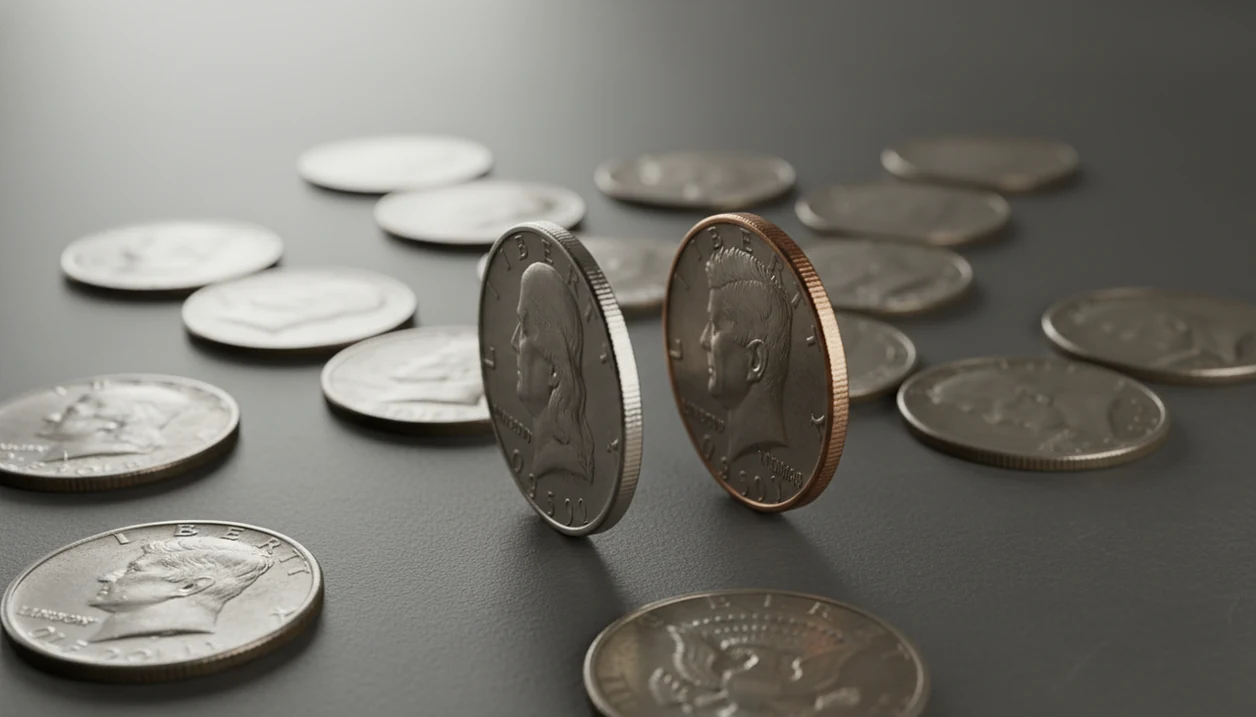


A silver half dollar identifier starts with the date: Franklin half dollars and 1964 Kennedy halves are 90% silver, Kennedy halves dated 1965–1970 are 40% silver, and regular circulation halves after 1970 are copper-nickel clad. Confirm the result with the edge color, weight, mint mark, and clear photos before estimating value.
Definition: A silver half dollar identifier is a date, design, edge, weight, and photo-based method for telling whether a U.S. half dollar is 90% silver, 40% silver, or copper-nickel clad.
TL;DR
- Franklin half dollars and 1964 Kennedy half dollars are 90% silver.
- Circulation-strike Kennedy halves from 1965 through 1970 are 40% silver.
- Most post-1970 Kennedy half dollars are not silver unless they are special collector issues.
Silver Half Dollar Identifier Date Rules For 90% And 40% Coins
The fastest silver half dollar check is the date rule: Franklin half dollars and 1964 Kennedy half dollars are 90% silver, while 1965–1970 circulation Kennedy halves are 40% silver. Regular circulation Kennedy halves dated 1971 and later are generally copper-nickel clad.
The U.S. Mint describes regular half dollars through 1964 as 90% silver on its half dollar specifications page source. It also notes the Kennedy half dollar changed to 40% silver in 1965 and stayed there for circulation issues through 1970.
Start with the obverse. A beginner often turns the coin under a kitchen light, then realizes the small date tells more than the shine. Special collector silver issues exist after 1970, but they are not ordinary pocket-change finds. For most people, the date sorts the coin before any edge test does.
How Silver Half Dollar Identification Works
Silver half dollar identification works because U.S. coin metal changed by law and issue year, so the date usually tells you the likely composition before shine or color does. The design series narrows the date range first: Franklin halves fall before the clad era, while Kennedy halves cross the 1964, 1965–1970, and post-1970 breaks.
- Start with the design and date, then place the coin into the Franklin, 1964 Kennedy, 1965–1970 Kennedy, or later Kennedy group.
- Check the edge as a clue, not a verdict, because lighting, wear, plating, and 40% silver layers can blur the copper line.
- Weigh the coin when photos are uncertain; mass is a practical check on silver percentage when the date or rim is hard to read.
- Treat collector issues separately, especially Bicentennial and modern proofs, and confirm them with original packaging, exact weight, or an expert review.
Date, Edge, Weight, And Photo Checks For Silver Half Dollar Identification
A reliable silver half dollar identification combines design recognition, date range, mint mark, edge color, weight, and value context. The date remains the strongest first filter because U.S. composition changes follow specific year ranges.
AI photo recognition can help identify Kennedy and Franklin designs, read visible dates, and point out mint mark areas. A coin identifier app can keep obverse, reverse, and edge photos together with collection notes, then show rarity, grade, and value clues for review.
Still, photos are only part of the check. A dark wooden table can make a copper-nickel half look warmer, and a blurred rim photo can hide the copper band. Worn, cleaned, plated, or damaged coins need extra confirmation, usually with a gram scale and a trusted reference. A good ai coin identification, rarity lookup, and collection value estimation app for collectors and beginners gives structured clues, not a certified grade or guaranteed sale price.
Before You Start: Tools And Photos You Need
Before you identify a silver half dollar, set up clean light, clear photos, and one simple measuring tool. The goal is to remove guesswork before the date, edge, and weight checks begin.
- Use bright natural light near a window or outside in open shade, and avoid yellow indoor bulbs that can make copper-nickel clad coins look warmer than they are.
- Photograph the obverse and reverse straight on, then take close-ups of the date and mint mark area so small details stay readable after you zoom in.
- Capture the edge from more than one angle, because a single rim photo can hide a copper band, glare, or a thin 40% silver layer.
- Keep a 0.01-gram scale nearby for worn, plated, or questionable coins, especially when the date or edge does not settle the answer.
- Leave the surface alone; do not clean, polish, rub, or “brighten” the coin before identification. Open the current silver spot price and a reliable reference page instead, then compare value only after the coin is sorted.
Five Silver Half Dollar Facts Every Finder Should Know
These five facts cover the core silver half dollar rules most finders need before sorting, selling, or storing a coin. Keep them beside the coin, not buried in a long price chart.
- Franklin half dollars from 1948 through 1963 and 1964 Kennedy half dollars are 90% silver.
- Circulation-strike Kennedy half dollars from 1965 through 1970 are 40% silver.
- A 90% silver Kennedy or Franklin half contains about 0.36169 troy ounce of silver.
- A 40% silver Kennedy half contains about 0.1479 troy ounce of silver.
- Edge color helps identify silver content, but the date and weight should confirm the result.
Those numbers matter when the coin comes from an inherited jar, not a dealer tray. The clink of mixed nickels, dimes, and foreign coins poured from an old coffee can can make every large coin feel important. Sort first. Price later.
6-Step Silver Half Dollar Identifier Workflow
Use this workflow when you want a calm, repeatable way to identify a Kennedy or Franklin half dollar. It works for a single coin on a desk or a small group pulled from a bank roll.
- Photograph both sides in bright natural light, keeping the phone flat over the coin.
- Read the date and sort it into 1964-earlier, 1965–1970, or after 1970.
- Check the edge for a silver color, a faint copper line, or a strong copper band.
- Weigh the coin if the result is unclear, especially with worn or plated pieces.
- Check the mint mark and condition for collector value beyond silver content.
- Save the coin record in an app or collection log with photos and notes.
For broader date checks across denominations, a silver coin identifier can keep half dollars, dimes, and quarters in one sorting system. The small habit matters. One label now prevents three guesses later.
Kennedy Half Silver Years, Mint Marks, And Edge Clues
Kennedy half silver identification depends on year first, then edge and mint mark details. A 1964 Kennedy half is 90% silver, 1965–1970 circulation strikes are 40% silver, and 1971 or later circulation strikes are generally copper-nickel clad.
| Kennedy half dollar group | Usual composition | Edge clue | Finder note |
|---|---|---|---|
| 1964 | 90% silver | Mostly solid silver-colored edge | Check mint mark and wear |
| 1965–1970 | 40% silver | Mostly silver edge with possible faint copper line | Date is essential |
| 1971 and later circulation | Copper-nickel clad | Clearer copper band | Usually not silver |
| 1776–1976 Bicentennial | Usually clad, some collector silver | Edge varies by issue | Confirm package or weight |
1964 Kennedy Half Dollars
A 1964 Kennedy half dollar is the simple case: circulation examples are 90% silver. Look for the Kennedy portrait on the obverse and the presidential seal reverse.
1965 To 1970 Kennedy Half Dollars
A 40 percent silver half can show a mostly pale edge, but not always a clean white rim. That faint copper line is why the date matters.
1776 To 1976 Kennedy Half Dollars
Most Bicentennial halves are common clad coins. Some special collector issues contain silver, so weight and issue type should confirm them.
Franklin Half Silver Identification For 1948 To 1963 Coins
“Is my Franklin half dollar silver?” Yes, regular Franklin half dollars struck from 1948 through 1963 are 90% silver because the series ended before the 1965 clad transition.
Start with the obverse: Benjamin Franklin faces right. The reverse shows the Liberty Bell, with a small eagle to satisfy legal design requirements. Mint marks may appear above the bell on many issues, with common marks including D for Denver and S for San Francisco. Philadelphia pieces usually have no mint mark.
Franklin halves are simpler than Kennedy halves for metal content, but not for collector value. Condition, full bell lines, lower mintages, and eye appeal can matter. We’ve seen cardboard 2x2 flips with dust on the outside and a clean coin inside. Wipe the flip if needed, not the coin.
90% Silver Half Dollar Value Versus 40% Silver Half Value
A 90% silver Kennedy or Franklin half contains about 0.36169 troy ounce of silver, while a 40% silver Kennedy half contains about 0.1479 troy ounce. Melt value is the silver weight multiplied by the current spot silver price.
The troy-ounce figures are calculated from the U.S. Mint's listed half-dollar weights and silver percentages: 12.5 grams at 90% silver and 11.5 grams at 40% silver (U.S. Mint).
| Half dollar type | Silver content | Approximate silver weight | Value starting point |
|---|---|---|---|
| Franklin half, 1948–1963 | 90% | 0.36169 troy oz | Melt plus possible collector premium |
| Kennedy half, 1964 | 90% | 0.36169 troy oz | Melt plus date, mint, and grade context |
| Kennedy half, 1965–1970 | 40% | 0.1479 troy oz | Lower melt base, some dates collectible |
| Kennedy half, 1971+ circulation | Usually clad | No silver melt value | Face value unless collectible |
Melt value is not the same as dealer payout or auction value. Key dates, mint marks, grade, and varieties can add numismatic premiums. The melt value vs collector value question is especially important before selling a high-grade coin. A saved collection record can calculate silver-content context while keeping photos organized, but the final offer comes from the market.
Common Silver Half Dollar Identifier Mistakes
Most silver half dollar mistakes come from trusting shine, size, or edge color before checking the date. The coin can look old and still be clad.
- All-Kennedy assumption: Not all Kennedy half dollars are silver. Only 1964 is 90% silver, and 1965–1970 circulation issues are 40% silver.
- Shiny-modern mistake: A bright 1972 or 1995 half dollar is still usually copper-nickel clad.
- Edge-only shortcut: Edge color can mislead because 40% silver halves may show a partly silver edge with a faint copper line.
- Silver-equals-value error: Silver content is only one value factor. Grade, mint mark, date, and variety can change the result.
- Surface-trick problem: Plated, cleaned, or damaged coins can fool visual checks.
A buyer asking about composition and mintage is not being difficult. They’re asking the right first questions.
Silver Half Dollar Verification Checklist Before You Sell Or Store
Before you assign value, verify the coin with a short checklist. This reduces mix-ups between 90% silver, 40% silver, and ordinary clad halves.
- Verify the date and design first: Franklin, 1964 Kennedy, 1965–1970 Kennedy, or later Kennedy.
- Inspect the edge under bright light, rotating the coin instead of judging one spot.
- Use a gram scale if composition is uncertain or the coin looks plated.
- Photograph the obverse, reverse, edge, and mint mark area.
- Compare any app estimate with current silver spot price and recent coin market references.
- Seek professional authentication for suspected rare errors, altered dates, or unusually valuable examples.
For metal checks beyond a visual edge test, a tool that can check coin metal may help you decide when weight, magnet response, or testing deserves attention. A saved photo record also helps if you ask a coin club for a second look.
Limitations
Manual checks and AI-assisted identification can narrow the answer, but they cannot prove every silver half dollar detail. Treat the result as a working identification until the coin is verified.
- Heavily worn, corroded, polished, or cleaned coins may hide the date, mint mark, and design details.
- Plated clad coins can appear silver in photos and may require weight checks or metallurgical testing.
- AI tools may misread worn dates, unusual toning, glare, or off-center strikes.
- Edge checks alone cannot reliably prove authenticity or composition.
- Automated values depend on spot silver and price guide assumptions that may not match local dealer offers.
- Rare errors, altered dates, and high-grade coins should be reviewed by a professional grading service.
- Phone photos can distort color, especially on warm wood, yellow indoor light, or reflective plastic holders.
That last part is common. A coin that looks bright white on a screen may look completely different beside a window.
FAQ
What years are silver half dollars?
Franklin half dollars from 1948–1963 and 1964 Kennedy half dollars are 90% silver. Circulation-strike Kennedy half dollars from 1965–1970 are 40% silver.
Are all Kennedy halves silver?
No. Only 1964 Kennedy half dollars are 90% silver, and 1965–1970 circulation Kennedy halves are 40% silver.
Are Franklin half dollars silver?
Yes. Regular Franklin half dollars are 90% silver because the series ran from 1948–1963, before the 1965 composition change.
Is a 1971 half dollar silver?
A regular 1971 Kennedy half dollar is copper-nickel clad, not silver. Special collector issues should be checked separately by packaging, weight, and reference data.
Is a Bicentennial half dollar silver?
Most 1776–1976 Bicentennial half dollars are copper-nickel clad. Some special collector issues contain silver and need confirmation by issue type or weight.
How much silver is in a half dollar?
A 90% silver half dollar contains about 0.36169 troy ounce of silver. A 40% silver Kennedy half contains about 0.1479 troy ounce.
Can an app identify silver coins?
Yes, a coin identifier app can help recognize design, date, mint mark, and value clues from photos. App results should still be checked against date, edge, and weight rules, with professional verification for rare or altered coins.