
Selling Coins Online Safely After Identification and Value Checks
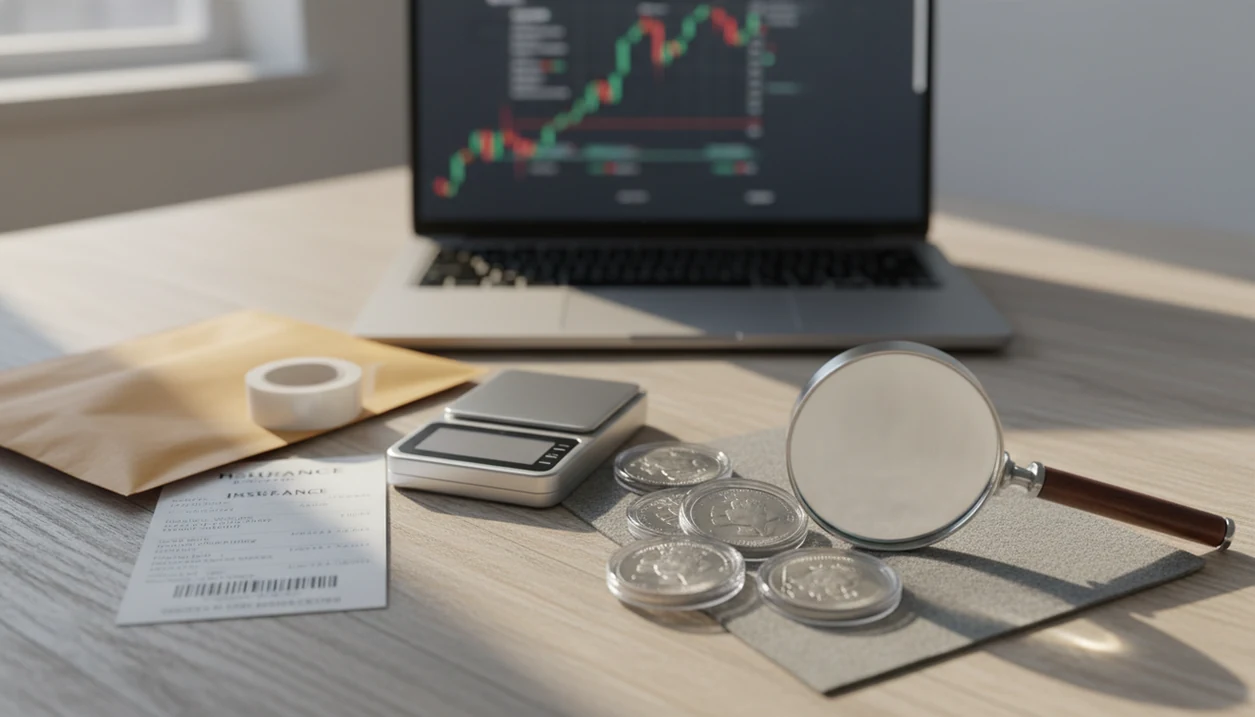


Selling coins online safely starts after you identify the coin, estimate a realistic value, and choose a platform with traceable payments, buyer history, and seller protection. The safest listings use honest photos, documented condition, cleared payment, insured shipping, and on-platform communication.
> Definition: Selling coins online safely means listing, accepting payment for, and shipping identified coins in a way that reduces fraud, underpricing, chargebacks, privacy exposure, and mail-loss risk.
- Identify the coin first, then compare recent sold prices before setting a price.
- Use established marketplaces, auction houses, or reputable dealers with documented transactions and dispute processes.
- Protect yourself with clear photos, on-platform messages, cleared payment, tracking, insurance, and shipment documentation.
Selling Coins Online Safely At a Glance
Selling coins online safely begins after coin identification, grade context, and value research, not before. A listing is safer when the coin type is clear, the condition is described honestly, and the asking price is grounded in recent sold prices.
The core controls are simple: use a reputable platform, write an accurate listing, accept secure payment, document shipping, and watch for scam behavior. If a buyer wants speed, secrecy, or a side payment, slow down.
A photo-first coin ID check can support the pre-listing review before you write the sale listing. Treat the result as a clue, not proof: compare the date, mint mark, variety, and condition against recent sold prices and trusted numismatic references, especially when a tiny mint mark sits half-hidden under the date.
Small letters matter.
Five Coin Listing Safety Facts Before You Sell Coins Online
- Identify before pricing. Confirm the date and mint mark, then compare recent sold listings, not active asking prices. A common circulation find can sit online at $500 and never sell.
- Use traceable selling venues. Established marketplaces, specialist auction houses, reputable dealers, and documented local-shop intake reduce risk through policies, feedback, and transaction records.
- Verify payment inside the account. Never ship from a screenshot, email alert, or “payment pending” message alone. Open the actual payment account and confirm cleared funds.
- Disclose condition problems. Cleaning, scratches, rim dings, holes, corrosion, and uncertainty should appear in the listing. A close-up photo of rim wear can prevent a later “not as described” claim.
- Ship with proof. Tracking, insurance, and signature confirmation are important for valuable shipments. FTC 2022 data reported $8.8 billion in fraud losses (https://www.ftc.gov/news-events/news/press-releases/2023/02/new-ftc-data-show-consumers-reported-losing-nearly-88-billion-scams-2022), and online shopping fraud was one of the most reported categories, so marketplace risk is real.
For beginners, recent sold prices are often safer than price-guide headlines because they show what buyers actually paid.
How Selling Coins Online Safely Works Behind the Scenes
Selling coins online safely works as a chain of verification: coin ID, condition, value range, buyer reputation, payment clearance, and shipping proof. If one link is weak, the whole transaction gets easier to dispute.
Reputation systems, platform records, and saved messages create evidence. They reduce perceived risk because the buyer and seller both leave a trail. Marketplace trust research has found that seller reputation systems can reduce perceived risk and increase willingness to transact, which is why feedback scores matter.
Photo-based ID and price context can help sellers avoid obvious mispricing, but they do not replace expert authentication for high-value coins. Use these checks for likely ID clues and price context, not as a guaranteed grade or authentication certificate. Marketplace trust research has also found that reputation systems can reduce perceived risk in online transactions; see Resnick et al., ‘The Value of Reputation on eBay’ at https://www.nber.org/papers/w9949. For deeper limits, our guide on photo-ID accuracy limits explains where image checks can fail.
Safe Coin Marketplace Choices for Online Sellers
Safer coin-selling venues vary by coin type, value, and seller experience. The right choice is the place that gives enough buyer reach without stripping away evidence, payment protection, or expert support.
| Selling option | Often fits | Safety strengths | Watch-outs |
|---|---|---|---|
| Major marketplaces | Common coins, modern issues, lower-value lots | Large buyer base, feedback, platform records | Scammers follow the traffic |
| Specialist coin auction houses | Rare coins, certified coins, estates | Numismatic audience, cataloging, dispute process | Fees and consignment timelines |
| Reputable dealers | Bullion, key dates, inherited groups | Faster review, documented offers | Wholesale offers may be lower |
| Local coin shops with online intake | Inherited collections, beginner sellers | Face-to-face option plus records | Quality varies by shop |
| Collector groups | Niche varieties, world coins | Knowledgeable buyers | Peer-to-peer risk and weak recourse |
A nickel stack beside empty wrappers may be fine for a group sale. A suspected key-date coin deserves more structure.
Coin Listing Safety Photos, Descriptions, and Price Checks
A safe coin listing is specific enough that the buyer knows exactly what will arrive. Photograph the obverse, reverse, edge, date, mint mark, and any damage before you write the title.
Use plain descriptions. Say “scratched reverse,” “possible old cleaning,” “dark corrosion near rim,” or “variety not confirmed” when that is true. Do not clean the coin to improve the photo; wipe dust from the holder or cardboard 2x2 flip instead. Our note on should you clean coins before scanning covers that mistake in more detail.
Price checks should use recent sold listings, not hopeful active listings. A photo-based ID tool can help cross-check type, variety clues, and grade hints, but sold-listing research shows market behavior. Before shipping, take timestamped photos or video of the exact coin, holder, package, and label; those notes support the listing, but the seller still has to verify every claim.
Coin Marketplace Scams and Payment Red Flags
Coin marketplace scams often look like convenience at first. The safest response is to slow the transaction and verify everything inside the platform or payment account.
- Overpayment scam. A buyer sends “too much” and asks you to refund the difference. That extra payment may later reverse.
- Urgent buyer. Pressure to ship today, skip normal checkout, or “trust a screenshot” is a warning sign.
- Off-platform checkout. Moving to text, wire transfer, or private payment can remove seller protection.
- Spoofed payment email. A fake message can look official. Confirm cleared funds inside the actual account.
- Fake escrow or address change. Unknown escrow links and last-minute shipping-address changes create dispute risk.
Chargebacks can happen after delivery, so screenshots are not enough. Keep messages on-platform and avoid buyers who ask for secrecy. The pocket check is real, but the payment check matters more.
Shipping Coins Safely With Tracking, Insurance, and Proof
Safe coin shipping means protecting both the coin and the evidence trail. Use a rigid holder or flip, cardboard protection, padding, tamper-evident sealing, and plain outer packaging that does not advertise collectibles.
Never mail valuable coins loose in a paper envelope. A dime can slide, cut through a corner, or arrive with a new scratch. For higher-value shipments, use tracking, insurance, and signature confirmation when the added cost matches the risk. USPS extra-service guidance recommends tracking, insurance, and signature confirmation options for valuable shipments because claims need documentation: https://www.usps.com/ship/insurance-extra-services.htm.
Before mailing, photograph or record the packed coin, sealed package, and label. Keep the receipt and tracking number. For expensive raw coins, consider whether grading or auction-house handling is safer than direct shipment; our guide on when to send coin to PCGS or NGC explains that threshold.
Privacy-Safe Communication When You Sell Coins Online
Privacy matters because valuable collectibles can reveal more than price. A full collection photo can show inventory, storage habits, and sometimes a home address in the background.
Keep negotiations in marketplace messages when possible. Avoid sharing your home address, full collection inventory, personal phone number, or unnecessary identity documents with unknown buyers. Use a dedicated selling email, strong passwords, and two-factor authentication. If you send photos, limit metadata when the platform does not strip it automatically.
Pew Research Center has reported that most U.S. adults are concerned about how companies use online data, https://www.pewresearch.org/internet/2023/10/18/how-americans-view-data-privacy/ and coin sellers have a practical reason to care. A foreign coin pouch sorted by country is fine for your records; it does not need to become a stranger’s map of everything you own. Our coin app privacy guide covers photo and value data in more detail.
Common Myths About Selling Coins Online Safely
- Myth: An offer above asking price is always good news. Overpayment requests are a classic scam pattern, especially when the buyer asks for a refund of the difference.
- Myth: Major marketplaces are automatically safe. Large platforms have policies, but scammers go where buyers already gather.
- Myth: A payment notification means it is safe to ship. Ship only after funds clear inside your actual payment account.
- Myth: Coins are small, so tracking and insurance are unnecessary. Small packages still get lost, delayed, damaged, or disputed. Without proof, recovery is harder.
- Myth: AI identification guarantees grade and authenticity. Photo tools can support the first pass, but expert grading may be needed for rare, altered, or high-value coins. If you are asking can app tell if coin is fake, the short answer is that photo clues are not the same as authentication.
For inherited collections, a slower review is often safer than a fast bulk sale because one key date can change the whole decision.
When to Get a Professional Coin Appraisal or Grading
Get professional help when one coin could materially change the sale outcome, or when authenticity, alteration, cleaning, or legal ownership questions could affect price. A small fee or longer timeline can be cheaper than selling a rare coin as a common one.
Use a more formal review for key dates, scarce mint marks, suspected varieties, gold coins, ancient coins, and estate groups that have not been sorted. PCGS, NGC, CAC, and reputable auction houses can add structure when the market needs more than photos and a hopeful description.
- Pause the direct sale if the coin might be counterfeit, altered, repaired, harshly cleaned, or unusually valuable for its type.
- Compare the risk against the likely upside: if a single coin could change the whole collection’s value, do not rush it into a bulk lot.
- Ask for written terms before mailing anything valuable, including purchase offers, appraisal fees, consignment rates, insurance handling, and return rules.
- Separate inherited collections into obvious groups first, then get expert eyes on better dates and unusual pieces before accepting bulk-sale pressure.
- Keep records of photos, correspondence, shipping receipts, and any grading or auction paperwork.
Limitations
No online selling method removes every risk. The goal is to reduce avoidable losses, not to make every buyer, payment, or shipment risk-free.
- AI coin identification and value estimation depend on photo quality, lighting, surface visibility, and available comparison data.
- Remote grading can miss cleaning, altered dates, counterfeits, repaired surfaces, and rare varieties.
- High-value coins may need third-party grading, in-person appraisal, or specialist auction handling before sale.
- Platform protections vary and may not cover every dispute, chargeback, return problem, or policy violation.
- Shipping insurance has limits, exclusions, documentation rules, and reimbursement delays.
- Seller fees, taxes, payment holds, and return rules can reduce your net proceeds.
- Privacy controls help, but they cannot erase information already shared with a buyer.
- No process eliminates all fraud, underpayment, privacy exposure, or mail-loss risk.
If a coin might pay a month’s rent, do not treat it like a spare duplicate from a folder.
FAQ
Where can I sell coins online?
You can sell coins online through major marketplaces, specialist coin auction houses, reputable dealers, local coin shops with online intake, and collector groups. Common coins fit broad marketplaces, while rare or certified coins often fit dealers or auction houses better.
What payment method is safest for selling coins online?
The safest payment method is a traceable, platform-supported payment that shows cleared funds in your actual account before shipment. Avoid shipping from screenshots, emails, or pending-payment notices.
Should I accept off-platform offers for my coins?
Off-platform offers often remove seller protections, message records, and dispute support. They also make payment spoofing and address-change scams easier.
How do I price coins before listing them online?
Price coins by confirming the identification, condition, rarity context, and recent sold listings. Active asking prices are less reliable because they show what sellers want, not what buyers paid.
Do coin photos prevent buyer disputes?
Clear photos reduce disputes by documenting the coin, condition, and damage before sale. They do not guarantee a platform will decide a dispute in your favor.
Should I insure coin shipments?
Insurance and signature confirmation are worth considering for valuable coins or shipments you cannot afford to lose. Keep photos, receipts, and tracking records because claims usually require documentation.
Can buyers reverse coin payments after delivery?
Yes, buyers may file chargebacks, disputes, or return claims after delivery depending on the payment method and platform rules. Sellers should understand payment holds and dispute windows before shipping.
Are coin buyers on Reddit safe?
Some Reddit coin buyers are reputable, but peer-to-peer groups depend on reputation checks, moderation, and community norms. Use caution with new accounts, off-platform pressure, and unclear escrow arrangements.
Do rare coins need grading before I sell them?
Rare coins may need third-party grading or expert appraisal before sale when authenticity, variety, or condition strongly affects value. Grading is less necessary for low-value common coins where fees exceed the likely benefit.