
When To Send a Coin To PCGS Or NGC After App Identification
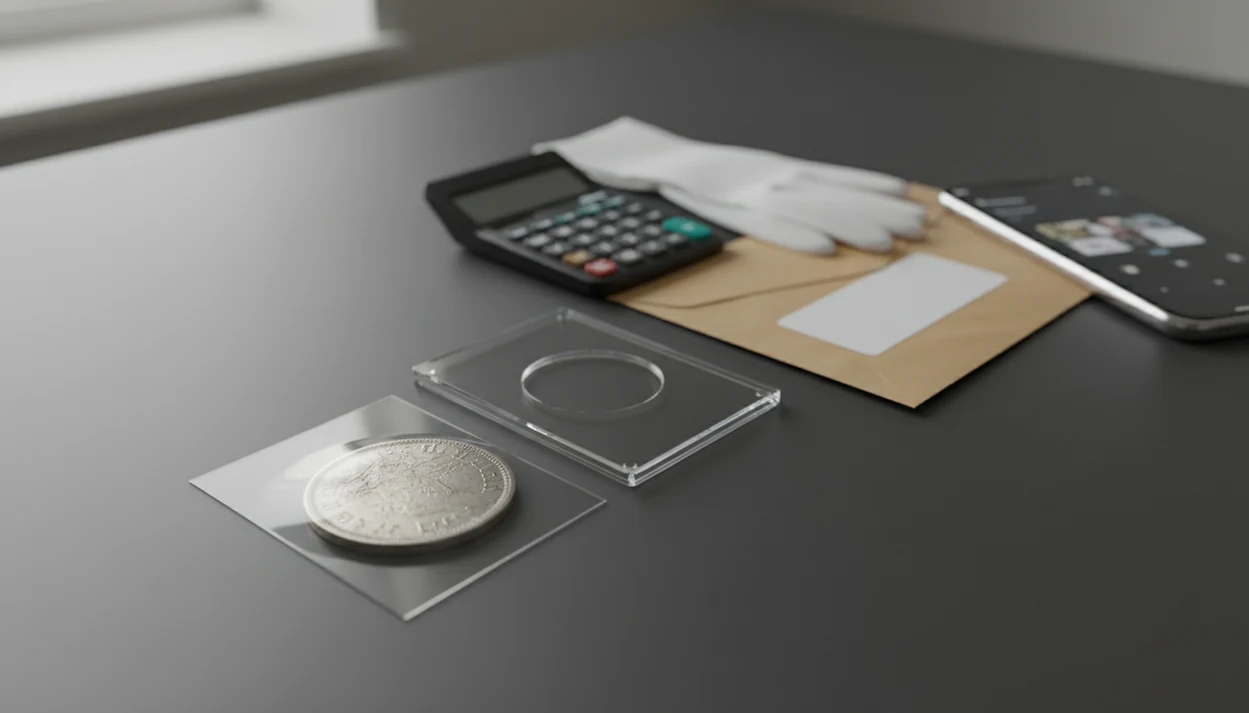


Send a coin to PCGS or NGC when the coin appears genuine, mostly problem-free, and likely worth enough after certification to exceed grading, shipping, insurance, and time costs by a comfortable margin. For most beginners, when to send coin to PCGS or NGC starts with app identification, then a value check, then a grading decision only for key dates, scarce mint marks, major errors, or unusually high-grade coins.
Scope: This guide is educational, not an appraisal, authentication, financial recommendation, or guarantee of resale value. Use it as a screening framework before you pay for professional grading or ask a qualified coin dealer to inspect the coin in hand.
- Do not send every old, silver, or inherited coin for grading; most common coins are worth more as raw coins than as paid submissions.
- A practical coin certification threshold is often around $200 or more in realistic current value, because grading fees, shipping, insurance, and membership costs can erase profit on cheaper coins.
- PCGS and NGC matter most when authentication, market trust, registry demand, or a potential high grade could materially change the coin’s resale value.
At-a-Glance Coin Certification Threshold After App Identification
Coins under about $200 in realistic current value usually do not justify professional grading unless there is a special reason. The short test is simple: send the coin only if value, rarity, authenticity risk, grade upside, and selling plans all support the cost.
When collectors ask when to send coin to PCGS or NGC, the answer is rarely “because it is old.” A common 1944 wheat cent, even from an inherited coffee can, may be a nice collection piece without being a grading candidate. A scarce mint mark, suspected major error, or unusually sharp uncirculated surface is different.
Grading is a resale and authentication tool, not a way to make an ordinary coin valuable. If the coin is common, cleaned, corroded, bent, or already worth less than the submission bill, keep it raw and document it well.
Five Facts About Sending a Coin for Grading With PCGS or NGC
- PCGS and NGC authenticate, grade, and encapsulate coins in tamper-evident holders, often called slabs. The slab helps later buyers trust what they are seeing.
- Professional grading uses the Sheldon 1–70 scale to standardize condition and market comparisons. A coin graded 65 can sell very differently from the same issue graded 63.
- Problem coins with harsh cleaning, heavy damage, corrosion, or alteration are poor grading candidates. A wiped surface under a desk lamp often shows as thin parallel hairlines.
- Standard grading fees often start in the tens of dollars per coin, while premium, high-value, or faster tiers can cost much more. Shipping and insurance add to the real bill.
- Only a tiny fraction of mass-produced circulating coins are rare enough or high-grade enough to justify certification. The U.S. Mint reported 14.5 billion circulating coins shipped in fiscal year 2023, so most pocket change is a common circulation find: https://www.usmint.gov/about/reports/annual-reports.
Worth a closer look is not the same as worth grading.
How PCGS vs NGC Grading Works Behind the Slab
PCGS vs NGC grading works by combining authentication, in-hand condition evaluation, grade assignment, label creation, and encapsulation in a tamper-evident holder. The slab records the service’s opinion, not a permanent promise about market price.
Graders inspect the coin directly. Apps and photos are triage tools because image embeddings and visual matching can suggest a type, date, mint mark, and broad condition band, but they cannot feel weight, inspect luster in hand, or confirm every surface issue. A phone photo on a dark wooden table can make copper cents look redder than they are.
The Sheldon scale runs from 1 to 70, from barely identifiable to top-tier mint state or proof condition. Small grade differences can matter greatly for key dates and registry coins. PCGS and NGC do not clean, restore, brighten, or improve submitted coins; they evaluate what is already there.
For grade-sensitive coins, certification usually works best when the coin is already scarce, problem-free, and likely to sell differently once authenticated.
Send Coin for Grading Decision: Yes, No, or Research More
Use three outcomes before paying fees: send, do not send, or research more. The middle option saves the most money for beginners.
| Decision | Good fit | Typical next step |
|---|---|---|
| Send | Key date, rare mint mark, major error, counterfeit target, or unusually high grade | Compare sold prices, choose tier, insure shipment |
| Do not send | Common, circulated, cleaned, corroded, damaged, or below the practical threshold | Store raw with date, mint mark, and condition notes |
| Research more | Possible variety, mint mark issue, die error, or grade-sensitive value jump | Check references and recent sales before submitting |
Send to PCGS or NGC
Send when the date and mint mark point to a scarce issue, or when a title draft with date and mint mark would clearly benefit from certified wording.
Do Not Send Yet
Do not send coins that fail the surface check. Dust off the cardboard 2x2 flip if needed, but do not clean the coin itself.
Research Before Submitting
Research more when an app flags a variety, but the photos leave doubt. The guide on can app tell if coin is fake covers that gap in more detail.
Fee Math for the PCGS or NGC Coin Certification Threshold
Fee math is the part most beginners skip. Add the grading tier, membership if needed, shipping both ways, insurance, submission supplies, and opportunity cost before deciding a coin “should” be graded.
Use this formula:
Expected graded value − raw value − total submission cost = grading gain or loss
A coin valued under about $200 often fails this test because fees consume too much of the possible upside. If a raw coin might sell for $80 and the total submission cost is $60, the graded version must sell well above $140 just to make the effort rational.
Optimistic grade assumptions are the most common reason submissions lose money. A coin that looked Mint State beside a kitchen window may come back AU after in-hand inspection. That one-point or category drop can erase the entire plan.
For beginners, the coin certification threshold is often easier to judge with conservative sold-price research than with hopeful price-guide numbers.
App Identification Checks Before You Send Coin for Grading
Does app identification replace PCGS or NGC grading? No. It is the first filter for date, mint mark, country, denomination, type, and broad value range before you decide whether manual research or certification makes sense.
Photograph both sides first. Then add closeups of mint marks, rims, lettering, and suspicious details in steady light. A coin balanced on a white napkin often photographs better than one held between fingers. Start with the obverse, turn to the reverse design, then record any edge or rim oddities.
Use rarity and grade hints to decide whether the coin deserves deeper research. If results feel inconsistent, the accuracy limits are covered in are coin identifier apps accurate. A good photo-first coin identifier and value estimation app for collectors and beginners delivers organized triage, not instant certified grading or guaranteed resale value.
Photo-identification tools can help sort obvious common coins from coins worth a closer look, but app results are not a guarantee of authenticity, grade, or final PCGS/NGC value.
PCGS vs NGC Grading Choice for Beginners
Both PCGS and NGC are widely accepted third-party grading services, and both have strong market recognition. For beginners, choosing the right coin to submit usually matters more than choosing between the two holders.
| Factor | PCGS | NGC |
|---|---|---|
| U.S. market use | Often preferred in some U.S. registry and resale segments | Also widely trusted for U.S. coins |
| World and ancient coins | Accepted in many areas | Strong presence in many world and ancient categories |
| Beginner priority | Check value, condition, and fees first | Check value, condition, and fees first |
| Before choosing | Compare sold prices in the same grade and holder | Compare sold prices in the same grade and holder |
Look at recent sold prices for the same coin, grade, holder, and variety. A 1964 dime raises the familiar question, “Is this silver or just old?” but silver content alone does not settle the grading decision.
If selling is part of the plan, read about selling coins online safely before paying for certification.
When to Ask a Coin Dealer or Grading Specialist
Ask for qualified in-hand help when the answer could change a major sale, insurance decision, or submission bill. A good dealer or grading specialist can inspect weight, edge, surfaces, and luster in ways photos and apps cannot.
This is especially important for suspected key dates, scarce varieties, and major mint errors, where a small detail can separate a common coin from a valuable one. It is also the moment to pause before any cleaning, dipping, polishing, or “improving.” Once surfaces are changed, the damage may be permanent and the grading outcome may fall sharply.
- Bring the coin to a reputable local dealer, coin show table, or specialist familiar with that series.
- Ask for an opinion on authenticity, variety, surface problems, and whether certification is likely to help.
- Compare that feedback with recent sold prices for the same date, mint mark, variety, condition, and holder.
- Get a second opinion before altering the coin in any way, even if it looks dull or spotted.
- Avoid anyone who promises a specific grade, guaranteed profit, or instant windfall before inspecting the coin carefully.
Sources Used for Grading and Cost Decisions
Use current grading-service fee pages, grading-scale references, and U.S. Mint production reports before spending money. These sources help separate a realistic submission from a hopeful guess.
- Check the current PCGS service fees at the official source and the NGC submission tiers at the official source before choosing a level.
- Confirm how the Sheldon 1–70 scale is being used by reviewing ANA education material or the grading service’s own grade descriptions, especially if a one-point difference would change the result.
- Use U.S. Mint annual reports for circulation-volume context, because huge mintages make most pocket-change finds common even when they look old.
- Recheck fees, memberships, shipping rules, insurance limits, and turnaround estimates close to the mailing date; these numbers change over time.
- Verify the tier, declared value, and packaging instructions before mailing coins, then keep photos and tracking records until the submission is returned.
Limitations
Grading decisions carry real uncertainty. Treat every estimate as a screening result until a qualified grader or specialist inspects the coin in hand.
- App estimates can be wrong if the date, mint mark, variety, grade, cleaning, or authenticity is misread.
- Professional graders may find hairlines, tooling, environmental damage, or altered surfaces that were not visible in photos.
- Turnaround times can run weeks to months, which makes grading inefficient for quick sales.
- Shipping, insurance, membership, and handling costs can make small submissions unprofitable.
- Certification does not guarantee a buyer, a profit, or stable future market prices.
- Cleaned, damaged, altered, or environmentally affected coins may receive problem designations.
- A slab does not turn a common coin into a scarce coin.
- Market preferences can differ between PCGS and NGC for specific series, grades, and registry groups.
Photo-first screening is useful for collection notes, but it does not authenticate coins the way in-hand grading services do. If you are still deciding whether an app-based workflow fits your collecting habits, the cost side is discussed in is coin scanner app worth it.
The safer habit is boring: identify first, verify second, submit last.
FAQ
Is coin grading worth it?
Coin grading is worth it only when certification adds more value than the total submission cost. It is usually not worth it for common low-value coins.
What coins should I grade?
Grade key dates, rare mint marks, major errors, scarce varieties, high-grade coins, and coins with meaningful authenticity risk. The coin should also have enough value to clear fees.
What coins should not be graded?
Common, low-value, cleaned, damaged, corroded, or heavily circulated coins are usually poor submissions. Many are better kept raw with clear collection notes.
Is PCGS better than NGC?
PCGS and NGC are both respected grading services. For beginners, selecting the right coin matters more than over-optimizing the holder.
How much does grading cost?
Grading cost includes the grading tier, shipping, insurance, membership if required, handling, and supplies. Standard fees can start in the tens of dollars, but total cost is often higher.
Can an app grade coins?
An app can provide identification, rarity context, and grade hints. It cannot replace professional in-hand grading from PCGS or NGC.
Should silver coins be graded?
Silver content alone is not enough reason to grade a coin. Rarity, condition, authenticity risk, and value above total costs matter more.
Will grading increase coin value?
Grading can increase buyer trust for the right coin. It does not automatically raise the value of common, damaged, or low-grade coins.
Do cleaned coins get graded?
Cleaned coins may receive details or problem designations from grading services. They are often not worth submitting unless the coin is rare enough to justify the cost.