
Coin App Privacy For Photos, Values, And Collection Data
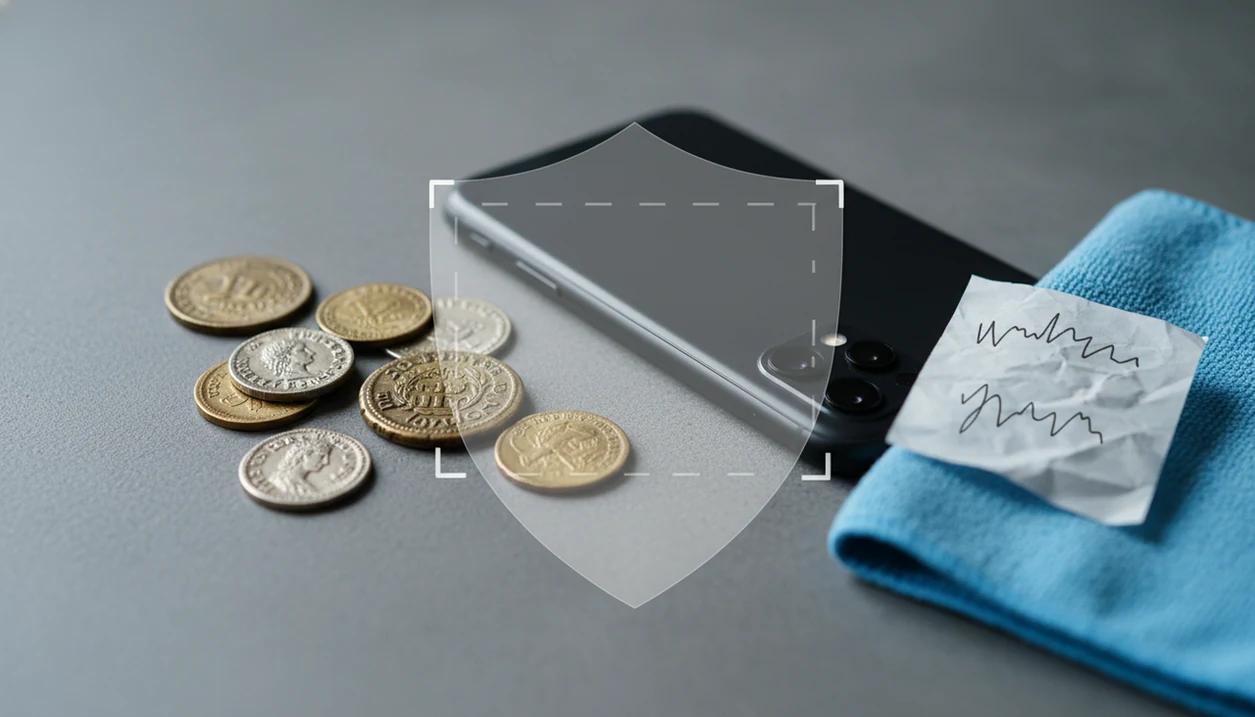


Coin app privacy matters because coin photos, upload metadata, purchase prices, collection totals, and saved locations can reveal valuables and storage habits. Treat coin app records like sensitive financial data: check photo handling, AI training rules, sharing partners, export options, and deletion rights before uploading rare or high-value coins.
> Scope: This page explains privacy and data-safety questions for coin identification apps; it is not legal, security, insurance, or appraisal advice.
- Coin photos can reveal more than the coin, including backgrounds, GPS metadata, storage habits, and clues about collection value.
- A privacy-safe coin identifier app should explain uploads, AI training, third-party processors, collection value storage, export, and deletion.
- Deleting an app from your phone is not the same as deleting uploaded photos, account records, backups, or shared processor data.
Coin App Privacy At A Glance
Coin app privacy means how an app collects, stores, shares, protects, and deletes your coin photos and collection records. The sensitive part is not cryptocurrency. It is the physical evidence of valuables, purchase history, storage habits, and identity clues.
A coin balanced on a white napkin looks harmless, but the original file may include time, device, and location metadata. A saved collection total can also say more than a single photo. For collectors, photo-based identification can provide likely matches, rarity context, grade hints, and value ranges, but it does not make uploaded records risk-free.
Read the privacy policy before uploading a key-date coin, proof set, bullion piece, or inherited group. Then check the app controls for photo deletion, account deletion, location permissions, and export. Small settings matter.
How Coin App Privacy Works Behind The Scenes
Coin app privacy works through a data flow: your phone captures a photo, the app processes it locally or uploads it, and cloud systems may analyze, store, log, or route it through vendors. Local device storage stays on your phone; server-side account storage lives with the app provider.
A typical coin scan may create image embeddings, which are numerical patterns used to compare the obverse, reverse design, date, mint mark, and wear. In plain terms, the app turns the picture into comparison data. That can support identification, rarity hints, grade hints, and estimated value range.
Metadata can travel with or beside the image. It may include timestamp, device model, app version, crash logs, and sometimes location. Cloud hosting, analytics, crash reporting, and support tools may each touch different pieces. We have seen dark wooden table photos make copper cents look redder than they are, but the table itself can also become a privacy clue.
Five Coin App Privacy Facts Collectors Should Know
- Coin photos and metadata may expose home context, collection context, device details, and the time a valuable coin was handled.
- Uploads may be used for AI training if the app policy or privacy settings allow model improvement from user images.
- Apps may share data with analytics, advertising, cloud hosting, crash reporting, payment, or customer support providers.
- Export and permanent deletion controls are central to practical privacy because collectors need records without keeping every upload online.
- High-value collection records should be handled like financial information, especially when they include purchase prices, storage notes, and rarity labels.
A beginner turning over a wheat cent under a kitchen light is usually focused on the tiny mint mark under the date. Privacy adds one more check: what else did the camera catch? Photo-based identification tools can be useful, but the safer habit is still to compare app output against a trusted reference and keep sensitive notes minimal.
Coin Photo Upload Safety Risks In Backgrounds And Metadata
Can coin photos reveal private information? Yes, coin photo upload safety depends on both the coin image and the context around it. Backgrounds can show desks, mail, receipts, safe doors, display cases, dealer labels, or rooms that identify where a collection is kept.
EXIF data and app metadata may include time, device information, and possible location. Rare coins, proofs, bullion, and inherited collections deserve extra caution because the photo may imply value even before the app estimates anything. An old dime stuck to pocket lint is one kind of casual find; a tray of certified gold is another.
Use a plain background, crop tightly, remove personal objects, and disable location access when it is not needed. Avoid public screenshots that show collection totals, value ranges, or valuable records. If you plan to sell, pair photo care with selling coins online safely.
Collection Data Privacy For Values, Purchases, And Storage Notes
Collection data privacy matters because values, purchases, and notes can reveal household valuables even without coin photos. A spreadsheet of purchase dates, dealer names, grading notes, and estimated value ranges can describe financial behavior in surprising detail.
Storage notes deserve special care. “Box in upstairs closet” or “safe at home” may help organization, but it also creates theft risk if exposed. Beginners are not exempt. A binder page heavy with state quarters may be modest today, while a few silver quarters or key-date cents can change the sensitivity of the record.
Keep collection notes useful, not revealing. Record denomination, year, mint mark, condition notes, and source. Avoid addresses, safe locations, alarm details, and travel plans. For accuracy limits around scanner output, the related question of are coin identifier apps accurate is separate from privacy.
7 Coin App Privacy Guarantees To Look For
A trustworthy coin app should make its privacy controls easy to find before you upload valuable material. Look for these seven guarantees in plain language.
- Photo collection disclosure: The policy says what coin images are collected and whether metadata is kept.
- AI training rules: The app explains whether uploads improve models and whether opt-out is available.
- Encryption: Photos and account records are protected in transit and stored securely.
- Access limits: Employee and vendor access is limited to defined support, security, or operations needs.
- Export controls: You can download collection records before closing an account.
- Deletion controls: You can request deletion of photos, account data, purchase notes, and collection entries.
- Sharing categories: Analytics, advertising, cloud, and support providers are listed by category.
The best privacy signal is not a slogan because collectors need specific controls they can actually use.
CoinEd App Privacy Gaps In Deletion, Backups, And AI Training
Coin identifier app privacy has gaps because app deletion, server deletion, backup deletion, and model training are different processes. Removing an app from your phone does not automatically erase uploaded photos, account records, or collection history from company systems.
Backups and logs may persist for a limited period. Third-party processors may also have their own retention windows for cloud hosting, analytics, crash reports, or support tickets. If uploaded images were used for AI model training, unwinding that use may be difficult after the fact.
User behavior can leak data too. A screenshot sent to a group chat, a public post with a visible value total, or a listing photo taken on plain paper beside a return address can bypass app controls entirely. For uncertain authenticity, privacy-safe research should come before asking can app tell if coin is fake.
Common Coin App Privacy Myths
- Myth: No real name means no privacy risk. Coin photos, device details, locations, and collection values can still connect records to a person or household.
- Myth: Deleting the app deletes uploaded data. Uninstalling removes local software, not necessarily server-side photos, backups, or support records.
- Myth: Coin-only photos cannot reveal value or location. Backgrounds, metadata, slabs, receipts, and display cases can expose collection context.
- Myth: App stores guarantee strong privacy. Store review is not a substitute for reading policies and permission settings.
- Myth: Privacy policies are always clear. In a Federal Trade Commission review of 1,751 mobile apps, 85% failed to clearly explain how personal data was collected, used, and shared source.
Most users are not careless. The forms are just easy to skip.
Privacy Sources And Standards Used
This page uses privacy sources and platform standards to frame practical risk checks for coin collectors. They help identify what to look for, but they are not app-specific legal guarantees or promises about CoinIdentifier’s own policy.
The baseline comes from general mobile privacy principles: clear disclosures, limited collection, meaningful permission prompts, and usable deletion choices. FTC mobile privacy guidance is relevant because coin apps often combine photos, accounts, analytics, and support tools. Apple and Google permission guidance also matters when a scanner asks for camera, photo library, location, or notification access. Deletion rights under laws such as the GDPR or CCPA can apply in some places, but availability depends on jurisdiction, account status, and retention obligations.
Use the sources this way:
- Separate general privacy principles from any claim about one specific app’s data practices.
- Check the app’s own policy for photo storage, AI training, vendor sharing, export, and deletion language.
- Compare permission prompts against the feature you are using, especially camera, photos, and location.
- Treat legal rights as location-dependent examples, not universal deletion buttons.
- Save policy copies or support replies when collection records are valuable.
How To Request Coin Photo And Collection Data Deletion
To request coin photo and collection data deletion, use the app’s account settings, privacy settings, or support contact and be specific about what should be removed. Export anything you need first for insurance, organization, or tax records.
Deletion request checklist
- Find the privacy control: Open account settings, privacy settings, or the support contact listed in the policy.
- Export your records: Save coin IDs, photos, purchase notes, and estimated values before deletion if you still need them.
- Request full deletion: Ask for photos, account data, collection records, purchase notes, and saved scans to be removed.
- Ask about retained copies: Request details on backups, logs, processors, and whether AI training data is included.
- Keep proof: Save confirmation emails, ticket numbers, and the date of the request.
If a coin may be valuable enough for certification, consider your records before deciding when to send coin to PCGS or NGC.
When To Get Professional Help With Coin Privacy Or Collection Records
Get professional help when a coin privacy decision could affect legal rights, insurance coverage, taxes, appraisal value, or physical security. A casual pocket-change scan may not need outside advice, but a rare, inherited, insured, or exposed collection can.
Before deleting records, slow down if the files include purchase history, sale proceeds, inheritance details, storage notes, or proof of ownership. The safest path is often to separate what should be removed from an app account from what must be kept offline for records.
- Contact a privacy lawyer when deletion rights, account-retention language, or breach notices are unclear.
- Use a certified appraiser for rare, inherited, insured, or high-value coins before relying on app estimates.
- Ask your insurer whether photos, receipts, grading records, or inventory exports are needed for coverage or claims.
- Call law enforcement or security help if exposed photos revealed safes, addresses, alarms, travel timing, or storage locations.
- Consult a tax professional before deleting sale, inheritance, purchase-price, or cost-basis records that may matter later.
Limitations
Coin app privacy controls reduce exposure, but they do not remove every technical, legal, or human risk. Rare coin uploads remain sensitive even when an app has clear settings and careful wording.
- No user can fully verify that every backup, log, cached file, or third-party copy was removed.
- Encryption and access controls reduce risk, but they cannot eliminate breaches, insider misuse, or accidental exposure.
- AI-based identification, grading, and valuation may be inconsistent, incomplete, or commercially influenced.
- Privacy policies can change over time, sometimes with limited notice or broad consent language.
- Deletion rights vary by jurisdiction, account status, payment history, and the app’s retention obligations.
- Third-party processors may keep limited records under their own legal or security rules.
- Public sharing outside the app can defeat strong app controls immediately.
- Photo-based coin identification tools are not formal appraisers, insurers, security advisers, or legal representatives.
According to Pew Research Center, 81% of U.S. adults say the potential risks of companies collecting data about them outweigh the benefits source. That concern fits coin collections.
FAQ
Are coin app photos private?
Coin app photos are private only to the extent described by the app’s storage, sharing, employee access, and deletion policy. Check whether uploads stay local, go to cloud processing, or are shared with vendors.
Can coin photos reveal location?
Yes. GPS metadata, mail, furniture, receipts, safes, display cases, and room details can expose location or storage context.
Do coin apps store uploads?
Some coin apps store uploads locally, while others use cloud processing or account-based storage. The privacy policy should explain retention and deletion rules.
Can uploads train AI models?
Some apps may use uploaded images to improve AI models unless the policy or settings say otherwise. Look for training opt-out language before uploading rare coins.
Does deleting the app delete data?
No, deleting the app usually removes software from your phone only. You may still need to delete server-side account data, photos, backups, and collection records.
Is collection value data sensitive?
Yes. Collection totals, purchase prices, rarity notes, and storage details can indicate valuables and should be protected like financial records.
Are app store apps safe?
App store review does not guarantee strong privacy practices. You still need to read privacy policies, permission prompts, and deletion controls.
Should I remove photo metadata?
Yes, stripping location metadata and using plain backgrounds can reduce coin photo upload risk. This is especially useful for bullion, proofs, and inherited collections.
How do I delete coin uploads?
Use in-app deletion tools or contact support. Ask specifically about photos, collection records, account data, backups, processors, and AI training use.