
Should You Clean Coins Before Scanning or Valuing Them?
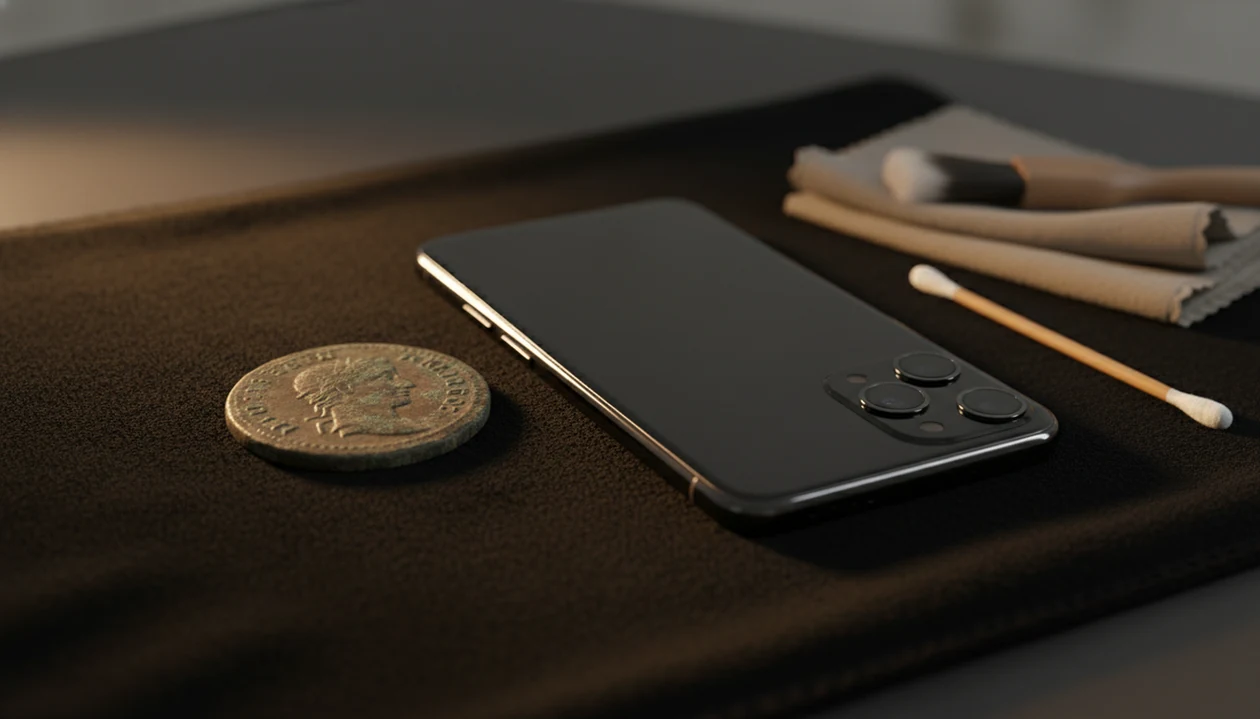


No, should you clean coins before scanning is almost always answered with “leave the coin as found,” because cleaning can scratch surfaces, remove patina, and reduce collectible value. A clear photo with good light is safer than wiping, polishing, dipping, or brushing the coin.
> Safety note: This page is general coin-handling guidance, not conservation, grading, or appraisal advice. If a coin may be rare, valuable, corroded, chemically contaminated, or historically important, photograph it as found and ask a qualified numismatist or conservation service before touching the surface.
- Do not clean a coin before scanning unless a qualified numismatist or conservation service advises it.
- Natural toning, patina, and minor grime usually do not prevent photo-based coin identification.
- Safe coin handling, lighting, focus, and edge-only contact matter more than making a coin look shiny.
At-a-Glance Answer: Do Not Clean Coins Before Scanning
Beginners should not clean coins before scanning, valuing, selling, or asking for an opinion. The small gain in photo clarity is rarely worth the risk of permanent surface damage.
Scan the coin in its original state first. That means no rubbing with a cloth, no soap, no dip, no eraser, and no “just a quick polish.” A beginner turning over a wheat cent under a kitchen light to find the tiny mint mark under the date is doing the right thing if they adjust the light, not the surface.
Leave it alone first.
The safe exception is a coin with heavy encrustation, active corrosion, PVC residue, or possible high value. In that case, photograph it as found and ask an experienced numismatist, PCGS, NGC, or a conservation service before touching the surfaces.
Safety Scope: When to Stop and Ask a Coin Expert
Stop and ask a coin expert when the question moves beyond safe handling and basic photo setup. This page is not grading, appraisal, authentication, or conservation advice, and it should not be used to decide whether a valuable coin should be treated.
If you see green PVC residue, powdery corrosion, crusted dirt, thick encrustation, or any surface problem that looks active, do not test it at home. High-value coins, inherited groups, possible errors, and anything with family or historical importance deserve a photo-first review before the surface is touched.
- Photograph the coin as found, including both faces, the date, mint mark, legends, and edge if useful.
- Avoid dips, polishing cloths, vinegar, baking soda, scraping tools, erasers, and “quick tests,” because surface changes can be irreversible.
- Pause if the coin may be rare, old, silver, gold, inherited, or part of a larger collection.
- Ask PCGS, NGC, the ANA, or a local numismatist for the right next step.
- Keep the coin dry, separate, and handled by the edges until that review happens.
Why Cleaning Damage Can Lower Coin Value
Cleaning can lower coin value because it changes the original surface, often in ways that cannot be reversed. Hairlines, stripped patina, chemical residue, and unnatural brightness are all signs professional graders look for under magnification.
PCGS explains that coins with surface problems, including cleaning, may receive “details” grades rather than problem-free numeric grades, and such coins often sell at a 20–70% discount compared with similar problem-free examples in many series source. The American Numismatic Association also warns that improper cleaning is one of the common ways collectors unintentionally damage coins, and that value loss from altered surfaces is usually permanent source.
That matters during a clean coin before value check. A shiny coin can look “improved” to a new collector, but a grader may see wiped fields, dull luster, or residue near the lettering. For uncertain coins, original surfaces usually matter more than brightness because originality affects grade, market trust, and buyer confidence.
Five Facts About Safe Coin Handling Before a Value Check
- Hold coins by the edges only, because fingerprints can leave oils and salts on the obverse or reverse.
- Avoid rubbing, brushing, polishing, soap, dips, vinegar, baking soda, and household chemicals; all can create coin cleaning damage.
- Keep coins dry, and do not breathe on the surface to “clear” dust before a photo.
- Use an inert holder, cardboard 2x2, tray, capsule, or soft towel while photographing, so a dropped coin does not hit a hard table.
- Photograph both sides before any conservation or expert review, including the date, mint mark, legends, reverse design, and edge if relevant.
We have seen beginners wipe dust from a cardboard 2x2 flip, which is fine if the coin stays untouched. Do not wipe the coin itself. Safe coin handling is often the simplest value protection step because it prevents new marks before identification even starts.
How Photo-First Coin Scanning Works With Patina and Grime
Photo-first coin scanning works by comparing visible features: the obverse portrait or symbol, reverse design, legends, denomination, date and mint mark, edge context, and overall pattern. In plain terms, the app needs readable clues, not a newly bright surface.
Image matching systems use visual features and pattern recognition. Natural toning and light grime usually do not block those features if the photo is sharp and evenly lit. A worn date on a buffalo nickel may still be hard to read, but changing the light angle is safer than rubbing the date area.
Photo-based identification tools can provide likely ID clues, rarity context, and estimated value ranges from clear images, but they should not be treated as certified grading, authentication, or conservation advice. They also cannot see through thick corrosion, deep encrustation, or a completely hidden date.
For most circulated coins, better lighting improves scanning more safely than cleaning because it reveals relief without changing the surface.
Safe Coin Scanning Setup Without Cleaning the Coin
Use indirect light, a steady phone, and a non-abrasive background before you consider any surface action. Flash glare can wash out relief, while a dark wooden table can make copper cents look redder than they are.
Place the coin on a soft, dark background that will not scratch it. Stabilize the phone with both elbows on the table, then tap to focus on the date, mint mark, lettering, and central design. Start with the obverse, then photograph the reverse design. If the edge matters, such as on some dollars or world coins, take a separate edge photo.
Photo checklist for both coin faces
- Set the coin on a soft, dark, clean surface.
- Hold the coin only by the edge if you need to move it.
- Use indirect light from the side, not harsh flash.
- Focus on the date, mint mark, legends, and main design.
- Photograph the obverse and reverse before any review, storage change, or conservation request.
If scan accuracy is your main worry, our guide on photo-based coin ID app accuracy explains where photos help and where they fall short.
Common Myths About Cleaning Coins Before Value Checks
Myth 1: Shiny coins are worth more. Brightness is not the same as originality. A polished old coin may lose the surface character collectors want.
Myth 2: Water, soap, or a soft cloth does not count as cleaning. Even mild methods can leave residue, encourage rubbing, or create fine hairlines that show under magnification.
Myth 3: Dealers and graders cannot tell a coin was cleaned. Experienced reviewers often spot altered luster, parallel wipe marks, or residue in protected areas around letters and devices.
Myth 4: Dirt must be removed before an app can identify a coin. Normal toning and minor grime usually still allow photo-based identification when focus and lighting are good.
The pocket check is real.
Many people ask “Is this silver or just old?” after finding a 1964 dime or quarter. The safer move is to scan and compare against a trusted reference before trying to make the coin brighter. If you plan to sell later, read about selling coins online safely before altering, listing, or shipping anything.
When Professional Coin Conservation May Be Safer Than Home Cleaning
Professional conservation is not the same as home cleaning. It is an expert assessment of whether contamination can be stabilized or reduced without needless surface harm.
| Situation | Safer next step | Why it matters |
|---|---|---|
| Heavy encrustation | Photograph first, then ask a specialist | Details may be hidden, but scraping can destroy them |
| Green PVC residue | Seek PCGS, NGC, or numismatist advice | Residue can be active and may need trained handling |
| Environmental corrosion | Get an in-person review | Value may depend on severity and coin type |
| Ordinary toning | Leave it alone | Toning is often part of originality |
| Low-value pocket change | Handle cautiously anyway | Beginners may misidentify key dates or varieties |
Conservation is not guaranteed to increase value, and it may not be economical. A small label reading possible error coin can be enough reason to slow down, photograph both sides, and research when to send coin to PCGS or NGC before taking action.
Limitations
No-clean handling protects surfaces, but it does not solve every identification or valuation problem. Some coins need better photos, specialist review, or formal grading.
- No coin identification app can see through thick corrosion, hard encrustation, or completely hidden dates.
- Low-value modern coins may not suffer meaningful market loss from careful rinsing, but beginners should still avoid cleaning until the coin is identified.
- Professional conservation can help some coins, but the cost may exceed the coin’s value.
- A photo-based estimated value range is not a certified appraisal, certified grade, or sale guarantee.
- Blur, glare, weak camera focus, poor lighting, and missing reverse images can reduce scan accuracy.
- Altered, counterfeit, plated, tooled, or damaged coins may require in-person expert review.
- Photo-based tools can organize scans and collection notes, but they cannot replace PCGS, NGC, or an experienced specialist for high-value, counterfeit, or conservation decisions.
If authenticity is part of the question, the limits are different from simple ID. We cover that separately in can app tell if coin is fake.
FAQ
Can cleaning coins lower value?
Yes. Cleaning can permanently reduce collectible value by scratching surfaces, stripping patina, leaving residue, or causing a coin to receive a details grade.
Can apps scan dirty coins?
Yes, apps can usually scan coins with normal toning, patina, and light grime. Thick corrosion or a fully hidden date can still prevent reliable identification.
Is rinsing a coin safe?
Rinsing can still be risky because water may leave spots, move grit, or encourage rubbing afterward. For uncertain or potentially valuable coins, get expert advice first.
Does soap damage coins?
Soap can leave residue and often leads people to rub the surface. Both problems can harm luster and create visible cleaning signs.
Should old coins be polished?
No. Polishing is especially damaging because it removes original surface character and can create obvious hairlines.
How do professionals clean coins?
Professionals use conservation methods chosen for the coin, metal, and contaminant. They do not use general home polishing instructions, and conservation is not always recommended.
What if the date is hidden?
Try angled light, sharper focus, and photos from both sides before touching the coin. If corrosion or encrustation blocks the date, seek expert review.
How should I hold coins?
Hold coins by the edge with dry hands or soft cotton gloves. Work over a towel or padded surface so a slip does not add damage.