
CoinEd Success Stories From Jars, Rolls, and Collections
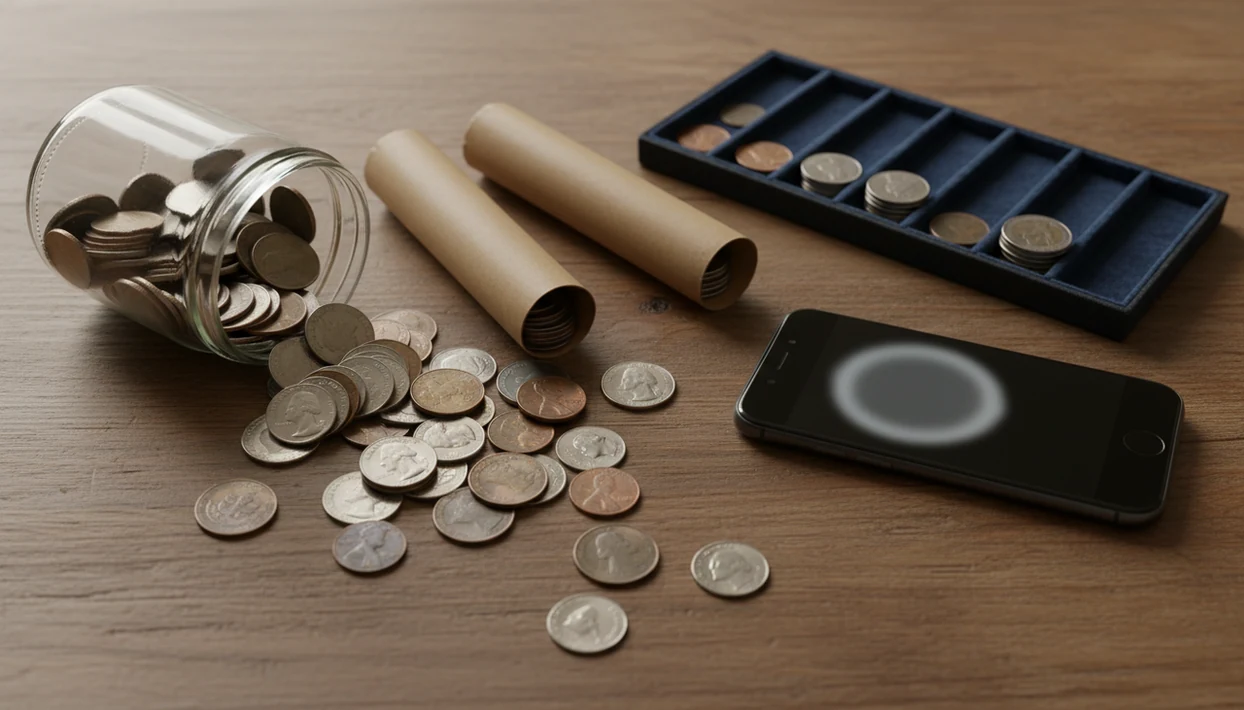
Coin identifier success stories are most useful when they show realistic scan-to-research outcomes: many common coins, a few silver or variety flags, and clear next steps for verification. These stories show how a photo-first coin app can help users identify coins, understand value context, and organize what they find without promising instant windfalls.
> CoinEd is the photo-first coin identifier and value estimation app that identifies coins from photos, shows rarity and grade hints, and helps beginners and collectors estimate coin value.
- Most coin app results are common-date coins, but users still learn country, year, mint mark, metal, and value context faster than manual lookup.
- The best coin scanning stories include a second check: better photos, mint-mark review, market comparison, and expert verification for higher-value finds.
- AI coin identification is strongest as a screening and learning tool, not as a guaranteed appraisal or authentication service.
CoinEd Success Stories: What Realistic App Results Look Like
Coin identifier success stories usually mean someone learned what a coin was, why it mattered, and what to check next. They do not always mean a rare treasure came out of a drawer.
The stories below are realistic composites based on common coin-scanning situations, not verified claims that a specific user found a specific valuable coin. They are meant to show decision points: what the app can screen, what the user should check manually, and when expert review matters.
Most real coin app results start in ordinary places: jars, rolls, inherited collections, and pocket change. A household jar may hold state quarters, worn Lincoln cents, a Canadian nickel, and one older dime that raises the question, “Is this silver or just old?” That is still a useful outcome. The user moves from guessing to a date, mint mark, denomination, metal clue, and estimated value range.
The pocket check is real.
Treat every app result as a starting point for research. A clear identification can save time, but the next step is still comparison against a trusted reference, especially for coins that look rare, damaged, cleaned, or unusually sharp.
CoinEd Photo Matching: From Obverse Image to Value Range
This is how coin identification works in a photo-first app: the system compares obverse and reverse images against stored coin images, then returns likely matches with confidence and coin details. In plain terms, the app looks for visual patterns: portrait shape, lettering, date position, reverse design, rim style, and mint mark area.
A typical data flow looks like this: image upload, visual feature extraction, candidate matches, confidence score, coin record, and value range. The output may include country, denomination, year, mint mark, metal, rarity hints, and grade hints. If a beginner turns over a wheat cent under a kitchen light, the tiny mint mark under the date can change the lookup path.
Computer-vision performance can be strong on covered coin types. One US coin classifier reports above 95% test accuracy for pennies, nickels, dimes, and quarters under its conditions source. However, rare varieties and mint errors are harder because they depend on fine details, not just the main coin type.
6 Coin Scanning Steps for Better Coin Identification Examples
Use the same scan routine each time if you want coin identification examples that are worth saving. A repeatable process prevents one blurry photo from becoming a confident-looking but weak result.
- Place the coin flat under bright, even light with no glare across the date.
- Scan the obverse first, then scan the reverse design before accepting the match.
- Review the date and mint mark manually, especially on cents, dimes, quarters, and older silver issues.
- Compare the estimated value range with market references, not just the first number shown.
- Log the coin with notes about condition, metal clues, and where it was found.
- Verify rare, expensive, damaged, or uncertain coins with a dealer, grading service, or experienced numismatist.
A good photo-first coin identifier and value estimation app for collectors and beginners delivers faster screening and cleaner notes, not guaranteed authentication or sale prices.
Story 1: Coin App Results From a Family Jar
Maria started with an inherited coin jar that sounded more interesting than it looked. The clink of mixed nickels, dimes, and foreign coins poured from an inherited coffee can onto a towel made the pile feel larger than it was.
Most scans came back ordinary: circulated Lincoln cents, common Jefferson nickels, clad Roosevelt dimes, and state quarters. That was not a failure. She learned which coins were from Canada, which dates were modern, and which worn cents were not wheat cents after all.
Then one small dime scanned as a 1964 Roosevelt dime. The app result did not make it a jackpot, but it did flag a silver candidate worth setting aside. Maria saved the scan, added a note, and compared the coin’s edge and date before putting it in a separate envelope. For beginners, sorting common coins first is often easier than catalog lookup because the app narrows the identity before research begins.
Story 2: Coin Scanning Stories From Bank Rolls
Andre searched a bank box of customer-wrapped halves after work, with bank receipts pushed beside the roll wrappers. Most roll coins were ordinary circulation finds, and the app confirmed that quickly.
The useful part was filtering. Common Bicentennial halves went into one stack. Modern clad halves went into another. A few older dates received closer inspection, especially when a mint mark looked soft or partly worn. One borderline match suggested a variety prompt, but the photo had glare across the lettering. Andre rescanned it under a desk lamp and still checked the mark with a loupe.
Not every roll search needs a high-value find to be successful. Efficiency counts. Coin scanning stories from rolls often show the app doing the boring work faster, then leaving the collector to slow down on the few pieces that deserve it. For a deeper accuracy discussion, the related guide asks are coin identifier apps accurate under real photo conditions.
Story 3: Coin Identification Examples From an Inherited Collection
Evelyn opened three mixed albums and a small box of loose world coins after a relative passed them down. Some album holes were labeled. Others were not, and several coins had no familiar denomination in English.
The app helped create working labels: country, denomination, date range, metal clue, and estimated value range. That made the collection less intimidating. A worn Mercury dime, a few older British coins, and several mid-century world coins could be grouped before any deeper research. Unknown tokens and obscure local issues did not scan cleanly, which was expected.
She also wiped dust from a cardboard 2x2 flip, but not from the coin itself. Good choice. Potential rarities, high-grade coins, unusual tokens, and expensive-looking pieces should go to a dealer, grading service, or numismatist. The decision point is covered in more detail in when to send coin to PCGS or NGC.
5 Common Patterns in CoinEd Success Stories
These five patterns show up again and again in useful coin identifier success stories. They are the difference between “the app found treasure” and “the app helped me make a better next move.”
For comparison, general image-search tools such as Google Lens may identify a broad coin type, while numismatic references such as the Red Book, PCGS CoinFacts, or NGC Coin Explorer are better for confirmation, grading context, and variety research.
- Most scans are common coins. The win is often fast identification, not a rare find.
- Photo quality changes results. Dark wooden tables can make copper cents look redder than they are.
- Confidence scores are not proof. A high-confidence type match can still miss a variety-level detail.
- Value estimates are ranges. App value estimates are not guaranteed sale prices.
- Verification matters most on edge cases. Rare varieties, doubled dies, mint errors, and micro mint marks need closer human review.
Fine-grained visual categorization research has shown accuracy can drop by more than 10 percentage points when systems must separate very similar subtypes source. That is why a mint error deserves more than one scan.
Coin App Result Gaps: Authenticity, Grade, and Sale Price
Coin app results can identify many coins, but they usually cannot guarantee authenticity, certified grade, or final sale price. Those three gaps matter most when money enters the conversation.
Sale price depends on demand, grade, venue, seller reputation, fees, and buyer confidence. For certified U.S. coins, grading standards from PCGS and NGC can materially affect market trust and resale value; see PCGS grading standards at https://www.pcgs.com/grades and NGC grading resources at https://www.ngccoin.com/coin-grading/grading-scale/. A coin that looks valuable in a scan may sell for less if it is cleaned, corroded, scratched, bent, or suspected counterfeit. Two fingers pinching a worn cent for a photo can also hide rim damage that affects the result.
Tools like CoinEd fit best as screening, learning, and organization tools. CoinIdentifier can help a user save scans, compare likely matches, and build collection notes, but a high-confidence identification is not a formal appraisal. If authenticity is the main concern, the safer question is whether a can app tell if coin is fake result is enough, or whether expert review is needed.
Limitations
AI coin identification has real value, but the limits should be clear before anyone relies on a result. A scan can guide research; it should not replace judgment.
- Most scans return common coins with modest value, especially from pocket change and modern rolls.
- Worn, dirty, corroded, cleaned, or partially hidden coins can be misidentified.
- Fine-grained varieties, doubled dies, micro mint marks, and mint errors may need expert review.
- App estimates are value ranges, not guaranteed sale prices or buyer offers.
- Consumer apps do not replace authentication, grading, auction review, or professional appraisal.
- Database coverage can be weaker for obscure local issues, tokens, ancient coins, and unusual world coins.
- Lighting and background can distort color, especially on copper, toned silver, and prooflike surfaces.
- Cleaning a coin before scanning can reduce value; the safer guidance is should you clean coins before scanning.
Small doubts matter.
FAQ
Do coin identifier apps work?
Yes, coin identifier apps can identify many covered coins from clear photos. Accuracy depends on coin condition, image quality, and database coverage.
Are coin app values accurate?
Coin app values are usually estimates or ranges based on available market context. They are not guaranteed sale prices or formal appraisals.
Can an app find rare coins?
An app can flag possible rarities, key dates, or unusual details. Rare finds still need careful verification by a trusted reference or specialist.
What photos identify coins best?
Clear, well-lit photos of both sides work best. Place the coin flat, avoid glare, and keep the full rim visible.
Can apps read mint marks?
Apps may detect visible mint marks on clear photos. Tiny, worn, or variety-level mint marks should be checked manually.
Should I get coins appraised?
Consider appraisal or expert review for potentially valuable, rare, high-grade, inherited, or uncertain coins. App results are a research starting point.
Are coin apps for beginners?
Yes, coin apps are especially useful for beginners because they speed up identification, learning, and collection organization. They should still be used with realistic expectations.