
Coin Collection Before And After: Photo Inventory Results From A Coin Jar
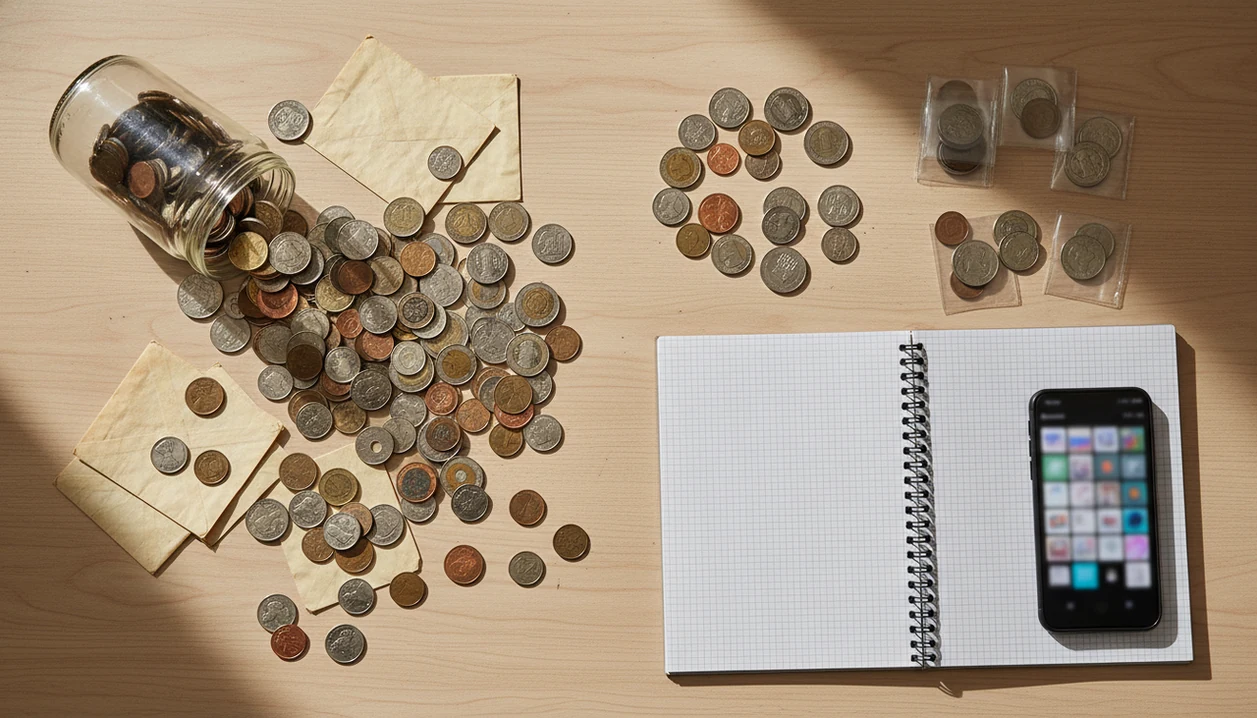
A coin collection before and after transformation shows how loose, unlabeled coins become a searchable inventory with photos, IDs, notes, condition hints, and value ranges. The real result is not just a cleaner jar; it is a collection you can understand, protect, review, and update.
> Photo-based coin ID tools can turn jar photos into draft records with likely IDs, rarity clues, grade hints, and estimated value ranges; treat those outputs as starting points, not authentication.
- The “before” is usually a jar, drawer, or inherited box with no labels, dates, mint marks, or value context.
- The “after” is a sorted and photographed coin inventory with denomination, country, year, mint mark, condition notes, and estimated value ranges.
- The biggest gains are fewer duplicates, easier rare-date checks, better storage decisions, and clearer documentation for resale, insurance, or family records.
Coin collection before and after results in one page
A coin collection before-and-after result is the move from loose storage to documented records. Before, coins sit in jars, cloth bags, junk drawers, paper envelopes, or inherited boxes with labels that may be missing, vague, or wrong.
After sorting, each useful record has photos, a likely coin ID, date and mint mark notes, duplicate counts, storage groups, and an estimated value range. Many coins still turn out to be common circulation finds. That is normal. The collection is still more usable because you can separate face-value pieces from coins worth a closer look.
The jar problem is widespread. In 2020, the U.S. Coin Task Force estimated that about half of U.S. coins were sitting in homes instead of active circulation, which explains why coin jars build up quietly for years. Source: https://www.usmint.gov/news/press-releases/united-states-mint-issues-statement-on-coin-circulation
The clink tells the story first.
Before-and-after coin inventory results we tracked
A repeatable coin inventory compares the messy starting point with the organized ending point using the same fields each time. We track what exists before research, then what can be confirmed after photos, sorting, and reference checks.
Before fields
| Before field | What it records |
|---|---|
| Total coins | Approximate count before sorting |
| Photos taken | Obverse and reverse images captured |
| Visible dates | Dates readable without magnification |
| Mint marks | Marks seen near the date or design |
| Denominations | Pennies, nickels, dimes, quarters, halves, dollars |
| Countries | U.S. coins separated from world coins |
| Duplicates | Repeated dates, types, or denominations |
| Storage categories | Jars, flips, tubes, albums, envelopes |
After fields
| After field | What it records |
|---|---|
| Confirmed IDs | Country, denomination, type, and year |
| Possible silver | Coins needing metal-content checks |
| Possible key dates | Dates and mint marks worth research |
| Error candidates | Off-center, doubled, clipped, or unusual pieces |
| Condition notes | Wear, scratches, color, rim damage |
| Estimated value ranges | Reference-based ranges, not guaranteed sale prices |
A coin collection inventory template helps keep these fields consistent.
How We Tracked These Coin Inventory Results
We tracked these results by comparing a rough starting record with a reviewed ending record for the same coin, group, jar, or inherited lot. A “before” record meant the coin was still unsorted or only loosely described; an “after” record meant it had photos, a likely ID, and review notes.
The goal was documentation, not appraisal. Estimated values were treated as reference ranges for context, not promises of grade, authenticity, or resale price.
- Record the starting state with the source container, approximate count, visible denominations, readable dates, and any old labels or family notes.
- Review each coin or group for country, denomination, year, mint mark, type, duplicate count, condition clues, storage status, and photo coverage.
- Add value context only as a range based on references and comparable records, while keeping sale price separate from inventory notes.
- Flag review items when the ID was uncertain, the photo was weak, an error was possible, or the coin might contain silver.
- Note the limits when glare, worn dates, missing provenance, damaged holders, or incomplete photos made the result less certain.
How coin collection transformation works from photos
Coin collection transformation works by pairing image recognition with collector checks: photograph the obverse and reverse, identify the coin type, extract visible details, compare the date and mint mark, then add condition and value context.
The photo-first check is useful because many beginners start with no labels at all. Still, photos do not replace inspection. Edge lettering, weight, diameter, metal content, surface cleaning, and small varieties may need a scale, magnifier, calipers, or a trusted reference. A dark wooden table can make copper cents look redder than they are, so lighting matters more than people expect.
If you use CoinEd, treat its photo-first identification, rarity hints, grade hints, and value estimates as structured clues for saved records. It does not replace authentication, certified grading, metal testing, or a guaranteed sale price.
How to use photo ID tools for before-and-after records
Use photo ID tools as record-building tools, not as the only judge of value. The cleanest results come from sorting first, photographing second, and reviewing uncertain coins last.
- Gather every coin into one workspace before sorting, including jars, envelopes, tubes, and loose drawer coins.
- Sort by country first, then denomination, year range, and visible metal type.
- Photograph both sides under steady light, with the full rim visible and glare controlled.
- Log the ID with date, mint mark, condition notes, duplicate count, and estimated value range.
- Tag review coins for possible silver, key dates, errors, varieties, or uncertain IDs.
- Store the keepers in flips, capsules, tubes, or albums after records are complete.
A small scale beside capsule cases makes the review pile feel less random. For app-based workflows, an app to help organize coin collection can keep the before and after records together.
Story 1: organize coin jar photos into a searchable inventory
How do you organize coin jar photos into a searchable inventory? Start by emptying the jar onto a towel, then separate pocket change, foreign coins, duplicates, and anything that looks older or unfamiliar.
One beginner jar we reviewed had cents, nickels, dimes, state quarters, Canadian coins, a few euro cents, and several repeated Lincoln Memorial cents. The after result was calmer: coins grouped by denomination and country, photographed on both sides, and logged with readable dates. A few had unclear mint marks, so they stayed in a review group.
Most jars are not secret hoards. The U.S. Mint produced 26.5 billion coins in 2019, and it produced about 12.7 billion circulating coins in 2022. Source: https://www.usmint.gov/about/production-sales-figures/circulating-coins-production Common coins are abundant because billions enter use. The main win is knowing what is common, what is duplicated, and what needs a closer look.
For beginners, sorting by country and denomination is often easier than checking value first because it reduces the pile into smaller decisions.
Story 2: inherited coin collection before and after value context
An inherited collection often starts as emotional clutter: envelopes, tubes, old albums, cigar boxes, and handwritten labels from someone who knew the coins better than anyone else in the room. Do not rush to sell. Preserve the original labels, even when they look messy.
We have seen a coffee can of mixed wheat pennies poured onto a towel, with family members asking which ones “matter.” The first answer is documentation. Build records around denomination, date and mint mark, condition, notes, and family provenance. If a flip is dusty, wipe the cardboard gently. Do not clean the coin itself.
The after version helps families talk clearly. It supports estate planning, insurance documentation, dealer review, and fair division among relatives. It also keeps stories attached to coins that may not be financially rare.
For inherited material, an inherited coin collection app can help separate family notes from market estimates.
Story 3: silver coin and key-date checks after sorting
Older does not automatically mean rare, but certain dates, mint marks, compositions, and errors change the review priority. After sorting, create separate tags for silver candidates, key-date candidates, error candidates, and uncertain IDs.
- U.S. dimes, quarters, half dollars, and dollars from before 1965 are often checked because many contain 90% silver under U.S. Mint specifications. Source: https://www.usmint.gov/learn/history/historical-documents/coinage-act-of-1965
- A 1964 dime or quarter commonly prompts the question, “Is this silver or just old?”
- A key date depends on the exact date and mint mark, not the date alone.
- Error candidates need careful comparison because damage is often mistaken for mint errors.
- High-value possibilities deserve trusted references, recent market checks, and expert review.
The tiny D beside Roosevelt’s torch is easy to miss. Start with the obverse, then check the reverse design, edge, and weight when the coin deserves it.
Common coin inventory results after a collection cleanup
Most coin inventory results are practical rather than dramatic. A cleanup usually creates clarity first, then value context.
- Most coins are common circulation pieces worth face value or modest premiums.
- Duplicates become obvious, so they can be traded, spent, stored, or removed from the main collection.
- Condition differences become clearer once coins are separated and photographed under the same light.
- Foreign coins, silver candidates, mint sets, proof coins, and unusual pieces are easier to isolate after sorting.
- The American Numismatic Association has over 25,000 members worldwide, showing how casual organizing can lead into a larger collecting community. Source: https://www.money.org/about-the-ana/
A drawer of 2x2 holders and staples can look fussy at first. Then the labels start saving time. If you want a digital running list, a coin collection tracker app can pair photos with collection notes.
What coin collection before-and-after photos do not prove
Before-and-after photos can prove organization. They can show cleaner storage, clearer labels, grouped denominations, visible dates, and better documentation. They cannot prove authenticity, exact grade, hidden varieties, or final sale price.
A shiny photo can be misleading. Desk lamp glare across shiny copper may hide scratches, cleaning lines, or rim damage. Magnification, weight, diameter, edge inspection, reference checks, and third-party grading may be needed for serious questions. That is especially true for rare dates, suspected errors, gold coins, and expensive world coins.
Do not clean coins to make the after photo look better. Cleaning can strip original surfaces, leave hairlines, and reduce collector value. Dust on a holder is different from dirt on a coin.
For uncertain photo results, our guide on are coin identifier apps accurate explains where app IDs help and where specialist review still matters.
Limitations
A coin collection before-and-after project improves records, but it does not remove every uncertainty. The work is useful, however the payoff may be mostly organizational.
- Large jars and inherited collections can take hours or days to sort, photograph, and log.
- Most circulated coins may still be worth only face value after inventory.
- AI identification depends on photo quality, visible details, lighting, and available reference data.
- Some errors, varieties, counterfeits, and grade differences require expert examination.
- Estimated value ranges change with metal prices, collector demand, selling venue, fees, and timing.
- Selling at the estimated value is not guaranteed and may require dealers, auctions, or patience.
- Albums, flips, capsules, and boxes add cost if you decide to improve storage.
Slow work beats guessing.
If the collection includes high-value candidates, treat app results and online ranges as starting points, not formal appraisals.
FAQ
How do I organize a jar of coins?
Sort first by country, then denomination, date, mint mark, visible metal type, and condition. Photograph both sides and keep duplicates grouped until you decide what to store, spend, or review.
Is there an app that can identify coins from photos?
Yes, coin identifier apps can identify coins from photos, create records, and show estimated value ranges. CoinEd and similar tools are useful for organization, but results still need human review.
Are old coins always valuable?
No, age alone does not make a coin valuable. Rarity, demand, condition, mint mark, metal content, and authenticity all affect value.
Should I clean old coins before photographing them?
No, do not clean old coins before photographing them. Cleaning can damage surfaces and reduce collector value.
What coins are worth checking after sorting a collection?
Check possible silver coins, key dates, scarce mint marks, errors, proofs, mint sets, and unusual foreign coins. Coins with uncertain IDs should be kept in a separate review group.
How do I photograph coins for an inventory?
Photograph both sides in good lighting on a plain background with the full rim visible. Avoid glare, keep the image in focus, and get close without cropping the coin.
Can an app tell me what my coins are worth?
An app can show estimated value ranges, but it cannot guarantee a resale price. Final value depends on condition, authenticity, demand, metal prices, fees, and selling venue.