
Roman CoinEd For Portraits, Legends, And Reverse Types
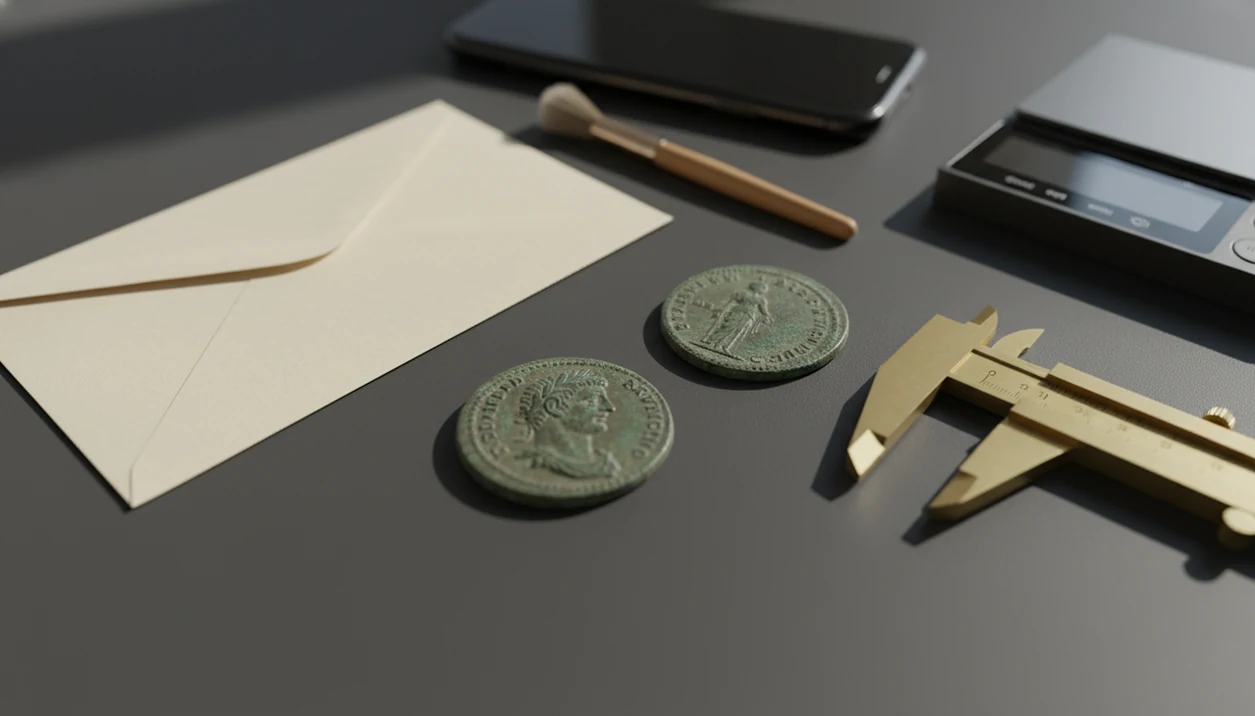


A Roman coin identifier can suggest a likely emperor, denomination, date range, and reverse type from clear photos, but ancient coin results should be treated as research leads rather than final attributions. For beginners, the safest approach is to compare the app result against portraits, Roman coin legends, reverse symbols, weight, metal, and trusted numismatic references.
> A Roman coin identifier is a photo-based research tool that compares a possible Roman coin against known portraits, inscriptions, denominations, and reverse designs to suggest likely matches.
- Use clear photos of both sides, because portraits, legends, and reverse types are all needed to identify Roman coins.
- AI coin apps are useful for narrowing possibilities, but ancient Roman coins are harder than modern coins because of wear, corrosion, off-center strikes, and die variation.
- Do not rely on an app alone for authentication, grading, or value decisions; confirm important finds with references or an ancient coin specialist.
Roman coin identifier basics for beginner-safe attribution
A Roman coin identifier suggests likely matches; it does not guarantee a final attribution. Treat the result like a starting label on an index card, then test it against the coin in front of you.
The core evidence is physical and visual: obverse portrait, reverse type, inscriptions, metal, diameter, weight, and any visible mint marks. A beginner may see “Constantine” in an app result, but the reverse legend, camp gate style, and coin size can still change the exact identification.
Small details matter. If the result names an emperor but cannot point to a matching legend fragment, reverse type, or denomination, treat that result as low confidence.
CoinEd is the photo-first coin identifier and value estimation app that identifies coins from photos, shows rarity and grade hints, and helps beginners and collectors estimate coin value. For Roman pieces, those hints should be checked against references. Ancient coin authentication requires specialist review, especially before buying, selling, cleaning, or insuring a coin.
How a Roman coin identifier works from coin photos
A Roman coin identifier works by comparing visible photo features against reference images and known coin descriptions. The software looks for image embeddings, which are numerical patterns made from portrait shapes, letters, figures, and surface texture.
It reads separate signals. The emperor’s head shape, legend fragments, reverse figure, denomination, metal color, and fabric all contribute to the suggested match. Fabric means the coin’s overall manufacture, including flan shape, strike style, and thickness.
Roman coins fight back a little. Irregular flans, hand-engraved dies, off-center strikes, corrosion, and incomplete legends can hide the exact clue an app needs. The British Museum says its Department of Coins and Medals holds over 200,000 Roman coins, which shows the scale of known types an identifier must sort through source. For broader ancient pieces, our ancient coin identifier guide covers similar limits.
Five Roman coin identifier facts beginners should know
- Photo-based tools compare coin images against known references, then return possible matches rather than certified attributions.
- Both obverse and reverse photos are needed because a portrait alone often cannot separate similar emperors, mints, or issues.
- Roman coin legends are often the strongest clue for emperor and date range, even when only fragments remain.
- AI accuracy is usually weaker for ancient coins than for common modern coins because ancient dies, wear, and surfaces vary more.
- App-based rarity, grade, and estimated value range should be treated as preliminary until checked against references or a specialist.
We often start with the obverse, then flip to the reverse design before trusting any match. A single portrait under a desk lamp can look convincing and still be wrong.
Roman coin legends, portraits, and reverse symbols to check
Roman coin identification improves when you read the coin in parts, not as one mystery object. Start with the obverse portrait, then copy the letters, then describe the reverse type in plain words.
Obverse portrait clues
Emperors can look similar on worn coins, especially late Roman bronze pieces with small busts and clipped legends. Look for crown style, beard, facing direction, armor, and the visible name fragments around the head. Common title fragments include IMP, CAES, AVG, DN, and PF. Copy visible letters exactly. Don’t fill gaps from memory.
Reverse type clues
Reverse types include Victory, an emperor standing, a seated deity, military standards, an altar, a wreath, or a camp gate. Reverse legends can distinguish similar issues and date ranges. If the script or country is unclear, a world coin identifier approach can help separate Roman coins from later foreign pieces.
How to identify Roman coins with app results and references
Use a Roman coin identifier as one step in a reference workflow, not as the whole answer. For beginners, matching the app result to visible evidence is often easier than paging through catalogues first because it narrows the search field.
For a reference check, start with named sources: Online Coins of the Roman Empire for imperial issues, Roman Provincial Coinage Online for provincial issues, and the British Museum collection when you need museum photographs. Save the app match, then verify the emperor, legend, reverse type, mint, and date range against one of those references.
- Photograph both sides in bright, indirect light, with the coin flat and the legends as sharp as possible.
- Record diameter, weight, metal color, and edge appearance before comparing results.
- Upload both sides to an ancient Roman coin app or photo identifier.
- Compare the suggested emperor, denomination, and reverse type with the visible legends.
- Check a museum database, academic catalogue, or reputable ancient coin reference.
- Ask an expert before buying, selling, cleaning, or insuring a potentially valuable coin.
A good photo-first coin identifier and value estimation app for collectors and beginners delivers organized research clues, not authentication, certified grading, or guaranteed market prices.
Ancient Roman coin app results versus expert attribution
Apps are useful for fast triage and organizing research, but expert attribution is better for rare, expensive, provincial, heavily worn, or suspicious pieces. A CoinWeek test of CoinSnap found 93% accuracy on 14 of 15 mostly modern coins, but the single ancient coin failed; the same test reported only 40% correct AI grading source. When comparing app results, test at least two outputs, such as CoinSnap and Google Lens, against a catalogue or museum record rather than trusting whichever app sounds most confident.
| Task | Ancient Roman coin app | Expert or reference-based attribution |
|---|---|---|
| Speed | Fast first pass | Slower, more careful |
| Portrait matching | Good for common portraits | Better with worn or ambiguous busts |
| Legend reading | Helps when letters are clear | Stronger with fragments and abbreviations |
| Rare types | May miss underrepresented issues | Better for scarce catalogued varieties |
| Authentication | Not reliable | Requires specialist judgment |
| Grading | Rough condition hint | More consistent with market standards |
| Value context | Estimated range only | Uses rarity, demand, provenance, and sales |
Tools like CoinEd can help sort research notes before you ask a specialist. Still, the final call belongs with evidence, not the first app screen.
Common Roman coin identifier myths that cause mistakes
Beginner errors usually come from treating a plausible match as proof. Similar portraits and partial legends can produce results that look right at first glance but point to the wrong emperor, mint, or century.
- One-photo certainty: One blurry image is not enough for a certain ID, especially if the reverse is missing.
- First-match trust: The first app match may be a lookalike, not the actual coin type.
- Counterfeit detection: Roman coin identifiers cannot reliably detect convincing ancient forgeries.
- Final value pricing: AI value estimates are not final market values.
- Latin equals Roman: Not every old-looking coin with Latin letters is Roman.
A dark wooden table can also make copper coins look redder than they are. That color shift can push an app toward the wrong metal or date range. If the coin is not Roman, an app that identifies foreign coins may be a better first pass.
Roman coin finds, hoards, and provenance context
Roman coins are common in some regions because they circulated widely, were lost in quantity, and sometimes appear in hoards. The Coin Hoards of the Roman Empire Project documents more than 15,000 Roman coin hoards source, and the Portable Antiquities Scheme has recorded over 1.5 million archaeological finds in England and Wales source.
Find location, soil condition, and associated objects can affect interpretation. They may also trigger local reporting duties. This is especially true for detector finds, hoards, and coins found with pottery, nails, brooches, or other archaeological material.
Don’t clean first.
Photograph the coin where it was found if that is lawful and practical, then document weight, diameter, and surface condition. Wiping dust from a cardboard 2x2 flip is fine; scrubbing the coin itself is not. For long-term records, a coin collection tracker app can keep photos and collection notes together.
Limitations
Photo-based Roman coin identification has real boundaries. The limits are not small print; they are part of using the result safely.
- AI tools may have limited ancient coin training data compared with modern coin datasets.
- Heavy wear, corrosion, patina, deposits, and smoothing can hide key details.
- Off-center strikes and irregular flans may remove legends or mint marks.
- Provincial issues, rare varieties, unofficial imitations, and unusual mints may be underrepresented.
- Apps generally cannot authenticate ancient coins or reliably detect high-quality forgeries.
- Automated grade and value estimates should not be used alone for high-value transactions.
- Poor lighting, glare, tilted photos, and single-side images can produce wrong matches.
Apps such as CoinIdentifier can organize a beginner’s first pass, but ancient coins still need reference checking. For valuable or suspicious pieces, use an ancient coin specialist.
FAQ
Can AI identify Roman coins?
AI can suggest likely Roman coin matches from photos, including possible emperors, denominations, and reverse types. The result should not be treated as final proof.
What photos do I need to identify a Roman coin?
Photograph both sides clearly, with readable legends, minimal glare, and a scale if possible. Flat, indirect light works better than flash.
Are Roman coin apps accurate?
Accuracy varies and is generally weaker for ancient coins than for common modern coins. Wear, corrosion, irregular flans, and partial legends reduce confidence.
How do Roman coin legends help?
Roman coin legends can identify emperors, titles, mints, reverse types, and date ranges. Copy the visible letters exactly before comparing references.
Can an app value Roman coins?
An app can give a rough estimated value range. Value depends on authenticity, rarity, condition, demand, provenance, and comparable sales.
Can apps detect fake Roman coins?
Mainstream apps cannot reliably authenticate ancient coins or detect convincing forgeries. Expert review is needed for serious buying or selling decisions.
Should I clean a Roman coin?
Beginners should not clean a Roman coin. Cleaning can damage surfaces and reduce research or market value.
What if the legend is missing?
Portrait, reverse type, size, weight, and metal can still narrow the coin. A firm attribution may not be possible without readable letters.