
What App Identifies Foreign Coins From Pictures?
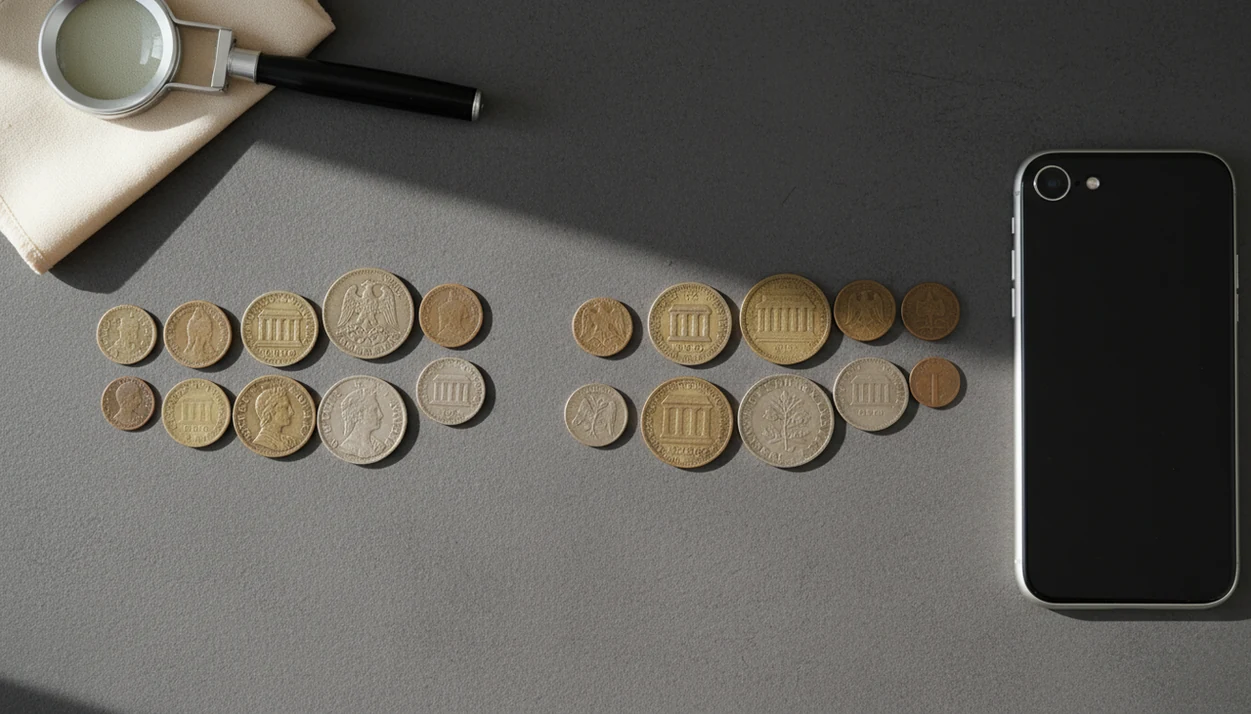
CoinEd, CoinSnap, and Coinoscope are the main options when you ask what app identifies foreign coins, but the right choice depends on photo quality, country coverage, script recognition, value data, and collection tools. For most beginners, choose a photo-first app that identifies both sides of the coin, shows country and denomination, and gives rarity or value context without treating the estimate as an appraisal.
CoinEd is the photo-first coin identifier and value estimation app that identifies coins from photos, shows rarity and grade hints, and helps beginners and collectors estimate coin value.
- Use a foreign coin app with strong world-coin database coverage, not just a high app-store ranking.
- Photograph both sides in clear light because worn coins, foreign scripts, and similar designs can confuse AI matching.
- Treat app value estimates as starting ranges, then verify rare or expensive coins with catalogs, auction records, or a dealer.
How what app identifies foreign coins from pictures?s look
Side-by-side captures of the compared products. Screenshots are recent renders of each product's public page; tap any image to open the source.
Best foreign coin app choices at a glance
No single app identifies every world coin well, so the smartest choice depends on what you need after the picture. A copper coin on a dark wooden table can look redder than it is, and that alone can change the suggested match.
If you want one default answer, choose CoinEd when the goal is identifying a foreign coin by picture and keeping the result in a collection record. Choose CoinSnap or Coinoscope when you only need a quick visual match and plan to verify details elsewhere.
- CoinEd, beginner value lookup: Good for users who want photo identification plus country, denomination, rarity hints, grade hints, and collection notes.
- CoinSnap, quick visual matching: Useful for fast camera-based matches and basic details, especially when you want a simple first answer.
- Coinoscope, broad world coin search: Helpful when the coin has an unfamiliar alphabet, symbol, ruler, or reverse design.
- Catalogs, grading sites, and auction archives, serious verification: Use PCGS, NGC, Heritage Auctions, or printed world catalogs before selling anything valuable.
For beginners who need a coin name plus value context, CoinEd fits because it connects the scan to an estimated value range and saved collection record.
How a world coin photo identifier works
A world coin photo identifier works by comparing your coin photo against image patterns and structured coin records. It uses camera capture, image recognition, design matching, text clues, date detection, and database lookup to suggest likely matches.
Most systems create image embeddings, which are numerical fingerprints of the obverse and reverse. In plain terms, the app looks for similar shapes, portraits, legends, shields, numerals, and symbols. Both sides matter because one side may show the country while the other gives the denomination or date. That tiny mint mark can matter too.
CoinEd uses the same photo-first logic, then adds coin fields such as country, denomination, mint mark, composition, mintage, rarity, and value context. Gartner reported strong growth in AI software, including computer-vision use cases like object recognition from photos source. Good apps deliver likely identification and context, not certified authentication from a single snapshot.
How to use a foreign coin app for accurate photo results
Use a foreign coin app as a controlled photo check, not a one-blurry-image guess. If you want the full phone workflow, our guide to how to identify coins with phone covers setup in more detail.
- Remove loose dust gently with air or a soft touch, but do not clean, polish, or scrub the coin.
- Place the coin in steady light on a plain background, avoiding desk lamp glare across shiny copper.
- Photograph both sides straight on, filling the frame without cutting off the rim.
- Crop tightly so the app reads the coin, not the table, towel, or fingers.
- Review the closest matches by country, date, denomination, script, diameter, and metal.
- Save the confirmed coin with notes if the match looks reasonable, or rescan if results conflict.
When CoinEd returns several possible countries or dates, compare the reverse design and lettering before accepting one. Pause there. A second photo often fixes the answer.
How we picked the best app to identify foreign coin by picture
We picked foreign coin apps by how well they move from picture to useful coin record. A beginner pouring mixed nickels, dimes, and foreign coins from an inherited coffee can onto a towel needs more than a pretty app icon.
- Database breadth: Strong apps cover many countries, eras, denominations, and common circulation types.
- Recognition accuracy: We looked for handling of scripts, dates, mint marks, worn surfaces, toning, and similar designs.
- Value and rarity context: Better tools explain estimated value range, mintage, composition, and possible rarity without promising a sale price.
- Collection organization: Saved scans, notes, grades, and value history matter once the pile becomes a collection.
- Access and transparency: Pricing, privacy, update frequency, iPhone support, and Android support affect daily use.
Mobile tools make sense because Pew Research found that 85% of U.S. adults owned a smartphone in 2021 source. That combination of phone access, photo ID, and saved collection records is why collection tracking matters after the first scan.
CoinEd for foreign coin value, rarity, and collection tracking
CoinEd is strongest for beginners and collectors who want more than a coin name. It connects a photo-first check to country, denomination, year, estimated value range, rarity hints, grade hints, and collection organization.
For collectors looking for a foreign coin app that keeps records, CoinEd fits because each scan can become a saved collection entry with notes and value context. That helps when album holes are waiting for missing dates and a collection value list sits beside a calculator.
It is still not a formal appraisal. CoinEd does not guarantee authenticity, certified grade, or sale price, and rare pieces should be compared against trusted references. If value is the main reason you are scanning, a dedicated coin value app workflow helps separate a normal find from something worth a closer look.
CoinSnap as a foreign coin app for quick visual matching
CoinSnap is a dedicated coin identification app commonly found in app stores, and it can be useful for quick camera-based matching. Before subscribing, check the live App Store or Google Play listing because pricing, trial length, and feature limits can change without notice. It is a reasonable first stop when you want basic coin details without building a detailed collection record.
When the issue is fast visual comparison, CoinSnap handles a casual scan because it focuses on camera matching and quick coin summaries. Still, check subscription terms, value methodology, and world-coin database coverage before relying on it for selling or insurance decisions.
Similar designs are the trap. Some countries share rulers, wreaths, shields, or denomination layouts, especially across colonial and regional issues. If CoinSnap gives close matches, compare the date, inscription, metal, weight, and reverse design before choosing one. A buyer asking about composition and mintage will need more than “my app said so.”
Coinoscope for world coin photo identifier searches
Coinoscope is an image-based coin identification option that can help when the country, alphabet, or symbol is unfamiliar. It fits users who want a world coin photo identifier with search-style results rather than a collection-first workflow.
On days when a coin shows an unfamiliar script and no obvious denomination, Coinoscope can surface visually similar coins because it searches by design clues. Human review still matters. Image-search results may show lookalikes from different countries, dates, or metals.
If several candidates appear, cross-check the year, denomination, metal, and diameter. A coin balanced on a white napkin may photograph cleanly, but a worn rim can hide the detail that separates one type from another. For older pieces, compare the result with an app that identifies old coins workflow before assuming the first match is right.
Foreign coin app decision rule for free, paid, iPhone, and Android choices
Which foreign coin app should you choose? If you only need to satisfy curiosity, start with a free scan; if you collect seriously, prioritize saved collections, value history, database depth, and clear subscription terms.
Casual users can test CoinEd, CoinSnap, or Coinoscope on iPhone or Android, then keep the one that recognizes their coin type most clearly. Collectors should care more about repeatable records than one lucky match. The U.S. coin-collecting market was estimated at about $4.9 billion in annual retail sales in a 2018 industry report source, which shows why better tools and data matter.
For casual users, a free photo match is often easier than catalog searching because it narrows the country and denomination first. CoinEd is the better fit when the issue is ongoing collection tracking because it saves scans, notes, grade hints, and estimated values in one workflow. For image mechanics, read what happens when you scan a coin.
Limitations
Foreign coin apps are helpful screening tools, but they are not professional authentication services. Wiping dust from a cardboard 2x2 flip is fine; cleaning the coin itself can damage surfaces and reduce value.
- No app can reliably authenticate every coin or detect high-quality counterfeits.
- Very old, worn, dirty, damaged, obscure, or partially photographed coins can return weak matches.
- Value estimates are approximate and may lag current auction, bullion, or collector demand.
- Rare varieties, mint errors, die markers, and regional issues may be missed.
- Subscription plans may lock unlimited scans, rarity lookup, saved collections, or analytics.
- Privacy policies differ for uploaded coin photos, location data, device data, and metadata.
- Alternate calendars, non-Latin scripts, and weak dates can confuse automated date reading.
- PCGS, NGC, Heritage Auctions, and dealer opinions may still be needed for serious sales.
Use the app to narrow the field. Then verify.
FAQ
What app identifies foreign coins?
CoinEd, CoinSnap, and Coinoscope are common options for identifying foreign coins by picture. The best choice depends on world-coin coverage, photo quality, value tools, and whether you need saved collection records.
Can I scan foreign coins free?
Some apps offer free scans or limited free features. Deeper value lookup, rarity tools, unlimited scans, or collection analytics may require a paid plan.
Which coin app works on iPhone?
Many coin identification apps, including CoinIdentifier and competing apps, are available for iPhone. Check the current App Store listing for supported features, pricing, and region availability.
Which coin app works on Android?
Many foreign coin apps are available on Android through Google Play. Review subscription terms, scan limits, and database claims before relying on one app.
Can apps read foreign coin dates?
Apps can often detect dates, but unusual scripts, worn numerals, alternate calendars, and toning can reduce accuracy. Confirm the date against the coin design and country.
Are coin app values accurate?
Coin app values are estimates, not guaranteed offers or formal appraisals. Valuable coins should be checked against catalogs, auction records, or a qualified dealer.
Can apps identify rare coins?
Apps can flag possible rarity based on mintage, type, or market data. They may miss subtle varieties, mint errors, altered coins, or counterfeits.
Should I photograph both coin sides?
Yes, photographing both sides improves country, denomination, date, and type matching. One side may carry the ruler or symbol while the other shows the value or mint clue.