
How To Check Coin Value With Phone Photos And Trusted Sources
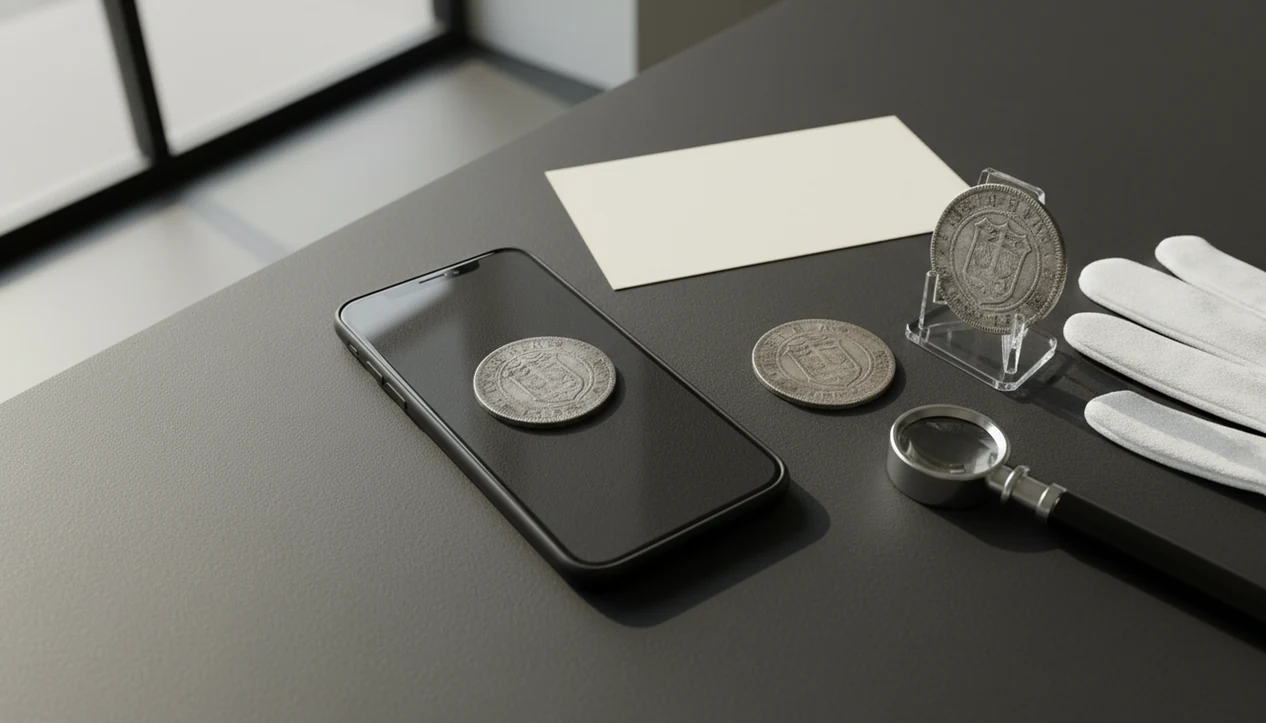
To learn how to check coin value with phone photos, take clear images of both sides, identify the coin in a coin value photo app, review date and mint details, estimate condition, then compare the result with trusted price guides and recent sales.
A coin value photo app such as CoinEd can identify coins from photos, show rarity and grade hints, and help beginners estimate value; treat it as a research aid, not an appraisal.
- Photograph the obverse, reverse, and edge in bright, even light before checking coin value by phone.
- Treat any app result as an estimated range, not a guaranteed selling price.
- Validate higher-value coins with price guides, auction records, and professional grading references before buying or selling.
Coin Value By Phone At A Glance
Coin value by phone means using your camera to identify a coin, review its rarity clues, estimate grade, and compare the result against outside price sources. It is a starting workflow, not a formal appraisal.
The minimum image set is simple: obverse, reverse, and edge. Add close-ups of the date and mint mark if the coin has small lettering. A beginner turning over a wheat cent under a kitchen light often finds the tiny mint mark only after the first photo looks too dark.
Phone checking is practical because many adults already have the needed hardware. In a 2022 Pew Research Center survey, 76% of U.S. adults ages 65 and older reported owning a smartphone: https://www.pewresearch.org/internet/fact-sheet/mobile/. For beginners, a photo-first check is often easier than starting with a printed catalog because the app narrows the coin type before research begins.
How A Coin Value Photo App Works Behind The Scenes
A coin value photo app works by comparing your coin photos against known visual patterns, including design type, legends, date placement, mint marks, denomination, and sometimes edge features. The technical layer is computer vision, which turns visible details into image patterns that can be matched against reference data.
The usual flow is image capture, coin identification, rarity or mintage lookup, condition hints, then price reference matching. That sounds tidy, but the photo matters. Desk lamp glare across shiny copper can make a cent look redder and less worn than it really is.
A 2020 AI vision study for banknote and coin recognition reported over 98% classification accuracy on test images: https://www.mdpi.com/2076-3417/10/6/2073. Real-world coins are messier. AI can classify many common coins well, but it may miss subtle die varieties, errors, counterfeits, cleaning, and surface problems. Good photo-first coin identifier and value estimation app for collectors and beginners deliver a structured estimate, not a guaranteed grade or sale price.
Requirements Before You Check Coin Price With Phone Photos
Before you check coin price with phone photos, set up the coin so the camera sees metal, design, and wear clearly. Small changes in light and angle can change the result.
- Use clean hands, a soft towel, indirect light, and a steady phone.
- Capture the obverse, reverse, edge, date, mint mark, and any unusual mark.
- Avoid harsh glare, deep shadows, cropped rims, and tilted photos.
- Do not clean the coin; cleaning can scratch surfaces and reduce collector value.
- Expect most circulated coins to be common; the U.S. Mint reported more than 11.9 billion circulation coins produced in 2023: https://www.usmint.gov/about/production-sales-figures/circulating-coins-production.
Wipe dust from a cardboard 2x2 flip if needed, but leave the coin itself alone. If you want a fuller setup checklist, a coin value app guide can help you compare photo capture, grade hints, and value ranges.
How To Use A Phone To Check Coin Value Step By Step
Use the same process each time so the phone result is easier to verify. Random snapshots lead to random estimates.
- Photograph both sides and the edge in bright, even light. Keep the whole rim in frame.
- Scan the coin in a coin value photo app and treat the result as a first-pass identification, not a final price.
- Confirm country, denomination, date, mint mark, and variety clues. Start with the obverse, then check the reverse design.
- Compare rarity, mintage, grade hints, and recent price references. Match your coin to examples with similar wear.
- Adjust the estimate for condition, selling fees, shipping, and whether expert grading is needed.
For a common quarter, the whole check may take two minutes. For an inherited silver dollar in a capsule, slow down. The difference between “interesting” and “worth a closer look” is often the date, mint mark, and surface condition.
Common Mistakes When Checking Coin Value With Phone Photos
The most common mistakes come from bad photos, loose price comparisons, and treating an app hint as a final answer. Avoiding these errors makes the phone check more useful before you decide whether a coin needs deeper research.
- Use soft, even light instead of a bright lamp beam or flash. Glare can hide wear, hairlines, scratches, old cleaning, and small spots that affect value.
- Compare against completed sales or auction results for the same coin type, not active asking prices. A seller can ask anything; sold records show what buyers accepted.
- Check the small details before trusting the match. Mint marks, edge lettering, date positions, overdates, and small design varieties can separate a common coin from one worth more study.
- Treat app grade language as a clue, not certification. A phone photo cannot replace a professional grade, slab number, or in-hand authentication for expensive coins.
- Leave the coin uncleaned before photographing it. Rubbing a dark cent or dipping a silver coin may make it look brighter for a picture, but it can damage original surfaces and lower collector demand.
Phone Photo Details That Change Coin Value By Phone
Which phone photo details change coin value by phone? Date, mint mark, denomination, country, metal appearance, edge lettering, and design type all affect identification and value.
Condition changes value because collectors pay for surface quality as well as type. Wear, scratches, corrosion, cleaning, toning, strike quality, and eye appeal can move the same coin into very different ranges. A low-grade example may trade near face value, while a sharply struck, attractive example can deserve closer research.
High mintage also limits ordinary value. The U.S. Mint’s 50 State Quarters Program produced over 34.3 billion quarters from 1999 to 2008, so many state quarters are common circulation finds unless they have unusual condition or variety traits: https://www.usmint.gov/learn/coin-and-medal-programs/50-state-quarters. If you are sorting U.S. change, a US coin identifier can help separate normal dates from pieces that need a second look.
Quarter roll crumbs on the table are normal. Rare errors are not.
Trusted Sources To Verify A Coin Value Photo App Estimate
Verify a coin value photo app estimate by comparing it with independent references that match the same date, mint mark, variety, grade, and certification status. Asking prices are not the same as completed sales.
Price Guides And CoinFacts-Style References
Professional price guides and CoinFacts-style pages help you understand type, mintage, grade ranges, and known varieties. PCGS and NGC are common grading and certification references, but they are not the only useful sources.
Auction Results And Sold Listings
Auction archives and sold listings show what buyers actually paid. Match the coin closely. A certified MS example should not be compared with a raw, scratched coin from a drawer.
Certification Databases
Certification databases let you check slab numbers, holder details, and grade claims. This matters when the price seems high. The coin value vs appraisal distinction is important here: an app range can guide research, but an appraisal or certified grade carries a different level of review.
Common Myths About Checking Coin Value With Phone Apps
Phone apps are useful, but several myths lead beginners to overvalue ordinary coins. Keep the result in context before buying, selling, or posting a claim.
- Myth: the app gives the exact selling price. It gives an estimated value range.
- Myth: a rare design always means a valuable coin. Condition, authenticity, and demand still matter.
- Myth: one photo is enough for accurate grading. Multiple angles reveal wear, hits, and cleaning.
- Myth: an app can guarantee authenticity. Valuable or commonly faked coins need expert review.
- Myth: bullion, collector demand, fees, and venue do not affect the final sale amount. They often do.
A shiny bicentennial quarter in a grandchild’s hand can be a good teaching coin without being a high-value coin. To understand why low production does not always equal high value, review mintage vs rarity before relying on a single number.
Limitations
Phone-based coin valuation is helpful, but it has real limits. Use it for triage, then verify anything that may affect a purchase or sale.
- Poor lighting, blur, glare, shadows, and cropped images can cause wrong identification.
- Very worn, cleaned, damaged, corroded, or altered coins are difficult to value from photos.
- Subtle die varieties, mint errors, and counterfeits may require specialist inspection.
- App price data can lag bullion moves, auction trends, and sudden collector demand.
- Selling fees, shipping, insurance, taxes, and buyer trust can reduce net proceeds.
- High-value coins should be professionally authenticated or graded before major purchases or listings.
Is this silver or just old? That question comes up often with a 1964 dime or quarter, and the answer may require weight, edge inspection, and metal reference checks. A coin value photo app can organize the first check, but it does not replace in-hand authentication.
FAQ
Can my phone identify coins?
Yes. A smartphone camera plus a coin identification app can identify many coins from clear photos of the front and back.
Are coin value apps accurate?
Coin value apps can provide useful estimates, but accuracy depends on photo quality, coin type, condition, and reference data. Treat the result as a range, not a guaranteed sale price.
What photos do I need?
Capture the front, back, edge, date, mint mark, and any unusual details in clear light. Avoid glare, blur, and cropped rims.
Can I scan coins for free?
Some apps and websites offer free scanning or lookup tools. Advanced features, larger collections, or deeper price references may require payment, as covered in a free coin value app guide.
How do I grade a coin?
Compare wear, luster, marks, strike, and eye appeal against trusted grading images. Phone hints can help, but precise grading usually needs careful comparison.
Should I clean old coins?
No. Cleaning can damage original surfaces and lower collectible value.
Can apps detect fake coins?
Apps may flag suspicious design details, but they cannot guarantee authenticity. Valuable or commonly counterfeited coins should be checked by a specialist or grading service.
When is grading worth it?
Professional grading may be worth it when potential value, rarity, authenticity risk, or resale needs justify the cost. It is usually unnecessary for common low-value circulation coins.