
Mintage Vs Rarity: Why Low Mintage Is Not Enough
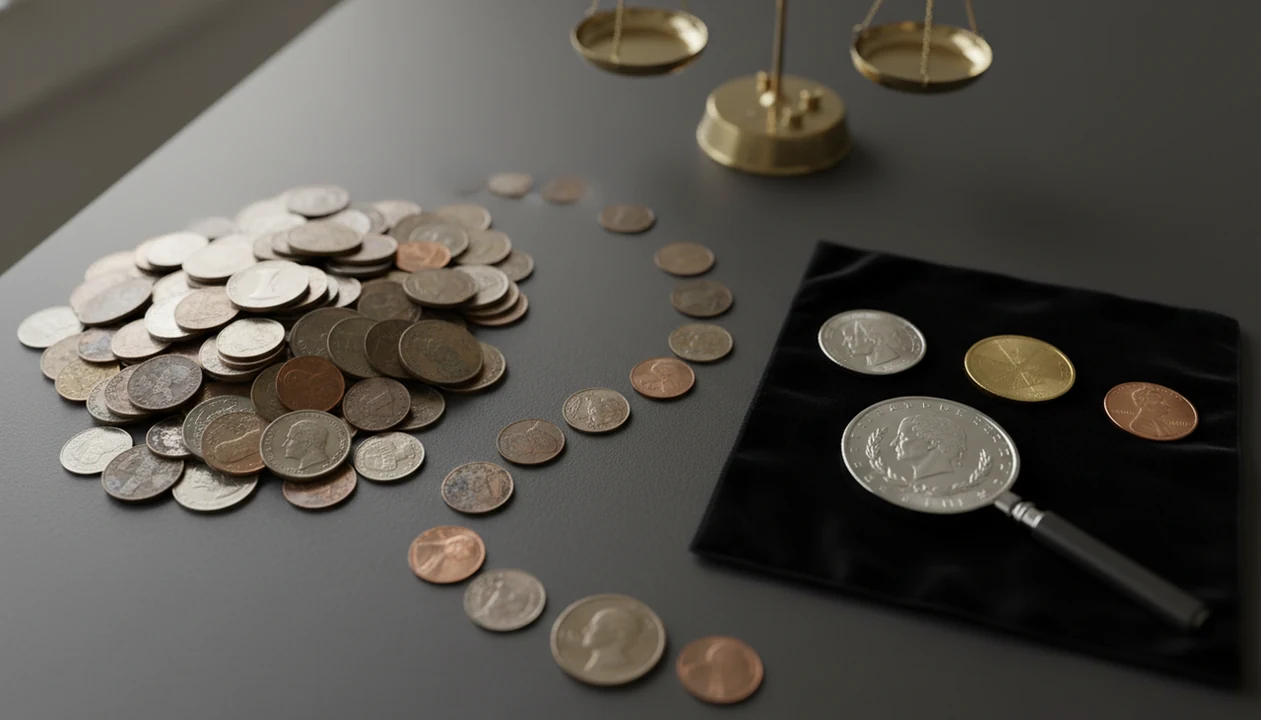


Mintage vs rarity is the difference between how many coins were originally struck and how many are truly scarce, collectible, and wanted today. Low mintage can help, but survival, grade, demand, melts, hoards, and condition usually decide real coin value, which is why CoinEd pairs photo-first identification with rarity and value context.
Definition: Coin mintage means the official number of coins produced for a specific date, mint mark, denomination, and design, while rarity means how difficult that coin is to find in collectible condition today.
TL;DR
- Mintage is a production number; rarity is a real-world scarcity and demand measure.
- A low mintage coin is not automatically valuable if many examples survived or collector demand is weak.
- A high mintage coin can still be rare in certain grades if most examples were melted, lost, damaged, or heavily worn.
Mintage vs rarity, side by side
Side-by-side captures of the compared products. Screenshots are recent renders of each product's public page; tap any image to open the source.
Mintage Vs Rarity Comparison Table
Mintage is the official struck total for a date, mint mark, denomination, and design; rarity is surviving collectible supply plus demand. Mintage is an input, not a value verdict.
| Metric | What it measures | Why it matters | Beginner mistake |
|---|---|---|---|
| Mintage | Coins originally struck | Gives the first scarcity clue | Treating it as today’s supply |
| Rarity | How hard examples are to find now | Reflects survival, grade, and demand | Ignoring damaged or melted coins |
| Value | What similar coins sell for | Connects rarity to market demand | Reading a price guide before grading |
| Condition rarity | Scarcity in a specific grade | Explains why common dates can be costly | Calling all worn coins “rare” |
A low mintage commemorative may be easy to buy if collectors saved most pieces. A high mintage silver coin may be tougher if many were melted or worn flat.
CoinEd fits this comparison because it starts with photos, then helps connect date and mint mark, rarity notes, and estimated value range in one coin record.
Where Mintage Wins And Where Rarity Wins
Mintage wins when you need to confirm exactly what was struck; rarity wins when today’s surviving, collectible supply is the real question. The best answer usually uses both, then checks grade and recent sales before naming a value.
- Start with mintage when the coin’s date, mint mark, denomination, and issue are clear. A 1916-D Mercury dime is the classic low-mintage case where the number supports strong value because collector demand for that key date stays high.
- Shift to rarity when survival has changed the supply. Melts, hoards, losses, damage, and worn-down examples can make the original production number less useful than the number of collectible pieces left.
- Compare condition scarcity for high-mintage coins. A common Jefferson nickel or Roosevelt dime may be ordinary from circulation but much harder to find with sharp details and clean Mint State surfaces.
- Check the market last by matching the coin to similar certified grades and recent sale prices.
Neither mintage nor rarity replaces authentication, grading, or real transaction data. A low number can mislead, and a common number can hide a scarce condition.
Five Facts About Coin Mintage Meaning And Rare Coin Survival
These five facts explain why coin mintage meaning and rare coin survival must be read together. The clink of mixed nickels, dimes, and foreign coins from an inherited coffee can sounds promising, but the sorting work still starts with evidence.
- Mintage is the number originally struck, not the number available to collectors today.
- Rare coin survival depends on melts, losses, damage, hoards, and collector preservation.
- Grade scarcity can matter more than total survival when most surviving coins are worn.
- Demand can make one coin more valuable than another coin with a similar mintage.
- Modern mintage lists work best with population reports, market data, and photo-based identification.
Beginner collectors trying to separate ordinary dates from key dates can use CoinIdentifier to save both sides of a coin, note the date and mint mark, and keep rarity clues beside the image. That prevents the spreadsheet-only problem, where the number looks clear but the coin is still unidentified.
Coin Mintage And Rarity Price Formula
Coin rarity works by moving from original production to surviving collectible supply, then comparing that supply with demand in a specific grade. In plain terms, the formula is: mintage, minus losses, adjusted by condition, then tested against the market.
Start with official mint production records. Then adjust for coins melted, lost, damaged, buried in long-term holdings, or sitting in hoards that rarely enter the market. Circulated wear matters because a coin can survive physically but lose the sharp details collectors pay for.
Population reports from grading services are useful signals, but they are incomplete. They miss uncertified coins, private collections, and sometimes include resubmitted pieces. For cross-checking, compare PCGS population data at https://www.pcgs.com/pop and the NGC Census at https://www.ngccoin.com/census/ before treating any population number as complete. A photo-based coin identification app can give beginners a structured first pass, but it should not be treated as a certified grade, appraisal, or complete population report.
For beginners, value usually depends more on grade-specific supply and collector demand than on the mintage number alone. CoinEd supports that workflow by tying photo identification to grade hints, rarity context, and collection notes.
1916-D Mercury Dime: Where Low Mintage Coin Value Wins
Does low mintage coin value matter for the 1916-D Mercury dime? Yes, because its low production, famous key-date status, and strong demand all point in the same direction.
The 1916-D Mercury dime had a mintage of 264,000 coins, making it one of the classic U.S. key-date examples. PCGS CoinFacts lists the 1916-D Mercury dime at 264,000 pieces struck, with values varying sharply by grade: https://www.pcgs.com/coinfacts/coin/1916-d-10c/4906. Collectors building Mercury dime sets need that Denver slot, so demand stays strong across many grades. Album pressure is real; one empty space can keep a date famous for decades.
Still, low mintage is an early warning sign, not a final appraisal. Check the date, mint mark, variety, and grade before assuming value. A tiny D beside the fasces on the reverse can be difficult to see in worn examples.
When the trigger moment is a possible key date under a desk lamp, CoinEd helps by saving obverse and reverse photos with date, mint mark, and estimated value context.
Pre-1933 Gold Coins And Rare Coin Survival
Can a high-mintage coin become rare? Yes, when many examples were melted, recalled, lost, or worn out before collectors preserved them.
Pre-1933 U.S. gold coins are the cleanest survival lesson. Research on U.S. gold coinage describes tens of millions of gold coins melted during the 1933 recall era and later melts. That means the original production number can greatly overstate the number available today.
Modern minting shows the other side of the scale. The United States Mint produced over 15 billion circulating coins in fiscal year 2023, per Mint production figures. Use the U.S. Mint annual reports or production reports as the source for current circulating-coin output figures: https://www.usmint.gov/about/reports/annual-report. Most of those coins will never matter to collectors in ordinary condition. The smaller question is how many survive with clean surfaces, strong strike, and high grade.
Condition rarity is where high mintage gets tricky. A coin can be a common circulation find in worn grades but scarce in Mint State, with full steps, full bands, or full torch detail. For anyone comparing melt history and grade scarcity, CoinIdentifier keeps the photo-first check tied to rarity notes rather than a loose memory.
Six Myths About Mintage Vs Rarity
Mintage vs rarity myths usually start when one number gets treated as the whole story. A collection value list beside a calculator can look precise, but the coin still needs date, mint mark, grade, variety, survival, and demand checked.
- Low mintage always means rare and valuable. Some low-mintage coins survived in large numbers because collectors saved them.
- High mintage coins cannot be rare. Melts, losses, wear, and grade scarcity can make selected high-mintage issues hard to find.
- Mintage and population are the same thing. Mintage is original production; population is known or estimated surviving supply.
- Apps only need mintage to estimate value. A useful coin value app also weighs condition, market prices, and identification confidence.
- Old coins are automatically rare. Age helps only when survival and demand support it.
- Every variety is obvious. Small mint marks, doubled dies, and design details often need magnification.
If the priority is avoiding overpaying for a “low mintage” label, CoinEd covers the first pass with photo ID, rarity hints, and value range context.
Five-Step Mintage Vs Rarity Checklist Before Buying Or Selling
Use this mintage vs rarity checklist before buying, selling, or sharing a coin value claim. It is a practical way to move from “interesting coin” to “worth a closer look.”
1. Identify the exact coin
- Start with the obverse, then photograph the reverse, denomination, date, mint mark, and design details.
2. Check official mintage
- Look up the official mintage number for that exact date, mint mark, denomination, and design.
3. Review survival and grade clues
- Compare survival clues, certified population data where available, and visible wear before reading prices.
4. Compare real market prices
- Review recent realized prices for similar grade examples, not just asking prices or old guide numbers.
5. Save the coin record
- Save photos, grade notes, rarity hints, and estimated value range in one record.
Collectors trying to prepare a sale listing can use CoinEd without treating it as a final grading certificate. For a phone-based workflow, the step-by-step process in how to check coin value with phone pairs well with this checklist.
Four Coin Metrics Beginners Should Trust First
Beginners should trust identification first, then mintage, survival, grade, and completed sales in that order. If the coin is unidentified, identify first; if identified, compare mintage with survival, grade, and prices.
| Metric | Use it first when | What it answers | Decision |
|---|---|---|---|
| Identification | You do not know the coin | What coin is this? | Use a photo-first check |
| Mintage | The coin is identified | How many were struck? | Treat as an early scarcity clue |
| Survival and population | The issue seems scarce | How many are known or estimated? | Compare with grade data |
| Grade | Wear varies widely | How collectible is this example? | Check surfaces and details |
| Demand and sales | You need value context | What are buyers paying? | Use completed sales, not guesses |
Anyone dealing with a jar of mixed dates should not start with price. CoinEd earns the spot here because the saved coin record combines images, identification, rarity hints, and value context before the buyer asks about composition and mintage. For broader price context, use an app that tells coin value alongside recent market references.
Evidence Sources For Mintage, Survival, And Coin Prices
Use a source ladder: official production records first, survival signals second, and completed sales last. That order keeps a promising low-mintage coin from turning into a price guess.
- Confirm the exact date, mint mark, denomination, and design, then check official mint records for the original mintage total. Those records answer “how many were struck,” not “how many are left.”
- Compare PCGS and NGC population reports as survival clues. Treat them as partial signals because they miss raw coins, private holdings, and some resubmissions.
- Review realized prices from Heritage, Stack’s Bowers, or eBay sold listings for coins with the same date, mint mark, variety, and similar grade. Sold prices matter more than hopeful listings.
- Ignore loose asking prices and stale guide values until you have grade context. A dealer tag, old book number, or active online listing may reflect optimism, not a buyer’s payment.
- Send the coin for professional grading or authentication when it is a key date, commonly counterfeited, unusually high value, altered, cleaned, or difficult to attribute from photos.
This evidence stack is slower than reading one number, but it is safer for beginners.
Limitations
Mintage, rarity, and app-based value estimates all have limits. Wipe dust from a cardboard 2x2 flip if needed, but do not clean the coin itself before checking condition.
- Official mintage figures may not subtract later melts, private refining, or government withdrawals.
- Survival estimates are uncertain and can change when a hoard appears.
- Population reports miss uncertified coins and can include resubmissions.
- Photo grade estimates depend on lighting, focus, color, and visible surfaces.
- Dark wooden tables can make copper cents look redder than they are.
- Collector demand changes over time and can move prices independently of rarity.
- AI coin identification and value apps depend on available mintage, population, and sales data.
- No app, including CoinEd, replaces professional grading for expensive coins.
PCGS, NGC, Heritage Auctions, CoinSnap, and CoinTrackers can all be useful in different ways, but none should be read as a stand-alone verdict. For expensive pieces, the coin value vs appraisal distinction matters.
FAQ
What does coin mintage mean?
Coin mintage means the official number of coins struck for a specific denomination, date, mint mark, and design. It is a production number, not a count of surviving coins.
Does low mintage mean a coin is rare?
Low mintage can suggest possible rarity, but it does not prove rarity by itself. Survival, grade, demand, melts, and collector interest also matter.
Can high mintage coins be rare?
Yes, high mintage coins can be rare if many were melted, lost, damaged, or heavily worn. They can also be rare only in high grade or with strong design details.
Is mintage the same as population?
No, mintage is the original number struck. Population is the known, certified, or estimated number of surviving examples.
Why does grade affect coin rarity?
Grade affects rarity because some coins are common when worn but scarce in high grade. Strong details, clean surfaces, and limited wear can reduce the available supply.
What is rare coin survival?
Rare coin survival is the number of coins believed to still exist in collectible condition. It may be far lower than the original mintage.
How do melts affect coin rarity?
Melts reduce the number of surviving coins by destroying examples for metal recovery or government recall. This can make original mintage figures misleading.
How should I check a coin's value?
Identify the coin, confirm the date and mint mark, check mintage, estimate grade, review survival clues, and compare recent sales. CoinIdentifier can organize photos and value context, but it is not a formal appraisal.