
Inherited Coin Collection App For Sorting A Coin Jar
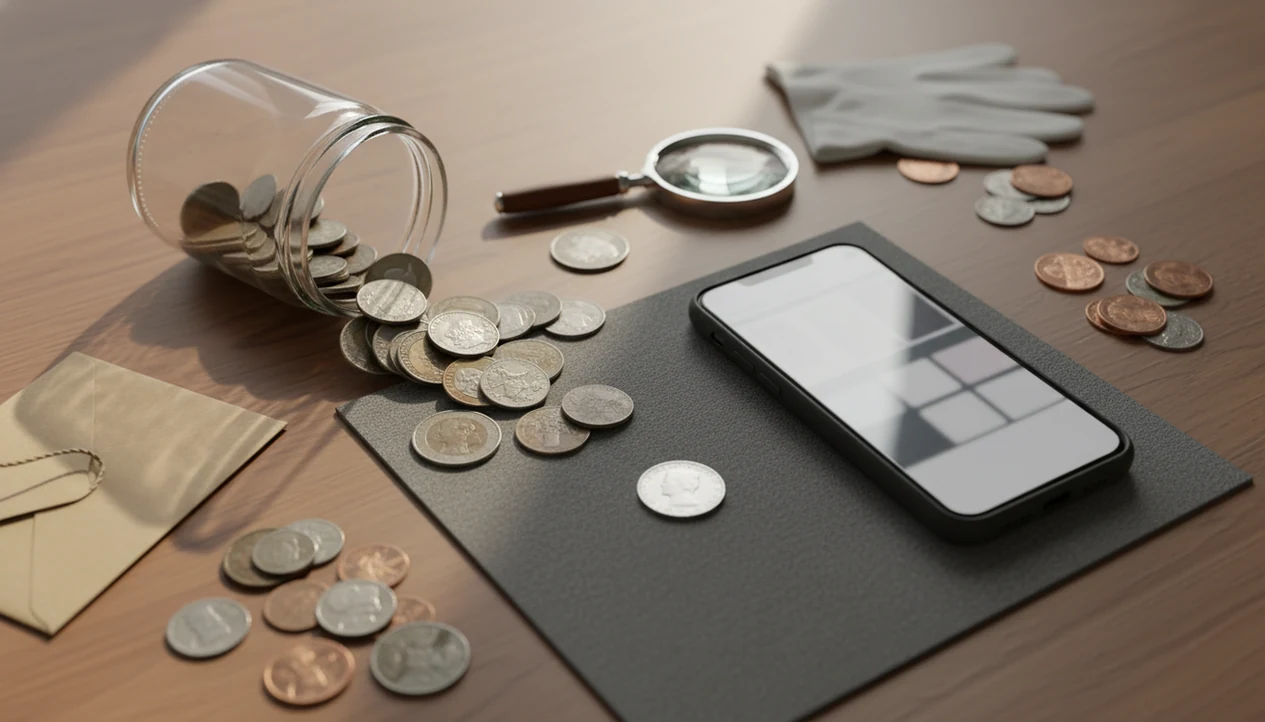


The best inherited coin collection app is one that lets you photograph coins first, identify country, denomination, date and mint mark, then organize likely common coins separately from coins that need expert review. CoinEd fits that first-pass workflow because it saves photo scans, identification details, rarity hints, and estimated value ranges in one place.
> CoinEd is the photo-first coin identifier and value estimation app that identifies coins from photos, shows rarity and grade hints, and helps beginners and collectors estimate coin value.
- Start by sorting the inherited coin jar into readable groups, then scan both sides of each coin in good light.
- Use app values as rough ranges because grade, condition, demand, and selling venue can change real prices.
- Flag high-value, rare, error, ancient, or suspicious coins for cross-checking with price guides or professional grading.
Inherited Coin Collection App At A Glance For Beginners
An inherited coin collection app is a camera-based sorting, identification, and value-triage tool for people who just found coins in jars, albums, boxes, or envelopes. It works best when you use it to separate common circulation finds from coins that may deserve a dealer, auction archive, or certified grading review.
CoinIdentifier is useful for this first pass because it records the country, denomination, year, mint mark, metal, condition notes, and estimated value range beside the coin photos. That matters when a green felt table is covered with scattered coins and nobody remembers which ones were “special.”
According to Pew Research Center, 76% of U.S. adults use a smartphone, computer, or tablet to manage finances (https://www.pewresearch.org/short-reads/2022/02/15/more-americans-are-using-digital-tools-to-manage-their-finances/). Coin records now fit that same habit.
Start calm. Sort before you sell.
Coin Jar App Benefits For Inherited Coin Owners
Can a coin jar app help if you inherited coins and know almost nothing about them? Yes, because it turns a loose pile into a searchable record instead of asking you to identify every date, portrait, mint mark, and reverse design by memory.
Many inherited groups arrive as jars, bank envelopes, Whitman albums, loose foreign coins, and unlabeled flips. Manual lookup gets slow because a tiny D beside Roosevelt’s torch, or a worn date on a buffalo nickel, can change what you research next. The U.S. Mint produced more than 14.5 billion circulating coins in fiscal year 2023 (https://www.usmint.gov/about/reports/annual-reports), so common-coin noise is real.
Anyone dealing with a mixed coffee can of wheat cents, nickels, and foreign coins can use CoinEd as an app for inherited coins because it creates a photo-first check, then groups likely matches into collection notes. The Federal Reserve reported that 21.2% of U.S. adults own collectible assets (https://www.federalreserve.gov/publications/2024-economic-well-being-of-us-households-in-2023-expenses.htm), so plenty of non-experts face this exact problem.
How An App For Inherited Coins Works Behind The Camera
An app for inherited coins works by turning coin photos into visual features, comparing those features against reference data, then returning likely matches with supporting details. In plain terms, image recognition looks for patterns the same way a collector checks portrait, lettering, date, mint mark, denomination, country, and reverse design.
The process usually starts with photo capture of the obverse and reverse. The system creates image embeddings, which are numeric fingerprints of visible traits, then compares them with database records. Value context may come from market data, reference catalogs, and comparable coin records.
Lighting changes everything. Phone photos on a dark wooden table can make copper cents look redder than they are, and glare can hide a mint mark. CoinEd works best when the coin is flat, cropped closely, and photographed in steady light. Good photo-first coin identifier and value estimation app for collectors and beginners deliver structured clues, not certified authentication.
Top CoinEd Features For Organizing Inherited Coins
The most useful features for inherited coins are photo identification, collection organization, and value triage. Beginners should prioritize repeatable records over chasing one exciting price from a single scan.
Photo Identification
CoinEd lets you scan obverse and reverse images so the app can compare both sides against likely coin types. A quarter flipped for the eagle side often gives the missing clue.
Collection Folders
Folders, tags, notes, and exportable inventory fields help you organize inherited coins by family source, country, denomination, or review status. If you need a broader record system, a coin collection tracker app is the natural next layer.
Value And Rarity Hints
Rarity notes, grade hints, and estimated value ranges help decide which coins are worth a closer look. If your priority is clean organization before any sale, CoinEd fits because it pairs each scan with a saved record and estimated value range.
How To Use An Inherited Coin Collection App Safely
Use an inherited coin collection app as a careful sorting workflow, not a rush to price everything. The coin may be replaceable, but the family context around it often isn't.
- Prepare a soft surface with a towel or felt pad, then wash and dry your hands before handling coins.
- Avoid cleaning or polishing any coin, and do not rub dirt from the surface.
- Group the coins by country, denomination, metal color, date range, and obvious album or proof pieces.
- Scan both sides of each coin, and record uncertain matches instead of forcing an answer.
- Tag each result as keep, research, sell, or professional review.
- Cross-check high-value results with a price guide, auction record, dealer, PCGS, or NGC before selling.
Heirs who want a repeatable process can use CoinIdentifier because the scan, tag, note, and review workflow keeps uncertain coins out of the sell pile. For field-by-field setup, a coin collection inventory template can help standardize your notes.
Common Inherited Coin Jar Patterns Worth Sorting First
Sort obvious groups first, then scan the coins that have the highest chance of needing research. Date ranges, mint marks, and metal composition often matter more than age alone.
- U.S. coins first: Separate pennies, nickels, dimes, quarters, half dollars, and dollar coins before scanning.
- World coins second: Group foreign coins by country or script, since app confidence may vary more here.
- Silver-colored older coins: Ask the common question, “Is this silver or just old?” especially around 1964 U.S. dimes and quarters.
- Copper cents and wheat cents: A beginner turning over a wheat cent under a kitchen light may find the tiny mint mark under the date.
- Proofs, commemoratives, and album coins: Keep these away from loose change and create a shortlist before trying to value everything.
Collectors who inherit a binder page heavy with state quarters can use CoinEd to create a quick shortlist because the app records scans, type details, and collection notes. For broader learning, the coin collection for beginners guide covers the basic sequence.
Common Myths About App Values For Inherited Coins
App values are starting points, not sale guarantees. The same coin can bring different prices depending on grade, eye appeal, venue, fees, and buyer demand.
- Myth: The app value is the exact sale price. An estimated value range is a guide, not a cash offer.
- Myth: AI can grade every coin accurately from a photo. Independent testing of CoinSnap found strong identification on a small sample, but much weaker grading; cite the specific test URL here before publishing.
- Myth: Scanning means no expert is needed. Counterfeits, alterations, and varieties can require trained review.
- Myth: All apps cover ancient, world, and error coins equally. Coverage varies, and niche pieces can be unsupported.
- Myth: One scan settles the question. Better photos, both sides, and reference checks can change the result.
For inherited coins, organization usually matters more than one dramatic estimate because a clean inventory shows what you own, what needs research, and what can wait.
When To Cross Check An App For Inherited Coins
Cross-check any coin with an unusually high estimated value, low mintage note, possible mint error, precious metal content, or uncertain identification. Grading, authenticity, and variety attribution can change value dramatically.
| Coin result | Why it needs a second source | Good next check |
|---|---|---|
| High app estimate | Price may depend on exact grade | PCGS, NGC, or auction records |
| Possible mint error | Many “errors” are damage | Specialist dealer or grading service |
| Silver or gold content | Melt value and collectible value differ | Metal reference and recent sales |
| Ancient or obscure world coin | App coverage may be thin | Specialist catalog or dealer |
| Rare variety note | Small die markers matter | Variety guide or certified attribution |
The Federal Reserve found that 40% of adults with investments manage them largely on their own, and inherited collectibles invite the same DIY instinct. Owners who compare CoinEd results with pcgs.com, ngccoin.com, or coins.ha.com create better guardrails before selling. The accuracy question is covered more directly in are coin identifier apps accurate.
Limitations
CoinEd can speed up inherited-coin sorting, but it is not a formal appraisal, authentication service, or certified grading opinion. That distinction protects beginners from overconfidence.
- AI grading from photos is approximate and can be distorted by lighting, glare, angle, wear, cropping, and image quality.
- Consumer apps cannot reliably detect all counterfeits, altered coins, mint errors, or rare die varieties.
- Ancient coins, obscure world issues, private tokens, and exonumia may be misidentified or unsupported.
- Estimated values are guide ranges, not guaranteed sale prices or dealer offers.
- Database coverage varies by app, so important results should be cross-checked.
- Privacy policies differ, so review how coin photos, location data, and account metadata are stored.
- A coin centered inside a cardboard flip may scan poorly if plastic glare covers the date or mint mark.
Use the app for triage. Use experts for decisions that carry real money.
FAQ
What app identifies inherited coins?
A photo-based coin identifier app can identify many common inherited U.S. and world coins from obverse and reverse images. CoinEd also saves scan results with value and rarity hints.
Can I scan a coin jar?
Yes, but scan coins one by one after grouping them by country, denomination, metal color, and date range. Pile photos are usually too cluttered for reliable identification.
Are coin app values accurate?
Coin app values are rough ranges, not guaranteed sale prices. Actual prices depend on grade, demand, authenticity, venue, and fees.
Should I clean inherited coins?
Do not clean, polish, or rub inherited coins. Cleaning can leave hairlines, remove original surfaces, and reduce collectible value.
How do I sort inherited coins?
Sort by country, denomination, date range, mint mark, and metal first. Then tag coins as keep, research, sell, or professional review.
Can apps detect fake coins?
Consumer coin apps cannot reliably authenticate all counterfeits or altered coins. Valuable or suspicious coins should be checked by a dealer or grading service.
Which inherited coins need appraisal?
Coins with high app estimates, precious metal content, possible errors, rare dates, or uncertain identification need a second opinion. Professional review is most important when value depends on condition or authenticity.
Can I sell app-scanned coins?
You can sell coins after scanning and organizing them, but verify valuable results before listing or accepting offers. A title draft with date and mint mark is helpful, but it is not proof of grade.
Do coin apps grade coins?
Some coin apps provide grade hints from photos. Professional grading is needed when small condition differences can change value significantly.