
Coin Collection Results After 30 Days of Scanning and Organizing
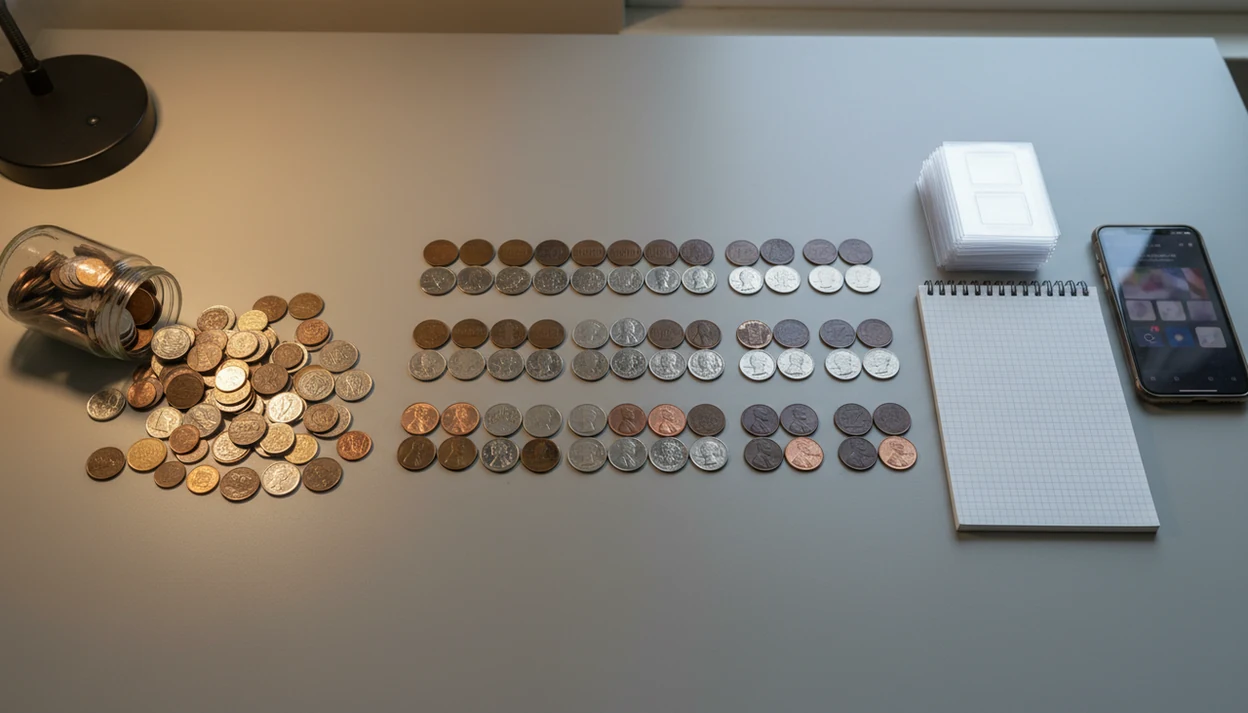
Coin collection results after 30 days usually look like a cleaner digital inventory, clearer coin groups, rough value ranges, and a short priority list of coins worth researching further. A realistic month of scanning can turn jars, albums, and inherited boxes into a searchable draft collection, but it should not be treated as a final appraisal.
Definition: A coin identification app identifies coins from photos, shows rarity and grade hints, and helps beginners and collectors estimate rough coin value before deeper research.
TL;DR
- A focused collector can often scan hundreds of common coins in 30 days if photos are clear and both sides are captured.
- The strongest 30-day outcome is organization: images, country, denomination, year, mintmark notes, and rough value ranges in one place.
- AI value and grade hints are starting points, not final appraisals, especially for rare, worn, ancient, or potentially high-value coins.
30 Day Coin Inventory Results at a Glance
A completed 30 day coin inventory usually includes front and back photos, likely IDs, dates, denominations, countries, mintmark notes, and estimated value ranges. The real result is a working catalog, not a certified statement of value.
A motivated collector can often process hundreds to low thousands of common coins in a month. A weekend-only user may finish far fewer, especially if each coin gets careful notes. U.S. and modern world coins are usually faster because the design, date, and denomination are easier to match.
Progress looks ordinary at first.
A good month turns “loose change in containers” into labeled groups and a triage list. Ancient coins, slick worn pieces, tokens, and obscure world issues may still sit in an uncertain folder. That is normal coin collection progress, not failure.
How Coin Collection Results After 30 Days Work in an AI App
Photo-first coin identification works by comparing images of the obverse and reverse against known visual patterns, then storing the likely match with metadata. In plain terms, the app looks for design features, inscriptions, date placement, mintmarks, and shape before it builds an inventory record.
Image quality matters more than most beginners expect. A coin balanced on a white napkin often scans better than one photographed on a glossy counter. Dark wooden tables can make copper cents look redder than they are, which may confuse condition and color hints.
Under controlled conditions, a Heritage Science study reported up to 98% accuracy for automated image-based classification of ancient coins, but that is not a consumer-app guarantee source. Real coins have glare, scratches, weak strikes, and pocket wear.
An AI coin app can classify common visual features faster than a beginner can research every coin by hand, but uncertain matches still need human review.
How to Use Photo Scanning for Organized Coin Collection Results
Use photo-based scanning as a sorting and recording workflow, not as the final judge of grade or value. The best 30-day workflow keeps photos consistent and separates “identified,” “uncertain,” and “needs research” coins from the start.
- Sort coins into broad groups before scanning. Start with cents, nickels, dimes, quarters, world coins, tokens, and damaged coins.
- Photograph both sides in consistent lighting. Start with the obverse, then capture the reverse design without glare.
- Log app identification results and uncertainty flags. Keep notes when the date is weak, the mint mark is unclear, or the country match feels off.
- Review value ranges and rarity hints without assuming final value. Treat every estimated value range as a starting point.
- Create a priority pile for rare dates, better condition coins, and uncertain IDs. A lamp angled toward a faint mint mark can change what gets researched next.
For a longer setup, a dedicated app to help organize coin collection can keep the same workflow from becoming a second pile of notes.
Method for Tracking Coin Collection Progress Over 30 Days
The most useful tracking method is a small daily or weekly scan count, not one exhausting weekend. Common circulating coins should come first because they build rhythm and reveal duplicates quickly.
- Track total coins scanned each session.
- Track confidently identified coins separately from uncertain coins.
- Count duplicates by denomination, year, and mint mark.
- Keep a “needs expert review” count for rare dates, errors, ancient coins, and possible counterfeits.
- Record the number of coins moved into safer storage.
The U.S. Mint reported producing about 11.6 billion circulating coins in fiscal year 2023, which helps explain why modern sorting can feel endless even when each coin only takes seconds source.
For beginners, scanning ordinary coins first is often better than starting with mystery coins because easy wins teach the date, denomination, and mintmark routine.
Story 1: Inherited Coin Jar Results After 30 Days
What happens after 30 days with inherited coin jars? Most households end up with modern coins identified, duplicates grouped, and a short stack of older or foreign pieces worth a second look.
Picture the clink of mixed nickels, dimes, and foreign coins poured from an inherited coffee can onto a towel. The first week may feel slow. By the third week, ordinary quarters, memorial cents, and modern nickels usually fall into clear groups. A tarnished silver quarter in loose change gets flagged instead of tossed back into the pile.
The Federal Reserve noted that about $10.5 billion in coins were sitting idle in homes, cars, and businesses during the coin circulation disruption source. That makes household coin sorting a real use case, not a rare scenario.
The biggest win is learning what is ordinary and what deserves a second look. An inherited coin collection app can help keep family notes attached to the coins.
Story 2: World Coin Collection Results After 30 Days
World coin collection results after 30 days usually improve most in country and denomination identification. That sounds basic, but it changes a mixed box from “unknown foreign coins” into usable folders.
A collector may start with coins in different languages, scripts, metals, and sizes. Some have Latin letters. Others use Arabic, Cyrillic, Chinese characters, or worn legends that barely show under a desk lamp. Country identification is often the first major improvement, followed by year ranges, denominations, and duplicate groups.
Not everything resolves neatly. Heavily worn coins, tokens, private issues, older colonial pieces, and unusual scripts may remain uncertain. Keep those separate.
The practical output is simple: folders by country, rough year range, duplicate stacks, and value bands. A good photo-first coin identifier and value estimation app for collectors and beginners delivers faster sorting and research leads, not guaranteed authentication or sale prices.
Story 3: U.S. Coin Collection Results After 30 Days
U.S. coin collection results after 30 days often look like denomination runs, mintmark notes, and a priority list for deeper research. Cents, nickels, dimes, quarters, half dollars, and dollar coins become easier to compare once they are grouped by year.
- Cents often separate into wheat cents, memorial cents, shield cents, and obvious duplicates.
- Nickels and dimes become easier to check by date and mint mark.
- Quarters sort into state, national park, bicentennial, and earlier designs.
- Half dollars and dollar coins usually get extra attention because they appear less often in change.
- Varieties, errors, and condition-sensitive coins still need verification.
A beginner turning over a wheat cent under a kitchen light may finally spot the tiny mint mark under the date. That one habit creates a better priority list.
PCGS publishes grade-by-grade price data for U.S. coin series, and adjacent grades can show large value gaps for some dates; treat app grade hints as provisional source.
Common Organized Coin Collection Results After One Month
Common organized coin collection results after one month are more about structure than a dramatic value number. A collection becomes easier to search, compare, store, and discuss.
- A digital photo record for most scanned coins.
- Duplicate groups by type, year, country, or denomination.
- Estimated value ranges for ordinary and better pieces.
- An uncertain-ID list for worn, foreign, ancient, or damaged coins.
- A priority review pile for rare dates, cleaner examples, and possible errors.
Organization often matters more than the headline total value because it prevents the same coin from being “rediscovered” five times. It also keeps ordinary face-value coins from distracting you from coins that need deeper research.
A coin collection inventory template can mirror the same fields: date, mint mark, denomination, country, condition notes, source, and estimated value range.
What 30 Day Coin Collection Progress Does Not Prove
A 30-day scan does not prove exact market value, certified grade, authenticity, or error status. It gives a useful working record, but important coins need comparison against trusted references and, sometimes, professional review.
| What the scan suggests | What it does not prove | Safer next step |
|---|---|---|
| Estimated value range | Guaranteed sale price | Check sold auction records, not hype listings |
| Grade hint | Certified grade | Use professional grading for valuable coins |
| Possible rare date | Confirmed rarity | Verify date, mint mark, and mintage references |
| Possible error | True mint error | Compare with specialist error references |
| Country or type match | Authenticity | Seek expert review for high-value or suspicious coins |
Asking prices can be misleading. A laptop with five price comparison tabs open may show wild numbers for the same coin. Sold prices, condition, and authentication matter more.
Tools like CoinEd, pcgs.com, ngccoin.com, and coins.ha.com fit different parts of the research process.
Limitations
A 30-day inventory is a draft system that still needs refinement. It can make a collection easier to understand, but it cannot remove the need for careful numismatic judgment.
- AI may misidentify worn, damaged, ancient, obscure, token, counterfeit, or poorly photographed coins.
- AI grade hints are approximate and can be wrong.
- Value ranges are not binding appraisals or guaranteed sale prices.
- Subtle varieties and mint errors may require specialist review.
- Cleaning, scratches, environmental damage, and altered surfaces can distort both ID and value.
- High-value coins should be confirmed by a professional grader or qualified numismatist.
- A coin that remains unidentified is not automatically worthless.
- A strong photo record still needs updated notes as you learn more.
Do not clean coins before scanning or selling. Wipe dust from a cardboard 2x2 flip if needed, but leave the coin surface alone.
For accuracy concerns, the guide on are coin identifier apps accurate explains where photo-based results tend to be strongest and weakest.
FAQ
How many coins can I scan in 30 days?
Casual users may scan a few dozen to a few hundred coins in 30 days. Motivated users with clear lighting and sorted groups can often scan hundreds or more.
Are coin value estimates from an app accurate?
App value estimates are rough ranges, not formal appraisals. Verify important coins with sold-price records, trusted references, or a qualified numismatist.
Can AI grade coins accurately?
AI grade hints can help beginners separate heavily worn coins from sharper examples. They are not the same as third-party grading.
Which coins need expert review after scanning?
Rare dates, high-value coins, ancient coins, possible errors, suspicious pieces, and uncertain IDs need expert review. Coins with unusually high app estimates should also be checked.
Should I clean coins before scanning them?
No, you should not clean coins before scanning them. Cleaning can scratch surfaces, change color, and reduce collector value.
Can an app flag rare coins after 30 days?
An app can flag possible rare dates, mintmarks, and coin types. It cannot guarantee rare varieties, authenticity, or final value.
What coins should I scan first in a 30-day project?
Start with clear, common modern coins because they are easier to identify and organize. Then move to older coins, foreign coins, worn pieces, and anything the scan marks as uncertain.