
Benefits Of Coin Value Tracking For Coin Collections
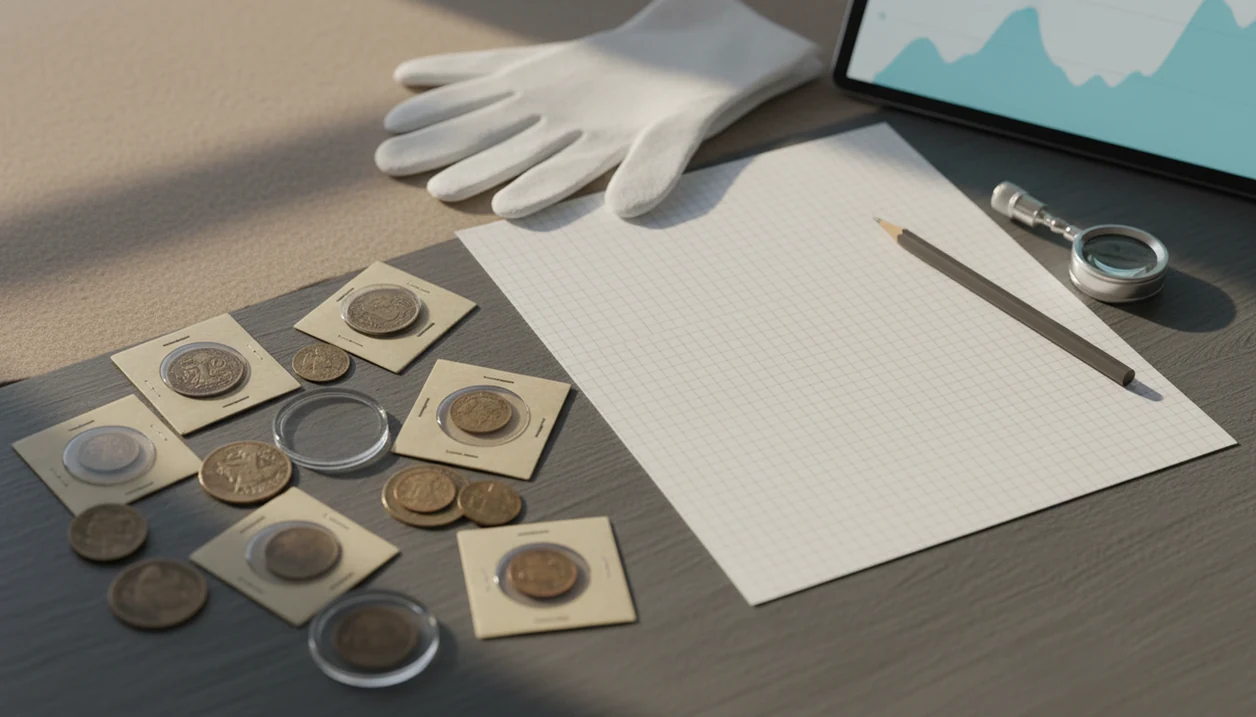
The main benefits of coin value tracking are clearer records, better sale decisions, safer insurance or estate planning, and smarter research priorities. A useful value record should include the coin identity, estimated value range, condition notes, source, and the date the estimate was last updated.
> Coin value tracking is the practice of recording each coin’s identity, estimated value range, update date, and valuation notes so a collection can be reviewed and managed over time.
- Track coin value as a range, not a guaranteed sale price.
- Date-stamped updates help you see which records are current and which coins need rechecking.
- Collection value records are most useful when they connect photos, identification, rarity context, and condition notes.
Coin Value Tracking Definition For Collection Value Records
Coin value tracking is the practice of recording each coin’s identity, estimated value range, update date, and valuation notes so a collection can be reviewed and managed over time. A good record explains what the coin is, what it may be worth, where the estimate came from, and why the number changed.
Values should usually be ranges. Grade, authenticity, selling venue, eye appeal, metal content, and collector demand can all move the final price. A 1916 dime in a drawer and the same date in a certified holder are not the same record.
This is useful for collectors, beginners, estate organizers, and sellers, not only investors. A photo-based coin record can connect identification, rarity clues, condition notes, and estimated value ranges without treating the estimate as certified grading.
Start with the obverse. Then turn the coin over and write down what changed.
Five Benefits Of Coin Value Tracking Collectors Should Know
- Better organization: Value tracking turns loose coins, album slots, flips, and tubes into searchable collection value records. The clink of mixed nickels, dimes, and foreign coins from an inherited coffee can becomes a list someone can actually review.
- Fewer stale estimates: The update date is as important as the estimate itself because a five-year-old note may reflect old demand, old bullion prices, or an earlier identification.
- Safer selling: A range reduces false certainty and keeps one guide number from becoming a promised sale price.
- Clearer estate or insurance records: Dated records help heirs, appraisers, and insurers understand what exists and which coins may need formal documentation.
- Smarter research priorities: Collectors can sort by highest value, biggest change, uncertain ID, or coins worth a closer look.
The coin collecting market was valued at $18.10 billion in 2023, with an 8.5% projected CAGR through 2034 and a $43.90 billion projected 2034 market, according to one industry market summary source. Bigger markets make cleaner records more useful, especially when selling or inheriting.
How Coin Value Tracking Works Behind The Collection Record
Coin value tracking works by linking identification, photos, condition notes, valuation sources, and update dates into one living record. The basic workflow is simple: identify the coin, save obverse and reverse photos, record attributes, estimate a range, attach a source, then update the record when better information appears.
Condition, mint mark, date, variety, rarity, metal content, and sales venue can all change the value range. A beginner turning over a wheat cent under a kitchen light may find the tiny mint mark under the date, then realize the record needs a different comparison.
Photo-first tools can help with identification and rarity lookup, but the value record still needs human review. Good photo-first coin identifier and value estimation apps for collectors and beginners deliver structured clues and price context, not certified grading or guaranteed resale results.
Large reference systems show why data depth matters. PCGS CoinFacts says its app includes coin values, populations, images, narratives, and auction prices realized for over 40,000 U.S. coins source.
Requirements Before You Track Coin Value Accurately
Reliable value records need clear inputs before pricing starts. Gather these first:
- Clear photos: Save obverse and reverse images, plus close-ups of dates, mint marks, edges, and suspected varieties.
- Identity fields: Record country, denomination, date, mint mark, metal or series if known, and reverse design.
- Condition notes: Describe wear, scratches, cleaning concerns, rim damage, color, and whether the coin may be proof or circulation strike.
- Storage location: Note the album page, box, tube, slab number, or envelope.
- Valuation fields: Record source, estimate type, date checked, and confidence level.
Blurry photos, missing mint marks, and guessed identifications can produce misleading estimates. Phone photos on a dark wooden table can also make copper cents look redder than they are.
Beginners should organize first. Pricing every unusual coin perfectly can come later.
How To Use Coin Value Tracking For A Collection
Use coin value tracking as a repeatable routine, not a one-time pricing session. For most collectors, dated ranges are easier than fixed prices because they show uncertainty without hiding useful information.
- Photograph the coin on both sides, then add close-ups of the date, mint mark, rim, and any suspected error.
- Identify the coin by country, denomination, date, mint mark, type, and reverse design.
- Enter condition and rarity notes including wear, possible cleaning, variety clues, mintage context, and whether the coin needs a better check.
- Save an estimated value range with the source, estimate type, and confidence level.
- Record the update date so old guesses do not sit beside current research as if they were equal.
- Schedule future reviews after grading, authentication, major market changes, or new comparable sales.
If you prefer a phone workflow, our guide on how to check coin value with phone covers the photo and lookup process in more detail.
Step 1: Build Collection Value Records With Dates
What should every coin value record include? Each record should include the coin identity, estimated value range, update date, source, and notes explaining what changed.
A dated record separates current estimates from stale guesses. That matters when you find a rubber-banded bank envelope in a shoebox and cannot tell whether the penciled price came from last month or 1998. Without a date, even a careful-looking number is hard to trust.
Useful notes include “possible variety,” “uncertain grade,” “cleaned surface,” “recent sale comparison,” or “pending authentication.” Add “needs better photos” when the date or mint mark is not readable.
Date-stamped collection value records help with audits, insurance conversations, estate organization, and sale planning. For beginners, a dated log is often better than memory because it preserves the reason behind each estimate.
Step 2: Prioritize Coin Portfolio Benefits From Value Changes
Coin portfolio benefits do not require speculation. In collection management, the point is deciding what to research, protect, grade, sell, upgrade, or recheck first.
Useful sorting views include highest estimated value, largest value change, oldest update date, uncertain identification, and needs better photos. That last one matters more than people expect. A close-up of reeded coin edges can settle whether a coin deserves a silver check or just a better label.
Value ranges also help prevent overreaction. One high auction result or one optimistic guide estimate should not rewrite the whole collection. Keep the range, note the source, and wait for stronger comparisons.
For collectors with mixed U.S. coins, a US coin identifier can help standardize the date and mint mark fields before the value record gets crowded with assumptions.
Step 3: Verify Track Coin Value Updates Before Selling
Should you refresh old estimates before selling or insuring coins? Yes. Old estimates should be checked again before selling, trading, insuring, donating, or dividing an estate.
Use a short verification checklist: confirm the identification, inspect condition, compare recent sold prices, check grade assumptions, and note the selling venue. Auction, dealer purchase, private sale, and retail replacement value may point to different numbers. An estimate is not the same as an immediate sale price. For higher-value coins, compare against recent realized auction prices and grading-service references; PCGS explains that grading evaluates factors such as wear, marks, strike, luster, and eye appeal: source.
Rare coins, key dates, error coins, and precious-metal issues may need more frequent review. The common question, “Is this silver or just old?” often starts with a 1964 dime or quarter, but the record should still show metal content, condition, and source.
If a sale depends on formal value, read the coin value vs appraisal distinction before treating a tracking range as documentation.
Common Coin Value Tracking Mistakes In Collection Records
The most common tracking mistake is recording one exact price without the source, date, or confidence level. Coin values are usually ranges because grade, authenticity, venue, and demand affect what someone may actually pay.
Other errors are just as common: omitting update dates, ignoring grade, using asking prices instead of realized prices, assuming old coins are automatically valuable, and failing to update after new information. Wrong identification can also produce the wrong value. A missing mint mark check can move a coin from “interesting” to ordinary in seconds.
Venue matters. A dealer offer, auction hammer price, private collector sale, and retail guide figure can all describe different market positions.
Keep uncertainty notes instead of forcing confidence. “Possible cleaned surface” is more useful than a neat number that hides the problem. Wipe dust from the cardboard 2x2 flip if needed, but don’t clean the coin itself.
Limitations
Coin value tracking is useful, but it cannot prove everything a collector may need to know.
- Tracking tools do not replace professional grading or authentication.
- Photo-based estimates may miss surface issues, cleaning, strike quality, altered dates, artificial toning, or counterfeits.
- Value ranges are estimates, not guaranteed sale prices.
- Thin sales data makes obscure, rare, ancient, or unusual world coins harder to price reliably.
- Market conditions can change quickly for key dates, error coins, and precious-metal issues.
- Poor photos, wrong attribution, missing mint marks, or incomplete condition notes can make records misleading.
- Insurance, estate, charitable donation, and tax decisions may require professional documentation.
- Apps can organize evidence, but they should not be treated as a certified opinion.
Resources from PCGS, NGC, auction archives, and careful photo-based identification tools can support research when used carefully. Serious sale, estate, tax, charitable donation, or insurance decisions may still call for an appraiser, dealer, auction specialist, authenticator, or grading service.
FAQ
Why should I track the value of my coin collection?
Tracking coin value helps you organize records, keep estimates current, prepare for sales, and give heirs or appraisers clearer information. It also helps identify coins that need better photos, authentication, or updated research.
How often should I update coin values in my records?
Review ordinary collection records at least yearly, and refresh important coins before selling, insuring, donating, grading, authenticating, or dividing an estate. Key dates, error coins, and precious-metal coins may need more frequent updates.
Are coin value estimates ever exact?
Coin value estimates are usually ranges, not exact prices. Grade, authenticity, venue, buyer demand, and recent comparable sales can all change the final result.
What records should collectors keep for each coin?
Collectors should keep photos, country, denomination, date and mint mark, variety notes, condition notes, storage location, estimated value range, source, update date, and confidence level. A coin value app can help keep those fields together.
Do old coins always become more valuable over time?
No, age alone does not make a coin valuable. Rarity, condition, demand, metal content, variety, and authenticity usually matter more than age.
Can photo-based coin apps grade coins accurately?
Photo-based coin apps can suggest identity, rarity clues, grade hints, and estimated value ranges from images. Professional grading is still needed when grade, authenticity, or sale value must be documented formally.
Does tracking coin values help with an inherited coin collection or estate?
Yes, dated records help heirs understand what is in the collection and which coins may need appraisal, insurance review, or sale planning. Tracked values are still estimates, so important estate decisions may require a professional appraiser or auction specialist.